
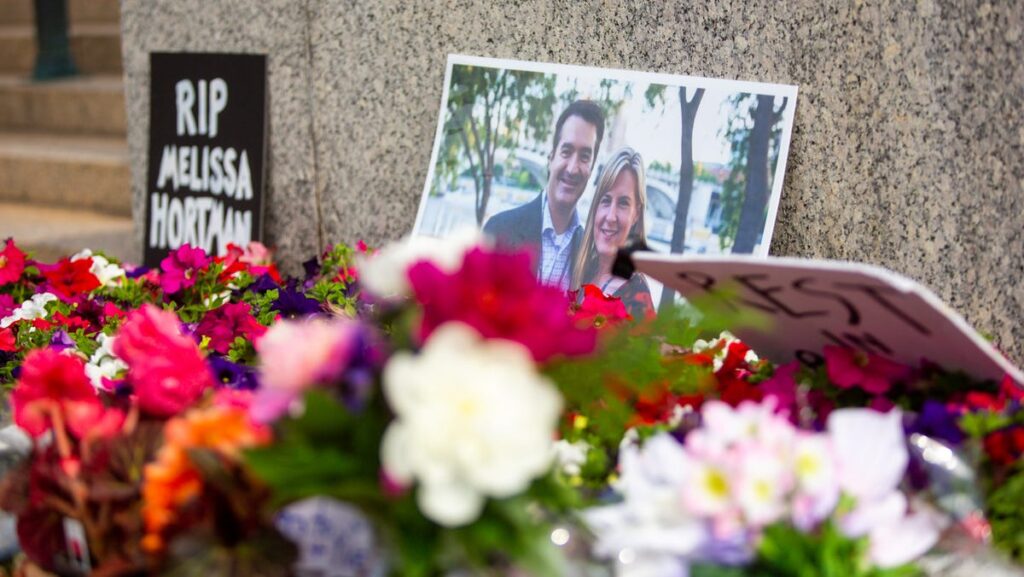
Most of us don’t live in political extremes hogging the mic. We trust our neighbors and local leaders. We help one another without hesitation when tragedy strikes. We show up for one another.


Universities have suffered from an erosion of trust
Polarization is eroding trust in science, universities and experts. What does that mean for the future of democracy?
- The U.S. is experiencing significant political division following the 2024 presidential election, raising concerns about a potential civil war.
- Unlike the Civil War of the 1860s, a modern conflict would be geographically messy, dividing communities and neighborhoods.
- While many Americans are preparing for political violence, a large portion of the population does not align with extreme views from either side.
- The article suggests that the majority of Americans who desire civility are often silent, allowing the loudest and angriest voices to dominate.
Our country is going through big changes since the 2024 presidential election. Immigration policy, diversity, equity and inclusion programs, vaccination protocols, and even the authority of the courts are being upended, with strong feelings from both sides of the issues. It often feels like the ground is shifting under our feet.
But this isn’t the first time the U.S. has faced upheaval. Before the Civil War, we were torn apart by the reality of slavery and states’ rights. In the 1930s, the Great Depression created deep uneasiness while war brewed overseas. In the 1960s the Civil Rights movement and the war in Vietnam brought people to the streets clashing with authorities. These times tested our ability to stay united.
With the current friction and animosity nearing a boiling point we might be asking; are we heading toward another civil war?
A modern civil war in America wouldn’t be neat or orderly
It certainly wouldn’t look like it does in the history books. Back then, it was states versus states, with clear lines drawn on a map. Today’s divide runs right through our towns and neighborhoods. Rural areas lean one way, urban centers another. Even within states, counties can feel like different worlds. A modern conflict wouldn’t be neat or orderly — it would be messy, personal and devastating.
And yet, the tensions are very real. Millions of Americans are preparing for chaos, stocking up in the event of political violence. Sadly, many political leaders ratchet things up instead of dialing things back. Democrats tried to block Trump through the courts after 2020. Now, back in power, Trump is tightening control of the Justice Department and military, fueling fears that troops will be used to insure election outcomes. Both sides see themselves as fighting for survival, and both accuse the other of crossing the line.
But here’s the thing: most of us don’t live in those extremes. We trust our neighbors and local leaders. We help one another without hesitation when tragedy strikes. We show up for one another other’s losses and celebrate our accomplishments. We work on solutions that are fair and will move us all forward.
Recent research shows that about 30% of Democrats and 30% of Republicans are dug in, convinced their side is righteous. But that leaves nearly half of us — millions of people — not perfectly aligned with either side. Not eager for constant political warfare, yet staying on the sidelines while the conditions of conflict are growing.
Staying silent during turbulent times has its own cost
So why aren’t we hearing more from them? Because it feels too risky. If you speak up for civility or compromise, you risk being attacked from all sides. No one signs up for that. But staying silent has its own cost. If the only voices we hear are the loudest and angriest, then the rest of us get dragged along. And the threat of violence looms larger.
What we need now are people willing to stand up — not to shout, but to remind us that democracy works best when we talk with each other, not at each other. We need to hear the voices of people who tend to vote Republican, Democratic or independent, yet don’t vilify those with opposing views. De-escalating conflict doesn’t mean being wishy-washy or ignoring problems. It’s about refusing to treat one another as enemies and insisting that we solve problems without tearing each apart.
We should be looking for ways to put extreme views back on the margins where they belong instead of handing them the microphone. We need to treat people as we want to be treated and stop giving our power to those who disregard that basic human aspiration. The real question isn’t whether we’re headed toward another civil war. The question is: will we let extreme views control the conversation, or will the voice of the sideline Americans finally be heard?
Lee Rasch is the Executive Director of LeaderEthics, a nonpartisan/nonprofit organization committed to promoting ethical leadership among elected officials. Lee can be reached at Lee@leaderethics.us. More information is available at leaderethics.us.