
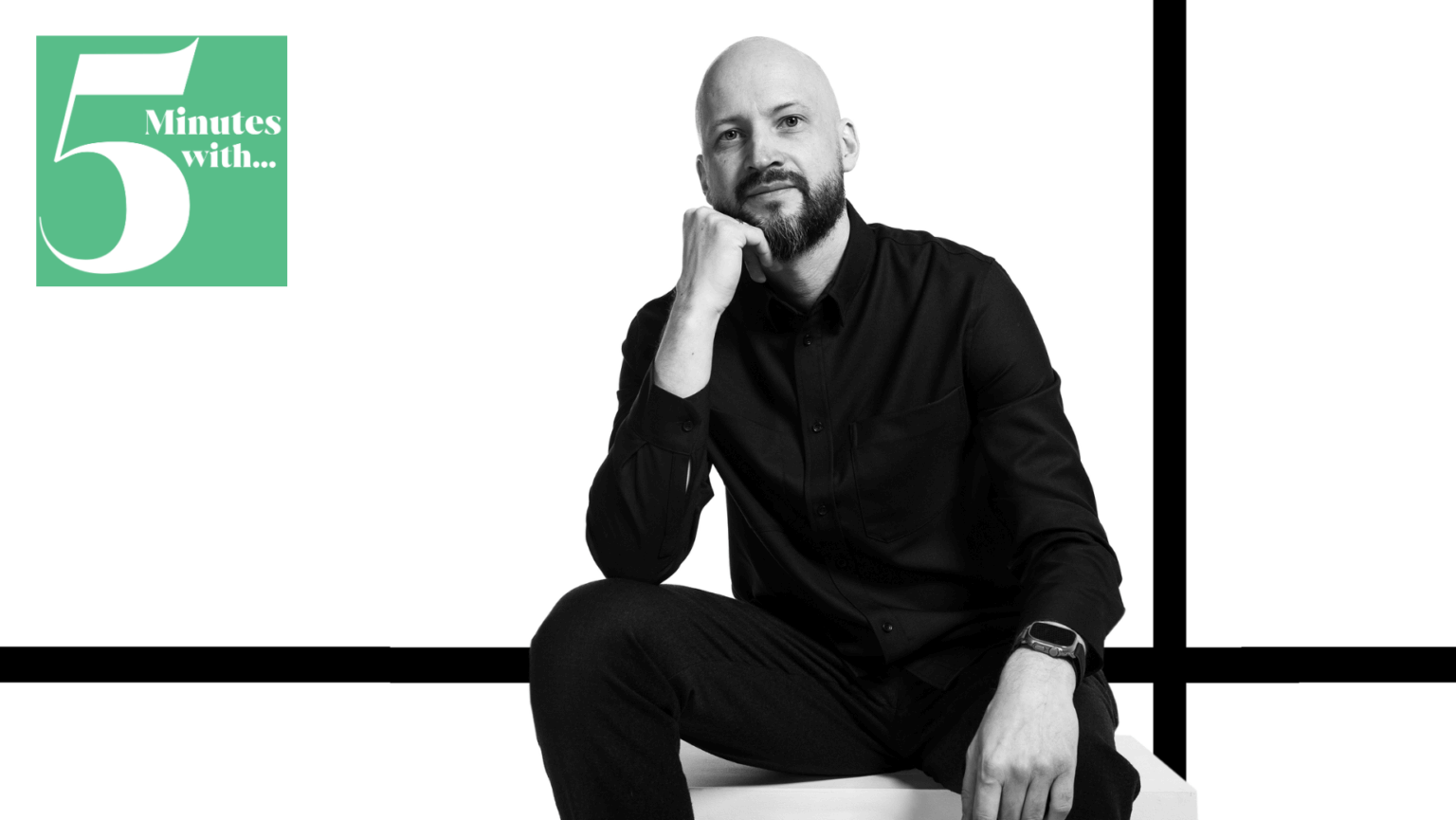
You might be surprised to hear that Marcin Sosiński’s pathway into the ad industry began as a “consolation prize”.
It’s a story that the chief creative officer for Poland and Central and Eastern Europe (CEE) at Dentsu Creative shared with Little Black Book following his recent induction into the Golden Drum Hall of Fame, and he’s come a long way since that unsure start: the past two decades have seen Marcin forge his reputation as one of the most awarded and influential creative leaders in the region.
A Cannes Lions Titanium and two Grand Prix, Poland’s first D&AD Black Pencil, and Grands from The One Show, LIA, Eurobest, Webbys, Clios, and more stand as a testament to that, and while he led McCann Poland – initially as executive creative director and later as managing director – it was named Effie Agency of the Year, Cannes Lions’ Good Agency of the Year, and Innovation’s Company of the Year.
Working on celebrated projects like Mastercard’s ‘Where To Settle’, which WARC Creative 100 ranked the third most awarded campaign worldwide, Marcin has championed both creative excellence and cultural relevance to showcase exactly what the Polish industry has to offer internationally. If you ask him, it comes down to a special way of thinking that can “inspire global conversations.”
Above: Mastercard ‘Where to Settle’
Sitting down with LBB’s Zara Naseer, Marcin pinpoints exactly what makes creativity in Central and Eastern Europe so unique, how he found artistic freedom within constraints, and why risk and the “magic of intuition” trump measurable, optimised content any day.
LBB> How did you get into advertising? Was it a purposeful decision or more of an accident?
Marcin> It was a happy accident. While studying at the Academy of Fine Arts, I entered a poster competition. The main prize was money. The runner-up prizes were internships in advertising agencies. I didn’t win the money.
At first, I was disappointed – what student doesn’t want money? Doing an internship also meant moving from Gdańsk to Warsaw and spending my summer working instead of travelling.
Back then, advertising wasn’t highly regarded among art students. Creating for clients, not yourself, felt like the opposite of artistic freedom. Yet it was this internship that taught me creativity within limits can be just as powerful.
What started as a consolation prize became the beginning of a lifelong fascination with how ideas can move people.
LBB> What was one of the first commercials you saw that really highlighted the potential of advertising creativity for you?
Marcin> It wasn’t a single commercial, but a moment. During my studies, a creative director came to give a lecture and showed a now iconic Polish campaign for a new mobile network. It was bold, beautifully crafted, and surprisingly artistic – nothing like the advertising we imagined back then.
That’s when I realised that great design, originality and emotion could live inside a brand campaign. It made me think that advertising might not be the enemy of art, after all. It was another way of putting creativity into the world.
LBB> What’s unique or exciting about the creativity coming out of Central and Eastern Europe (CEE) right now? Has it changed across your 20 years in the industry?
Marcin> It’s changed enormously. Twenty years ago, we were still defining our voice – often looking to the West for inspiration. Today, the region has grown confident and distinct: bold, ironic, emotional, and rooted in cultural nuance.
Central and Eastern Europe’s unique creativity is borne out of constant challenge. Our part of the world has never been simple – politically, socially, or economically. That’s taught us to treat problems as inspiration rather than obstacles. We’ve learned to improvise, build beauty out of limitation, and turn constraint into energy. That resilience is our creative fuel.
LBB> You’re one of the most awarded creative leaders in CEE – but if you could pick one campaign you’re most proud of, what would it be, and why?
Marcin> I’m not sure proud is the right word when it comes to work. I’m proud of my family, of people, not of campaigns. But some projects left a deeper mark on me, because the process itself felt almost artistic.
I value the moments when a campaign stops feeling like an assignment and starts feeling like collective creation – when every person involved brings something truly personal, unexpected, and irreplaceable. Those are the projects that stay with me.
I learned that when something is truly important and when everyone at the agency and the client is working towards the same goal, neither the scale of the challenge, the ambition of the idea, or the speed required can stop you from achieving something special. That’s when we move people.
LBB> Congratulations on your recent induction into Golden Drum’s Hall of Fame, celebrating creative leaders who inspire and motivate. How would you describe your style of leadership?
Marcin> For me, creative leadership is not about control. It’s built on trust and dialogue.
I believe in creative autonomy: in letting people think freely and take responsibility for their ideas. I’m not a fan of top-down management. My role is to build the kind of environment where people feel safe enough to take risks, to fail, to grow.
It’s about building a culture where ideas can collide and evolve, where listening is just as important as speaking. When people feel seen and trusted, they are energised and the work naturally becomes more courageous. And in the end, trust might just be the most creative tool we have.
LBB> Who’s been the most influential mentor to you, and what did they teach you about navigating this industry?
Marcin> I’ve been lucky to learn from many people – creative directors, agency leaders, clients. Each of them shaped not only the professional I’ve become, but also the kind of person I try to be. I’ve heard a lot of good advice along the way, but there are two thoughts I often share with others.
The first is about perspective. You can’t fight every battle with the same intensity, so pick the ones that truly matter. The second is simpler: act first, apologise later. Both capture something essential about creativity.
LBB> And what one key piece of advice you’d offer creatives today?
Marcin> Stay curious and kind. Curiosity keeps you moving forward; kindness keeps you connected.
But most importantly, creativity isn’t just the job of creatives or the agency. The best ideas happen when clients share that same courage and curiosity, when you are partners building something together, not compromising to find middle ground. Creativity is never a solo act; it’s a shared leap of faith.
LBB> What are your most exciting plans for the agency and putting Polish / CEE creativity on the map?
Marcin> Our ambition is simple but bold: to make ideas from this region matter globally. Not by imitating anyone else, but by leaning into what makes us different.
The goal isn’t just to ‘export’ CEE creativity, but to show that our way of thinking – strategic yet emotional, and a bit paradoxical – can inspire global conversations.
The next step is collaboration: connecting creative talent across the CEE region and building a collective narrative that’s bigger than any single agency or country. We all need to be ambassadors of this region beyond its borders. To act in its interest and make its voice heard. That’s how we can strengthen the value of our entire market.
LBB> What trends in the industry do you find yourself ranting about the most and why?
Marcin> I try not to rant, but there is one thing that worries me: the obsession with short-termism. Everything has to be immediate, measurable, optimised. But creativity isn’t a spreadsheet. Embrace risk, the magic of intuition, and with a little patience, results will follow.
And while technology has opened up amazing possibilities, too often it’s relied upon as a substitute for imagination. AI, data, algorithms – they’re powerful, but only when guided by human purpose. Innovation without empathy is just noise. And the future of creativity depends on how human we allow it to remain.
LBB> Outside of work, what’s inspiring you right now?
Marcin> I’m inspired by what’s happening in Polish design, film and contemporary art. There’s a new confidence in how we create with less imitation and more authenticity.
Design studios like TOFU in Gdańsk are a great example. They turn craftsmanship and visual discipline into something beautifully modern. And in Warsaw, places like Galeria
Lotna give space to a new generation of artists who are shaping their own language and sensibility. While in film, there’s an emotional honesty coming through. It’s a mix of restlessness and poetry that feels very true to who we are.
And I’m equally inspired by creative ideas from our own industry. It’s exciting to watch how consistently we’re growing – not just in skill, but in courage.