
13 Oct 2025, 3:28 p.m. MDT
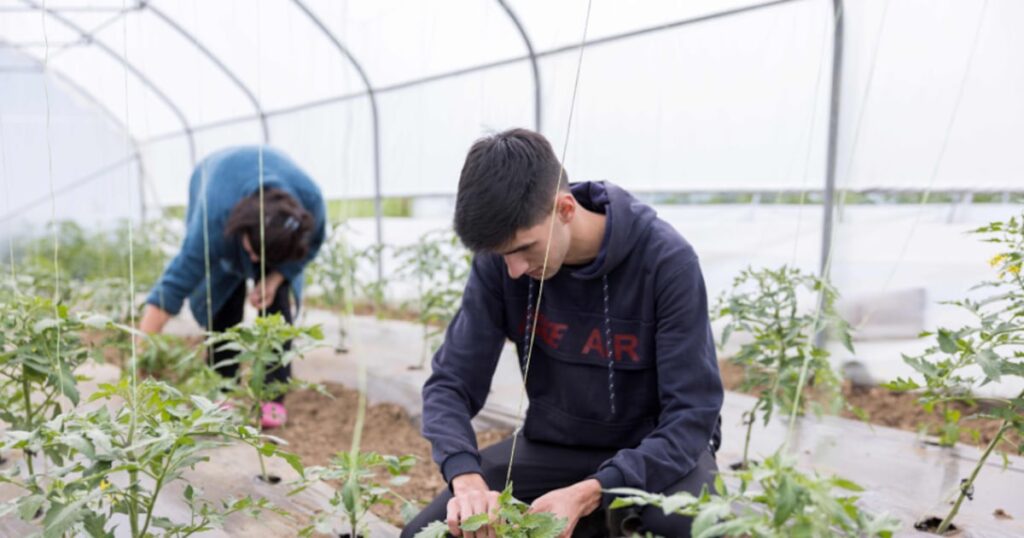
SARAJEVO, BOSNIA — For the first time in southeast Europe, humanitarian leaders, senior missionaries and long-term collaborators of The Church of Jesus Christ of Latter-day Saints gathered for an international online “greenhouse summit,” celebrating one of the region’s most successful self-reliance initiatives — helping families set up greenhouses to grow fruits and vegetables.
The virtual event on Thursday, Sept. 25, highlighted the far-reaching impact of greenhouse projects in Bosnia and Herzegovina — programs that are improving food security, strengthening families and offering new hope to vulnerable communities.
Organizers and collaborators
The summit was proposed by Elder Reid Bates and Sister Kathryn Bates, senior humanitarian missionaries from Olympia, Washington, currently serving in both Croatia and Turkey. The event was moderated by Davide Lotito, a Church Welfare and Self-Reliance manager residing in Milan, Italy, and co-sponsored by the Church’s trusted collaborators, the Muslim Aid Association BiH and the Ana and Vlade Divac Foundation. More than 50 participants attended.
Elder Bates explained that the Church’s humanitarian work in Croatia focuses on food insecurity. One of its collaborators, the Adventist Development and Relief Agency, the humanitarian organization of the Seventh-day Adventist Church, had seen the success of the greenhouse initiative in neighboring Bosnia and Herzegovina and expressed interest in starting a similar project. This became the genesis of the summit — to share success stories and practical guidance with other organizations.
Lotito opened the summit by encouraging participants to learn from proven successes: “Our aim is that this initiative will inspire even stronger cooperation among participants. We hope the session will provide insights into the elements that establish greenhouse projects as best practices in our region and perhaps motivate some of you to consider implementing similar initiatives within your own communities.”
That vision is already becoming reality. “Some of the NGOs that attended are now initiating greenhouse projects in their countries,” Lotito noted.
A decade of greenhouse growth
The Church has supported greenhouse projects in Bosnia and Herzegovina for more than a decade — addressing food insecurity, unemployment, climate challenges and the need for agricultural entrepreneurship. These initiatives empower women, youth, the unemployed and individuals with disabilities to build sustainable livelihoods.
Since 2014, The Church of Jesus Christ of Latter-day Saints and Muslim Aid have worked together to construct more than 3,000 greenhouses in 84 municipalities across Bosnia and Herzegovina. What began with only 20 greenhouses has steadily expanded due to proven success and demonstrated need.
“This remote greenhouse summit has helped attendees gain wider and deeper understanding of the process and the results of what is measurably the most successful self-reliance project in the region,” said Elder Charles Lamb. He and his wife, Sister Beth Lamb, organized the event and are serving in Sarajevo as senior missionaries from Brea, California
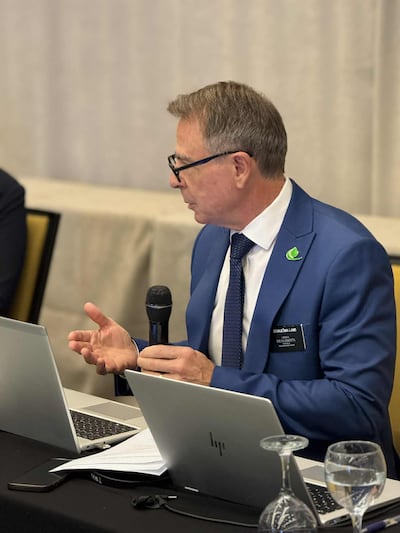 Elder Charles Lamb, a senior missionary from Brea, California, serving in Sarajevo, Bosnia, speaks during the Southeast Europe Greenhouse Summit in Sarajevo, Bosnia, on Sept. 25, 2025. | The Church of Jesus Christ of Latter-day Saints
 Admir Hodzic, representing Muslim Aid, emphasized the importance of the Church’s role.
“These projects are only possible with the help and support of the Church of Jesus Christ,” he said.
Muslim Aid is a non-governmental organization committed to improving the quality of life for those in need by focusing on socio-economic empowerment. The Ana and Vlade Divac Foundation is a nonprofit dedicated to supporting citizens, refugees and internally displaced persons primarily in Serbia. Both purposes align with the Church’s humanitarian purpose to relieve suffering, foster self-reliance and provide opportunities for service.
Missionary legacy and self-reliance work
The Lambs believe gatherings like this summit will foster stronger collaboration and innovation. “We hope this summit motivated participants to try new ways of bringing economic stability to families in rural areas of Bosnia and Herzegovina,” Elder Lamb said.
The Lambs are deeply connected to the region. Elder Lamb first served as a young missionary in the Austria Vienna Mission (Croatian-speaking) from 1979–1981, including 14 months in the former Yugoslavia. He and Sister Lamb later returned on a mission in Macedonia and Kosovo. Now on their third mission, they are serving in Sarajevo until August 2026.
“We call this our family business,” Elder Lamb said. “This is my third mission here, my wife’s second, and our son also served in this mission from 2013 to 2015.”
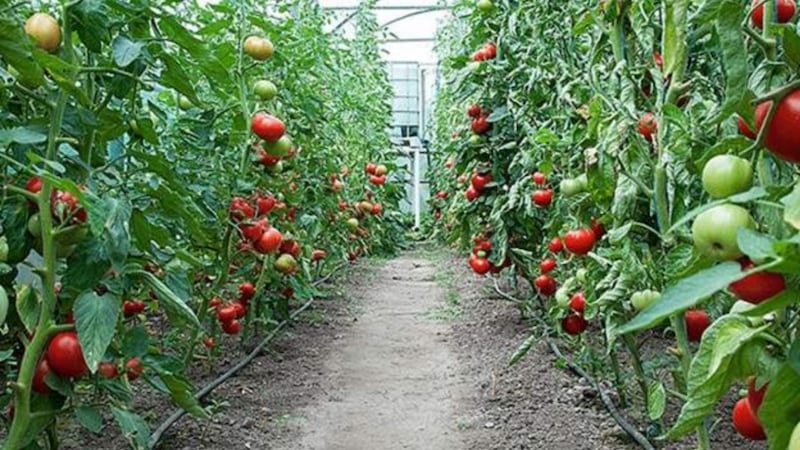 Tomatoes grow in a greenhouse in Bosnia and Herzegovina in January 2023. The Church of Jesus Christ of Latter-day Saints and Muslim Aid began the initiative to give families greenhouses and training in 2014. | Muslim Aid
 Broader humanitarian impact
Bosnia and Herzegovina is part of the Adriatic North Mission, which also includes Slovenia, Croatia, Serbia and Montenegro. Currently, four welfare and self-reliance missionary couples serve in the mission, focusing on humanitarian outreach. Working under the Church’s Europe Central Area in Germany, they assess needs and coordinate projects with local leaders and government agencies.
Mission President Brian Cordray described their service: “Our faithful missionaries have heeded Elder [Ronald A.] Rasband’s call to serve by lifting those in need throughout these countries. Using sacred Church funds, they bless lives by assembling and donating hygiene kits, providing beekeeping supplies to create economic stability, offering pregnant cows to help with nutritional and financial needs, and supporting greenhouse and other agricultural projects. Their work is a miracle.”
Looking ahead
Even before the summit, with the support of the Church and ADRA, a pilot program was started in Croatia to assist three villages build 15 greenhouses before spring of 2026.
The first-ever Southeast Europe Greenhouse Summit underscored how long-term collaborations and consistent humanitarian work can bring lasting change. With thousands of families already benefiting, and new organizations now inspired to begin similar efforts, the summit marked an important step in expanding self-reliance across the region.
— Sister Laurie Snow Turner is a senior missionary in the Adriatic North Mission and an assistant communications director.