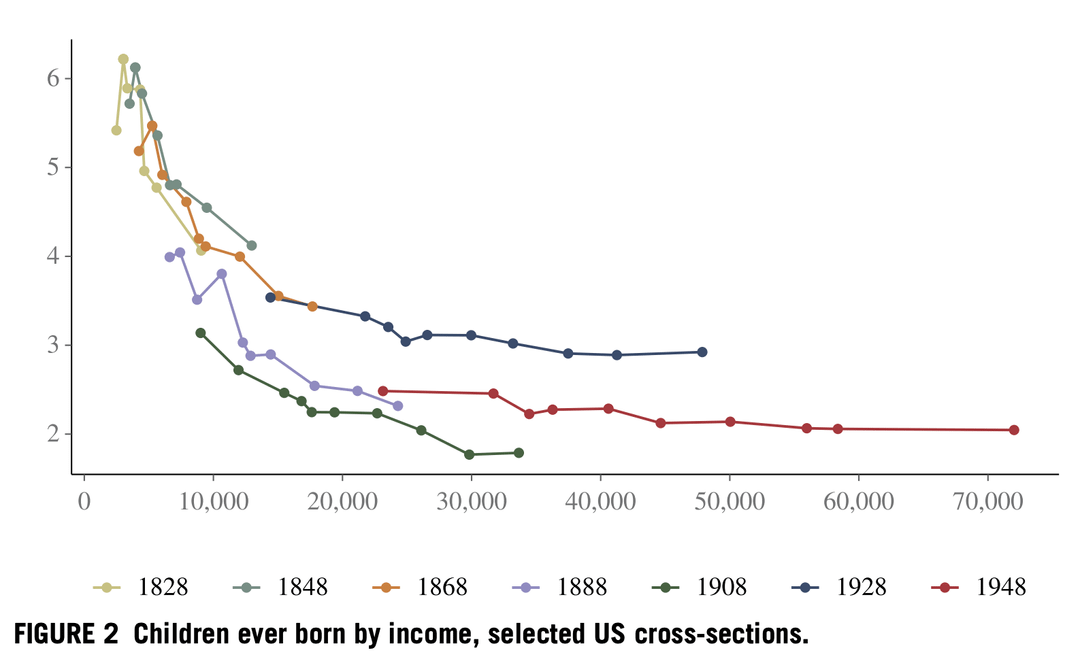
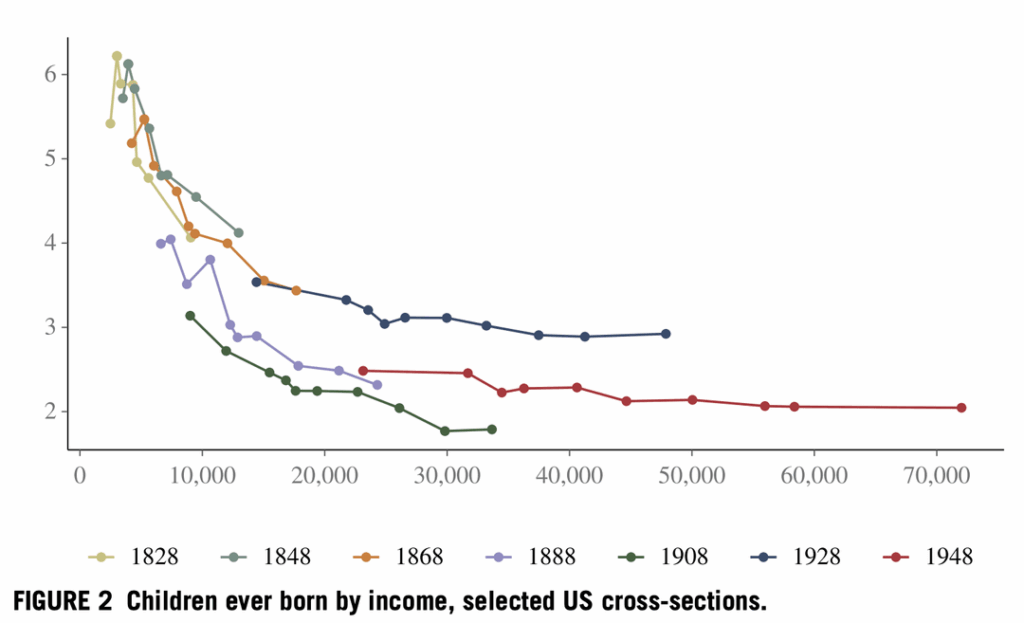
It looks like most of that is that the in curve was steepest at the lowest incomes, but no one has incomes that low any more.
thats_handy on
* In the first graph, neither of your axes have labels.
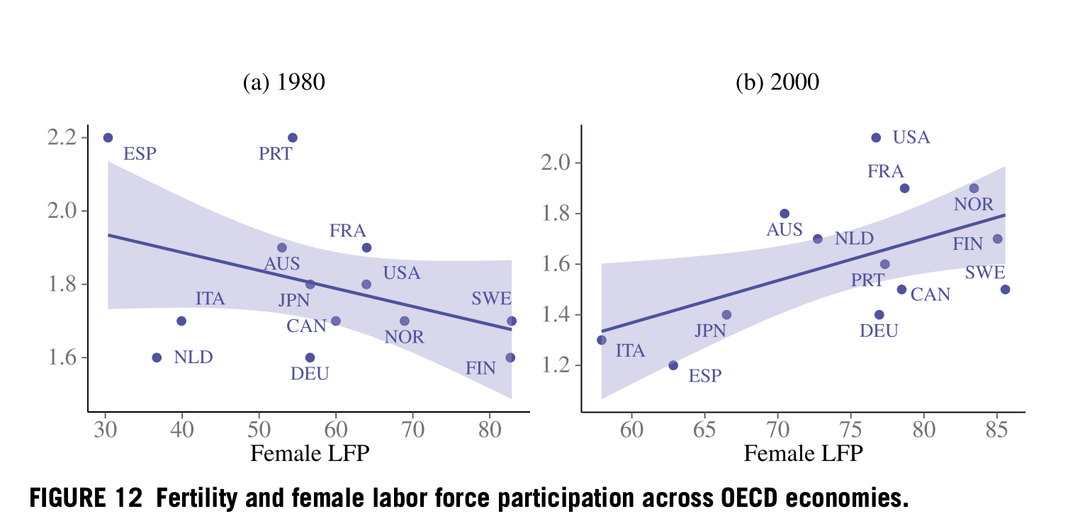
* In the second graph, the acronyms LFP and OECD are undefined.
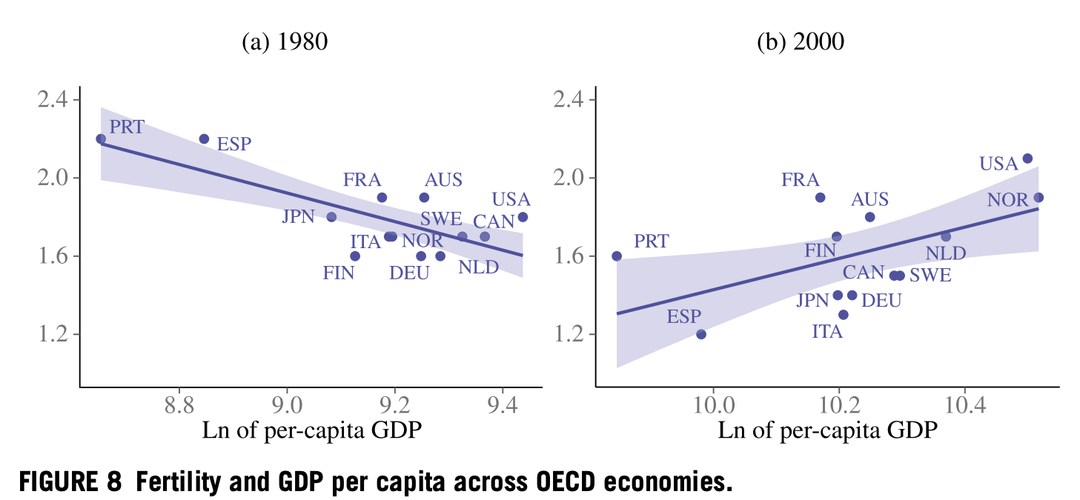
* In the third graph, the acronyms GDP and OECD (still) are undefined.
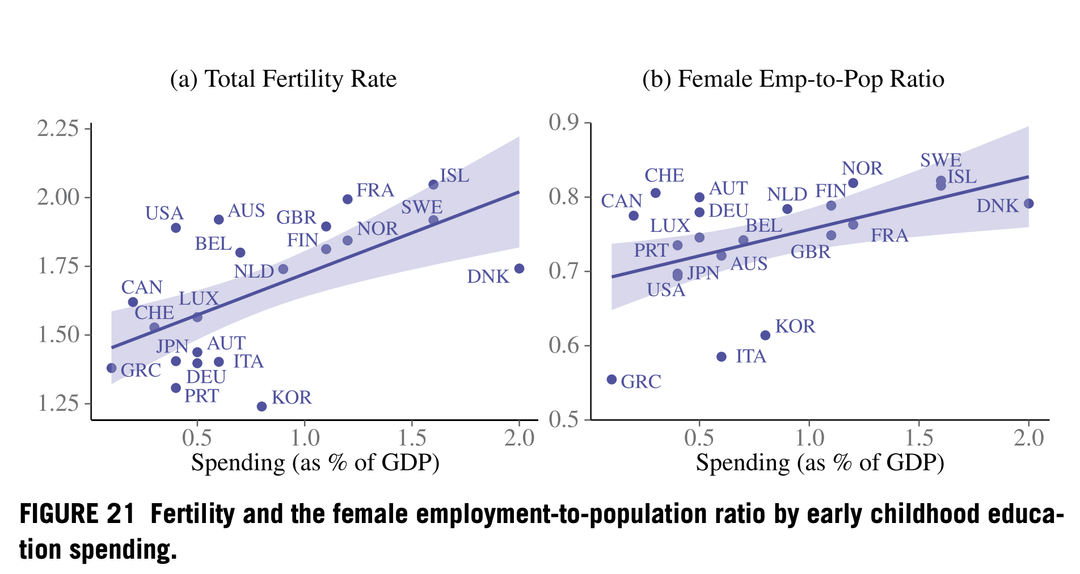
* In the fourt graph, the acronym GDP (again) is undefined, and you have to work to get the definitions of Emp and Pop.
This may be beautiful, but it’s not accessible.
_thetrue_SpaceTofu on
Wasn’t this posted a few days ago?
Even_Serve7918 on
It’s interesting – it’s now become a U-shape. The richest and the poorest people have the most children.
It’s become a sort of flex for the wealthy to have a lot of children, because they can afford to raise a lot of kids with all the trappings.
The poor don’t think about that. They invest very little in each additional child (because they don’t have the money either way), and sometimes, children even bring in more money in the form of benefits. The poor also tend to be more religious.
It’s the middle class that has to conserve and only have one or two children, so that they can pour their resources into those children and give them the best possible chance.

5 Comments
Source: [https://docs.iza.org/dp15224.pdf](https://docs.iza.org/dp15224.pdf)
It looks like most of that is that the in curve was steepest at the lowest incomes, but no one has incomes that low any more.
* In the first graph, neither of your axes have labels.
* In the second graph, the acronyms LFP and OECD are undefined.
* In the third graph, the acronyms GDP and OECD (still) are undefined.
* In the fourt graph, the acronym GDP (again) is undefined, and you have to work to get the definitions of Emp and Pop.
This may be beautiful, but it’s not accessible.
Wasn’t this posted a few days ago?
It’s interesting – it’s now become a U-shape. The richest and the poorest people have the most children.
It’s become a sort of flex for the wealthy to have a lot of children, because they can afford to raise a lot of kids with all the trappings.
The poor don’t think about that. They invest very little in each additional child (because they don’t have the money either way), and sometimes, children even bring in more money in the form of benefits. The poor also tend to be more religious.
It’s the middle class that has to conserve and only have one or two children, so that they can pour their resources into those children and give them the best possible chance.