
The people of the Western Balkans have been subjected to more than their fair share of protracted misgovernment, but those of Bosnia and Herzegovina stand out as the most comprehensively dissatisfied in the neighbourhood, according to a poll by the Horizon Europe-funded GEO-POWER-EU project.
In its second year, the GEO-POWER-EU consortium is working to develop coherent, evidence-based ideas on how the EU can become a more credible policy actor in the Western Balkans and the three newer membership candidates to the east: Moldova, Ukraine, and Georgia. The Democratization Policy Council, the think-tank I co-founded, is part of the project.
The poll was conducted in June; each country’s sample was roughly 1,000 respondents, constructed to be representative of the demography of each of the nine EU aspirant states.
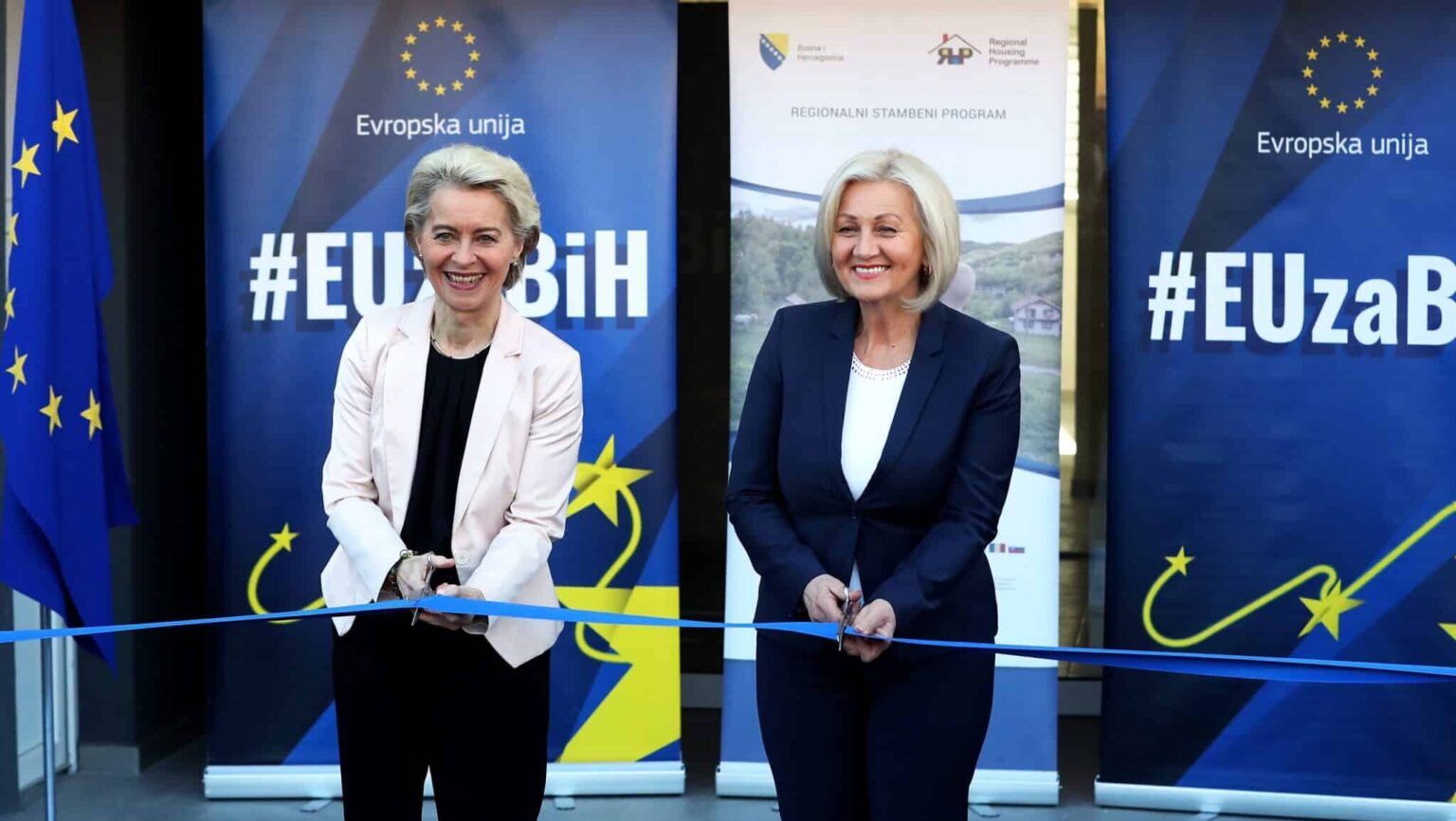
European Commission President Ursula von der Leyen, during her October 14 visit to Bosnia, appeared to cite the poll’s finding of 72 per cent overall popular support for EU membership.
It’s not surprising that she did not highlight another, more distinguishing, finding: out of the so-called ‘Western Balkans Six’, Bosnia’s citizens registered the greatest composite dissatisfaction with their country’s direction, by a large margin: 59 per cent dissatisfied [19 per cent completely and 40 per cent mostly]. Their popular frustration outstripped those of Serbians by 12 points [47 per cent], amid ongoing popular protests against the government under President Aleksandar Vucic.