
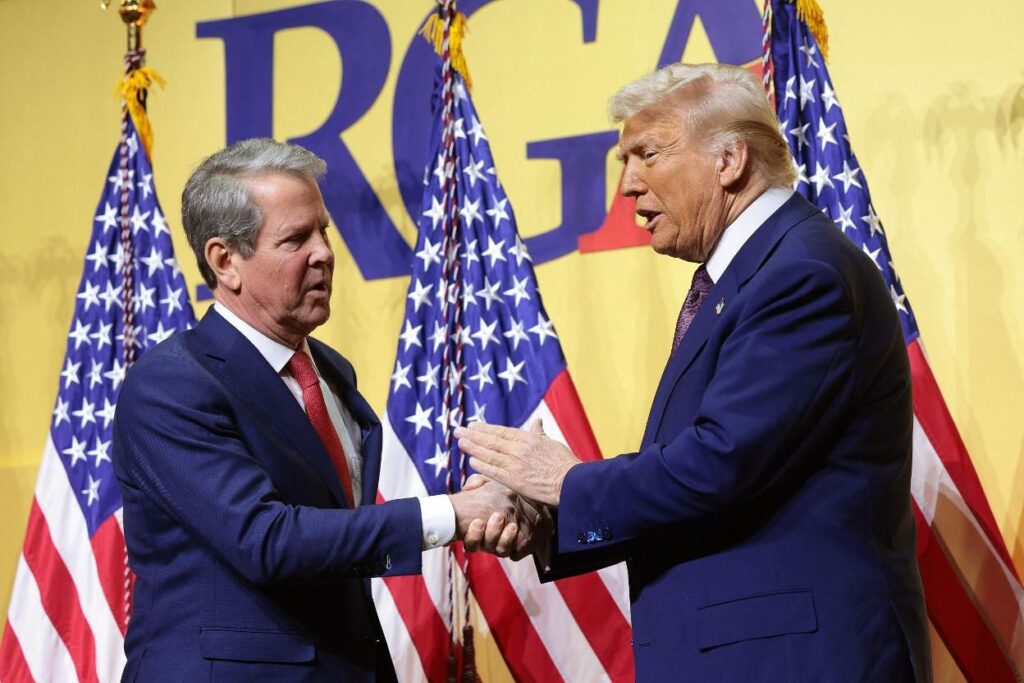
Georgia Gov. Brian Kemp’s upcoming visit to Korea is drawing attention, as questions swirl about how he will address negative public sentiment stemming from the mass detention of Korean workers in early September at a construction site in his state.
While his office has remained silent about the message he will share and whom he will meet during the trip later this month, calls from the Korean side are growing for Kemp to offer an immediate apology for the weeklong detention of more than 300 Korean workers. The detentions followed a major immigration raid at the construction site of a plant jointly run by Hyundai Motor and LG Energy Solution (LGES).
According to sources familiar with the matter, Kemp’s office has decided to hire the Korean subsidiary of a major global PR agency ahead of his third trip to Korea since his inauguration in 2019. This move has been seen as part of the U.S. state’s attempt to rebuild trust after the immigration raid.
“To monitor and analyze Korean news reports during the governor’s visit, his office is looking for an agency with extensive experience in global communications,” said a senior executive at one of the global PR agencies in touch with the U.S. state. “His office has already arranged meetings with Hyundai Motor and LGES, as well as Korean government officials.”
When lawmakers from the ruling Democratic Party of Korea visited Texas last week to meet business leaders and politicians there, Kemp also made an unexpected appearance at the venue.
Rep. Lee Un-ju, a member of the delegation, said the governor promised to submit a white paper to the White House to ensure Korean investors and engineers return home safely after finishing their work in Georgia. According to Lee, Kemp’s remarks followed complaints about the immigration raid and requests for action to prevent similar incidents.
The Georgia Department of Economic Development also reaffirmed its longstanding and mutually beneficial relationship with Korea at the National Day of the Republic of Korea event on Oct. 8.
“As Governor Brian Kemp prepares for his mission to Korea later this month, Georgia stands committed to strengthening cultural and business ties, especially during this festive time of Chuseok,” the department posted on social media. “Together, we look forward to a future of continued collaboration and success.”
Late last month, Kemp himself called for reforms to the U.S. visa system.
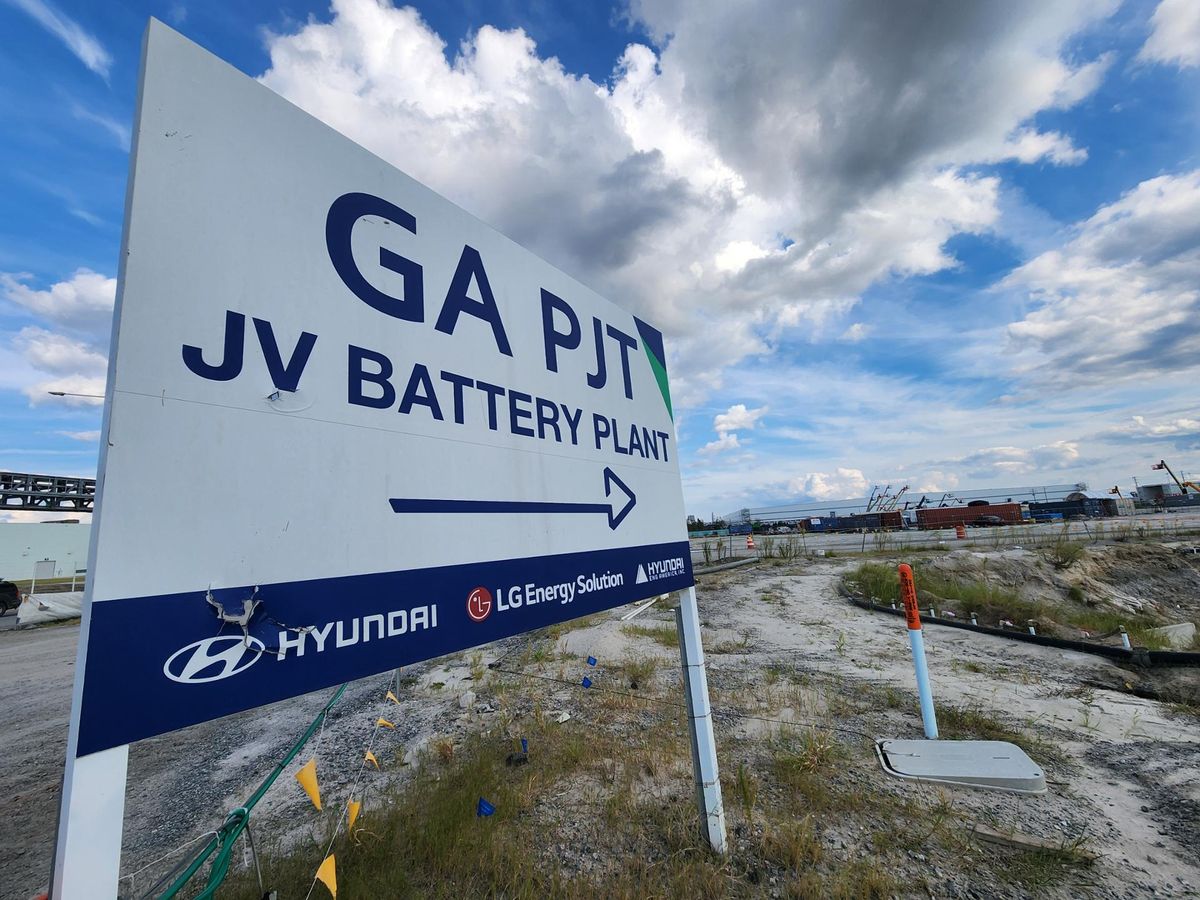
A signboard stands at the joint Hyundai Motor and LG Energy Solution plant construction site in the U.S. state of Georgia, Sept. 11. Yonhap
Despite these efforts, Korean workers remain hesitant about returning to U.S. worksites.
A company that supplies LG with factory equipment reportedly drew lots to decide who to send to the U.S., as no staff volunteered for the trip.
LGES has been cautious about revealing how many of its staff are willing to return to Georgia. The battery maker recently resumed sending workers to the site, but it is refusing to confirm whether previously detained workers are included in the new groups.
Rep. Kim Joon-hyung of the minor opposition Rebuilding Korea Party, a former chancellor of the Korea National Diplomatic Academy, said Kemp must offer a sincere apology, provide incentives to Korean investors and ensure safety for Korean workers.
“The most pressing issue is the creation of a visa quota for skilled Korean nationals,” Kim said. “The decision made during the Korea-U.S. working group meeting is not a fundamental solution.”
After last month’s working group meeting, Washington reaffirmed that temporary business visitors holding B-1 visas and those entering through the Electronic System for Travel Authorization visa waiver program can install, service and repair foreign-purchased equipment at their U.S. plants.
However, the two countries have yet to agree on the creation of a dedicated visa for highly skilled Korean nationals.