
Our weekly column Inside Denmark takes a closer look at the stories we’ve been talking about in Denmark over the last seven days. This week, how an escaped rare breed of pig demonstrated the short distance between a country manor and a marginalised area.
A wild boar on the loose is not an everyday occurrence in Denmark, but police in Aarhus responded on Wednesday to reports of several sightings of such an animal in the Brabrand district in the west of the city.
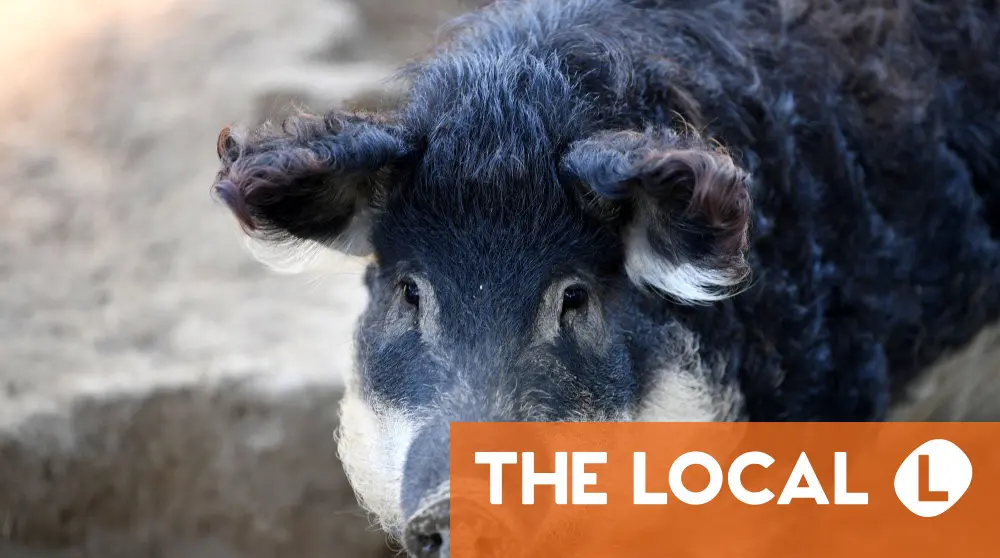
It was only after the animal was shot dead by a hunter that it turned out not to be a wild boar, but rather a Mangalitsa pig: a rare, Hungarian breed known for its thick, curly wool-like coat reminiscent of a sheep.
This perhaps made the story even more bizarre, until the explanation emerged that the unusual animal had escaped from the nearby Constantinsborg manor, owned by Anders Holch Povlsen, Denmark’s richest person and owner of the Bestseller fashion giant.
The Danish Nature Agency (Naturstyrelsen) explained on Wednesday evening that it had been contacted by police with a request to euthanise the pig.
A consultant from the agency gave the task to a hunter who shot the animal using a rifle.
Management at Povlsen’s country manor declared themselves less than satisfied with the handling of the incident.
“We had only just got it, and it found its own way out” of the manor grounds, Constantinsborg’s manager Henrik Møller Pedersen told local media [warning: the following link contains a video of the hunter shooting the pig and then helping police officers drag its carcass into a waiting vehicle at the side of the road] TV2 Østjylland.
Advertisement
Pedersen told TV2 the manor was “a bit fed up” about the pig having been shot and that its disappearance from the grounds had only been noticed after it had been put down.
He also said the pig had been part of a “nature restoration project” at the manor.
According to TV2 Østjylland, the animal escaped by swimming across a lake before reaching the scenic Brabrandstien, a trail which circles the Brabrand lake near Aarhus, before entering a residential area. The video of its shooting shows Silkeborgvej, a busy access road which enters the city from the west.
Police were alerted to the animal by a number of residents who thought it was a boar and responded due to concerns it could present a danger to traffic.
“It was resolved that the animal had to be euthanised,” the police wrote in a daily update on its website, resulting in the decision to call in the hunter.
The Danish Nature Agency meanwhile states that escaped wild boars should be shot as soon as possible to prevent the potential spread of African swine fever. The dead animal from Aarhus was taken for testing on Thursday, TV2 reported.
Pedersen explained its escape by saying that a lake which extends from a forested area to the east of Constantinsborg is not fenced off, in agreement with Aarhus Municipality. The Mangalitsa pig was in the area with another individual from its species before escaping, presumably across the lake.
Advertisement
Wild boars must be kept fenced in in Denmark due to the risk of disease spread.
Brabrand, which has a separate postcode from Aarhus, includes the local area of Gellerup, which is among the most marginalised in Denmark and one of just eight areas which remain on the government’s “parallel societies” list.
This is a Housing Ministry list which uses criteria including the number of residents from “non-Western” countries, the crime rate, employment rate and average income.
Areas on the list become subject to the special rules applied under the parallel societies law, meaning they can be subject to harsher punishments for certain crimes, forced redevelopment of housing and requirements for small children to attend daycare among other rules.
READ ALSO: Denmark announces fewer ‘parallel societies’ in annual update
The unfortunate story of the escaped Mangalitsa pig shows what a short distance there is from here to the home of Povslen, whose net worth was estimated at US$12.5 billion in 2024.
Of course, there’s no direct link between social underprivilege in Brabrand and the incident with the pig from Constantinsborg manor, even if it might be easy to weigh in with some heavy-handed symbolism.
Advertisement
Nevertheless, I found the story unusual in the sense that it involved two very different sides of Danish society in terms of financial position and status, connected only by geographical proximity. The difference in wealth was incidental (aside from the fact owning a rare pig is probably only something you can do if you have plenty of money).
Denmark is a much less class-based society than many others, but this story hinted at a class divide. Perhaps that is what made it stand out for me.