
Over the past decade, American youth have experienced rising rates of depression, anxiety, and suicidal thoughts.
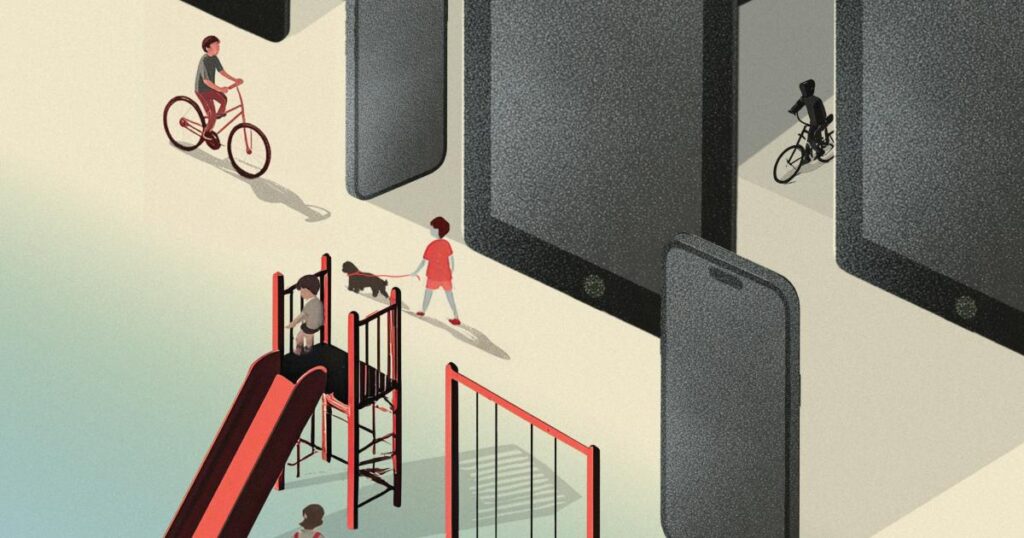
Nearly 1 in 5 youth ages 12–17 have experienced a major depressive episode in the past year while 20% report anxiety symptoms in the past two weeks, according to national survey data. Those findings come at the same time screen use has proliferated, with U.S. teens spending nearly five hours a day on social media, leading professionals and parents alike to wonder: Is technology to blame?
Many observers offer a resounding yes. Before Hampstead Hills’ pouch era, for example, students would spend recess consumed by short video reels. Students would sneak glimpses in the classroom or cluster in the bathroom consumed with group texts and social media posts. Now, there’s less social strife, increased focus in the classroom, and more physical activity at recess, teachers say.
Before, “the cell phone was their life—they would literally trip up the stairs staring at their phones,” says Brandon Pratta, an eighth-grade teacher. “Now, they talk more about their lives: baseball, chess, art.”
At Johns Hopkins Medicine, childhood psychiatrist Carol Vidal, MD, PhD, MPH, also notices her young patients’ excessive screen time negatively impacting their schoolwork, activity levels, in-person socializing, and sleep. She’s observed cyberbullying and inaccurate self-diagnoses of mental and neurological conditions like tics.