
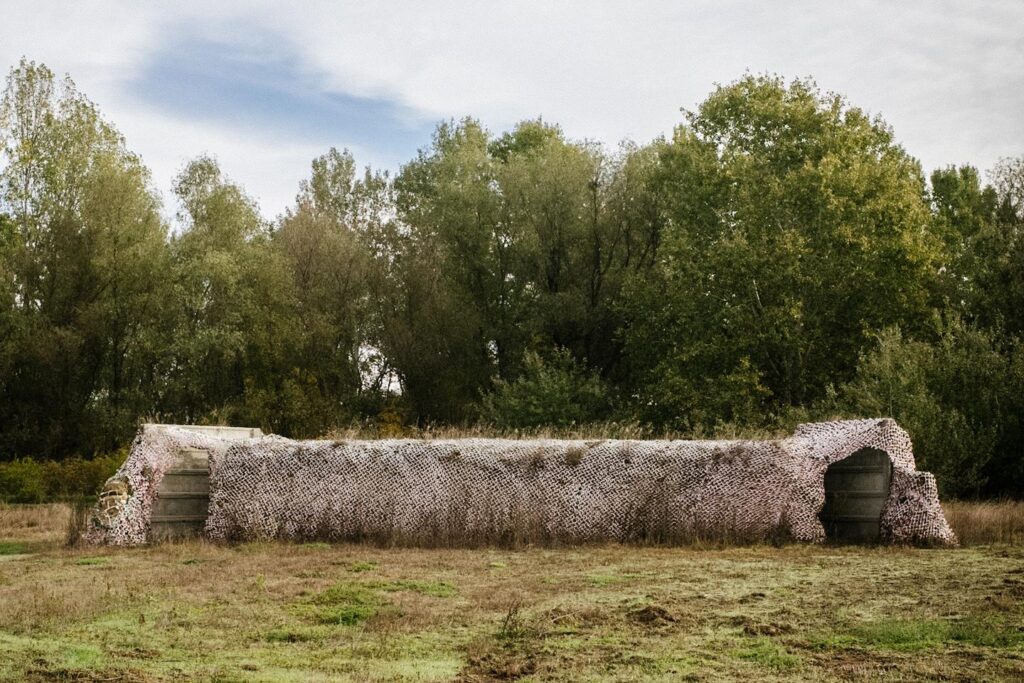
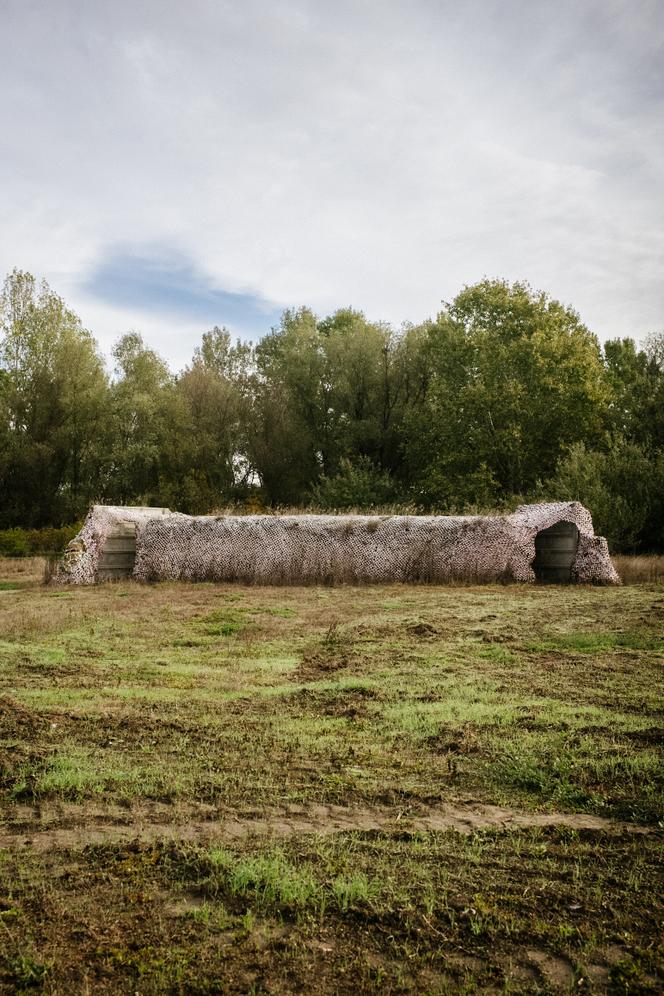
 A recently built anti-drone shelter erected by Romanian authorities after a drone crashed in Plauru, a small village on the banks of the Danube. HUBERT HAYAUD
At dusk in the Danube Delta, which straddles Ukraine and Romania, golden jackals, stray dogs and barn owls cry out together. Since the war in Ukraine began in February 2022, new sounds have joined the nightly chorus: first, air-raid sirens on the Ukrainian side, then, from the summer of 2023 onward, anti-aircraft fire, the drone engines – sounding like “a fishing boat” – and finally, explosions that “make the ground shake,” recalled Cerasela Cilibon, speaker from her flower-filled garden in Periprava, Romania, a NATO member. “For me, the war is all about sound. It’s always at night and you can’t see anything. Now, I can tell the difference between a Shahed drone, a Geran and a missile,” said the 50-year-old screenwriter, dressed in a red flannel set. She left the capital, Bucharest, in 2020 to renovate a house in this hamlet of 80 residents, seeking “some peace and quiet.”
Periprava, located on the Chilia river branch, faces the Ukrainian port of Vylkove. It is the last Romanian village before the Black Sea, so remote that residents must take a boat for several hours from the city of Tulcea to reach it. The original inhabitants are Lipovans – “Old Believers” (members of the so-called “Old Ritualist” Orthodox Church) – Russian speakers who mainly rely on fishing and tourism for their livelihoods. Since July 2023, Ukrainian ports along the Danube, which serve as alternatives to the port of Odesa for grain and goods exports, have been regularly attacked by Russian drones and missiles. Several drones have already flown over Romanian territory, most recently on September 13, just four days after 19 drones entered Poland. Residents of another nearby village, Pardina, told Le Monde they saw one flying very low before it returned to Ukraine. According to the Romanian Ministry of Defense, it was not shot down by NATO F-16 jets to avoid “collateral damage.”
You have 67.28% of this article left to read. The rest is for subscribers only.