
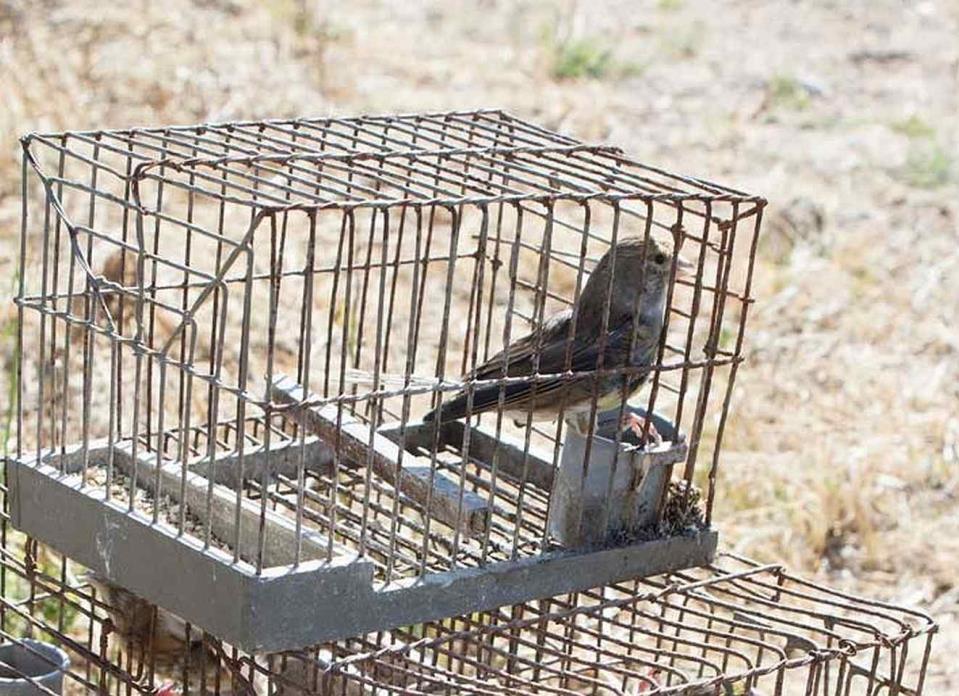

The government announced Saturday that the so-called “research period” for seven species of songbirds will open on October 20 and run until December 20, 2025, following a decision by the European Court of Justice (ECJ) that, it said, clarified issues related to Malta’s songbird research project.
The ECJ’s ruling on Case C-23/23, delivered on September 19, addressed only one of several alleged infringements raised by the European Commission, the government said. The Court found that Malta’s 2020-2022 legal notices lacked an explicit declaration and justification explaining the absence of a satisfactory alternative method for gathering migration data. However, the government said the Court did not rule against the overall framework of the research project, noting that Malta’s regulatory system (L.S. 549.145) is “clear and precise”.
Following this decision, the Maltese government said it revised its legal notice to include a formal declaration and justification demonstrating that there is no viable alternative to the current method of collecting information on the origins of songbirds migrating over Malta in autumn. The research project allows licensed trappers to capture songbirds using traditional clap-nets, check whether they are fitted with scientific rings, record the relevant data, and immediately release them. All captures are, according to the government, to be reported in real time via a free phone line (8000 2020) or the mobile app “Game Reporting MT.” Participants are also encouraged to submit short videos showing the release of the birds at the same capture site.
The new legal notice outlines seven reasons justifying why no satisfactory alternative method exists, the government said. These include: the need for a methodology specific to migratory songbirds; the failure of ornithologists and bird ringers to collect sufficient data using mist nets; the project’s success being demonstrated through independent data collectors, not limited to ornithologists; and the selective nature of clap-nets, which rely on calls and movement – methods not used by bird ringers. It also emphasises that bird censuses monitor population size and trends rather than migration origins, migration studies alone cannot identify ringed individuals without physical capture, and large-scale population modelling is inadequate due to the scarcity of recovery data and complex environmental variables such as weather.
Based on these justifications and after consulting the Ornis Committee, the government confirmed the continuation of the research project. Licensed participants are required to release all birds immediately after checking for scientific rings and to report every capture or lack thereof. Any bird found with a scientific ring must be reported on the same day and recorded on the official ring form issued with the license. Participants must also log their research effort, even if no birds are caught, by calling the free number or using the reporting app before leaving the site.
The government said all licence holders must comply with the regulations governing this special research derogation. The government reiterated its commitment to ensuring that the project operates within the framework of EU law while contributing valuable scientific data about the migratory origins of songbird species passing over Malta each autumn.