
Published on
October 19, 2025

Greece and Egypt are deepening their partnership, aiming to drive growth in tourism, trade, and investment. This strategic collaboration comes at a time when both nations recognize the vast potential for mutual benefit. By strengthening their economic ties, they seek to leverage Egypt’s growing investment opportunities and Greece’s expertise, creating a dynamic environment for increased tourism and joint ventures. With a focus on key sectors, this alliance is set to unlock significant benefits for both countries, promoting long-term prosperity and fostering deeper economic integration.
Egypt and Greece have long shared a history of cultural and economic ties, with both nations working together in various sectors for decades. In recent years, the two countries have increasingly focused on expanding their economic and trade relations. This has culminated in a significant commitment to further strengthening bilateral cooperation, particularly in the areas of fiscal policy, tax and customs systems, and joint investments. These efforts, according to Egypt’s Minister of Finance, are aimed at not only improving the economies of both countries but also deepening the historical and strategic relationship that has existed between them for centuries.
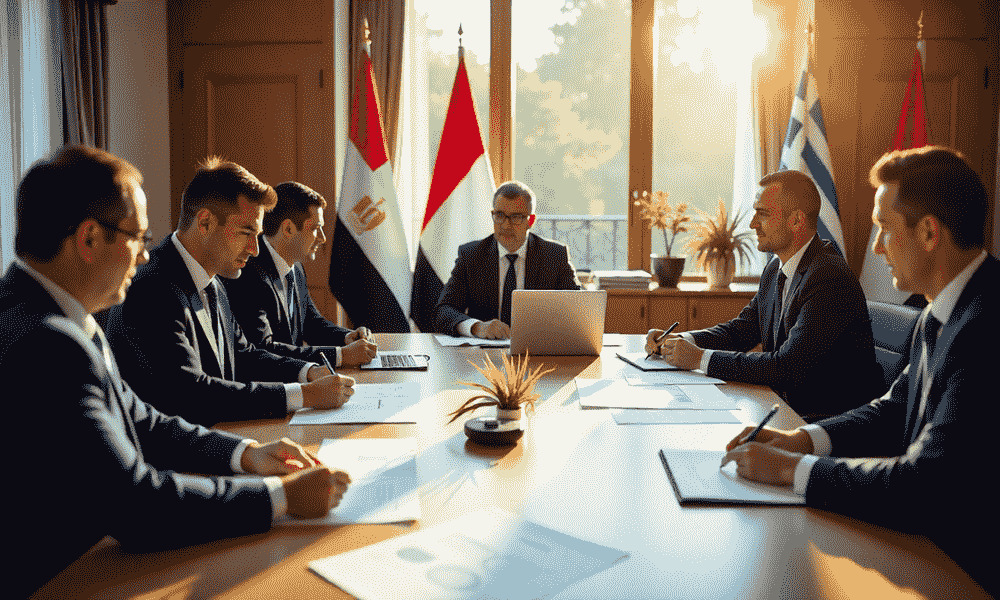
During a recent meeting at the International Monetary Fund (IMF) and World Bank (WB) Annual Meetings held in Washington on October 18, 2025, Egypt’s Minister of Finance emphasized the country’s dedication to enhancing collaboration with Greece. The meeting, which brought together ministers and financial leaders from around the world, was seen as an opportunity for Egypt to reaffirm its commitment to fostering closer economic ties with Greece, as well as to explore new avenues for cooperation in the fiscal and trade sectors.
The Minister of Finance highlighted Egypt’s ambition to expand economic exchanges with Greece. The two nations have a long-standing relationship, and Egypt aims to build upon this foundation to further boost trade, investment, and economic growth. He expressed that the partnership between the two countries was a reflection of their mutual respect and historical connection, which has been nurtured over many years through cultural, political, and economic engagements. Egypt is keen to leverage these deep-rooted ties to create new opportunities that will benefit both nations economically.
One of the key areas of focus discussed during the meeting was the sharing of expertise in fiscal policies, as both countries have significant experience in managing complex tax systems and economic frameworks. Egypt has been undergoing a series of economic reforms in recent years to modernize its fiscal structure, while Greece, having successfully navigated its own economic challenges in recent years, is well-positioned to offer valuable insight. Both nations recognize the importance of improving their tax and customs systems to ensure more efficient governance and facilitate cross-border trade. By sharing best practices and collaborating on these areas, Egypt and Greece hope to streamline their operations and create a more favorable environment for trade and investment.
Another important aspect of the bilateral discussions was the role of private-sector collaboration in driving economic growth. Egypt’s Finance Minister emphasized that private businesses play an essential role in strengthening the economic partnership between the two nations. While the government can set policies and create frameworks for cooperation, it is the private sector that will be the primary engine driving forward investment and business activity. As part of this vision, Egypt is actively seeking to attract more Greek companies to invest in the country’s growing economy. The country has a wealth of investment opportunities, especially in sectors such as infrastructure, energy, manufacturing, and tourism. The Egyptian government recognizes the potential for Greek businesses to contribute significantly to these sectors, creating jobs and stimulating economic development.
Moreover, both Egypt and Greece are well-positioned to benefit from this enhanced cooperation. Egypt, with its strategic location at the crossroads of Africa and the Middle East, is a gateway to many emerging markets. As one of the most dynamic economies in the region, Egypt offers promising investment opportunities, particularly in its burgeoning energy sector, as well as in the fields of technology, healthcare, and tourism. Greek companies, many of which are experienced in international trade and investment, can find new avenues for expansion in Egypt’s rapidly evolving market.
In turn, Greece stands to gain from the increasing trade and investment ties with Egypt. By enhancing its economic relationship with one of the largest economies in the Middle East and North Africa (MENA) region, Greece can secure greater access to the Egyptian market, while also benefiting from Egypt’s growing role as a regional economic hub. Both nations are looking at this expanded partnership as a way to diversify their economies and open new markets. Greece’s involvement in Egypt’s key strategic sectors will help both countries to build a more resilient, interconnected economic partnership.
The meeting also highlighted the importance of investment in key infrastructure projects. Both countries are keen on leveraging their respective strengths to facilitate greater connectivity. Greece, with its robust shipping and maritime infrastructure, could support Egypt’s trade ambitions, particularly in the Mediterranean. Likewise, Egypt’s development projects, such as the New Administrative Capital and the expansion of the Suez Canal, are attractive to investors looking to capitalize on the country’s strategic position as a logistics and transport hub.
The collaboration between the two countries also extends to regional initiatives. Egypt and Greece have long been allies in promoting stability and development in the Middle East and North Africa. This partnership is seen as an important way to address regional challenges, including issues related to energy security, economic integration, and infrastructure development. As both nations continue to strengthen their ties, they are expected to take on a more prominent role in shaping regional economic policy and promoting growth across the wider MENA region.
The private sector’s role in these efforts cannot be overstated. The Egyptian Finance Minister stressed the importance of creating an environment conducive to private-sector investments. This includes simplifying bureaucratic processes, offering incentives, and ensuring that both nations have the necessary infrastructure to support large-scale investments. As part of this effort, the Egyptian government is focused on streamlining regulatory frameworks to ensure that foreign businesses, including those from Greece, can more easily establish operations in the country.
Egypt’s commitment to expanding its economic and trade relationship with Greece is a reflection of both nations’ desire to build a more prosperous and resilient future together. By focusing on fiscal policy exchange, tax and customs reform, private-sector collaboration, and key investments in strategic sectors, Egypt and Greece are working to unlock the full potential of their economic partnership. This collaboration will not only enhance bilateral ties but will also contribute to the broader regional economic landscape, ensuring long-term growth and prosperity for both nations.
