South Korea Launches Rural Basic Income Pilot in Seven Counties
https://www.businesskorea.co.kr/news/articleView.html?idxno=254441

South Korea Launches Rural Basic Income Pilot in Seven Counties
https://www.businesskorea.co.kr/news/articleView.html?idxno=254441
1 Comment
Submission statement:
As AI-driven automation accelerates urbanization and job polarization, South Korea is experimenting with a rural basic income to counterbalance these effects.
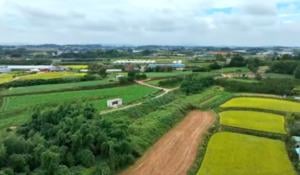
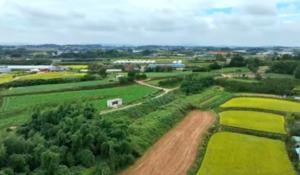
Starting next year, seven counties — Yeoncheon, Jeongseon, Cheongyang, Sunchang, Shinan, Yeongyang, and Namhae — will launch a two-year pilot program where all residents who have lived there for 30+ days receive ₩150,000 (~US$110) per family member in local gift certificates (total 600,000 won per family) These can only be used in local businesses to stimulate regional economies, not replaced by cash.
The initiative, led by the Ministry of Agriculture, Food and Rural Affairs, is part of a broader effort to mitigate rural decline, aging populations, and automation-related job displacement by testing income redistribution models suited to smaller, less industrialized communities.
Interestingly, several regions plan to fund their share using profits from renewable energy projects like solar and wind power — hinting at a potential AI-automation-to-basic-income feedback loop, where machine-driven industries could help sustain human livelihoods in depopulated areas.
If successful, this pilot could inform how AI-era basic income systems might work in decentralized, rural contexts — blending automation revenue, local currencies, and community resilience to maintain economic stability as traditional labor demand continues to shrink.