
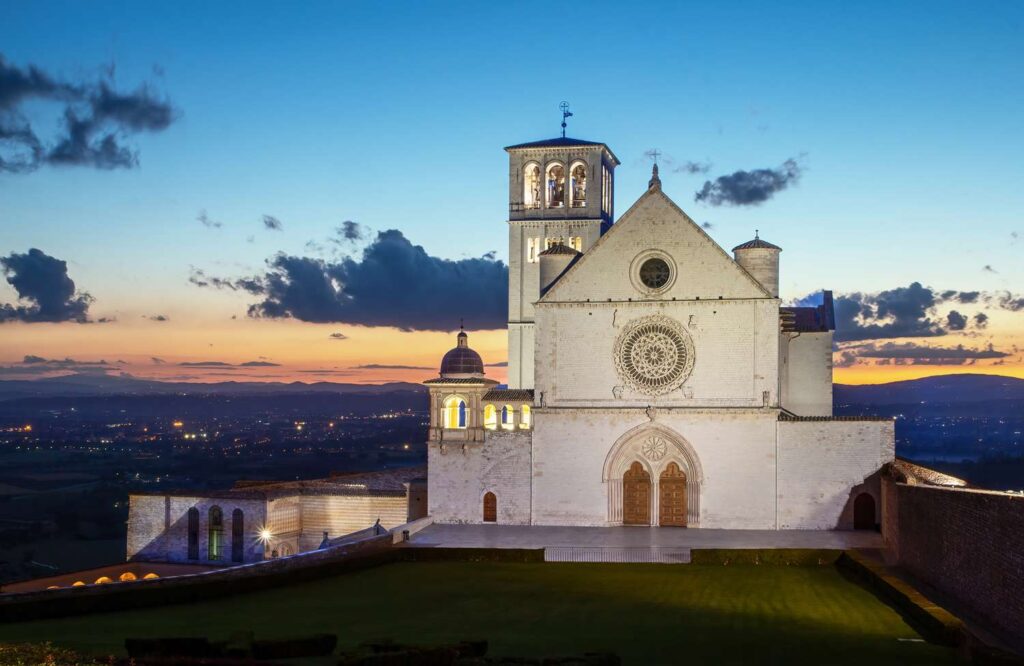
Umbria, known as the “Green Heart of Italy,” has long flown under the radar compared to its next-door neighbor, Tuscany. And having lived here for over 16 years, I’ve come to appreciate the slower pace of life. Recently, though, the exclusive Castello di Reschio has increased Umbria’s luxury tourism profile. So for those looking to explore this verdant region, here’s what should be on your itinerary.
What to See
Umbria comes by its moniker honestly. It’s a land of rolling hills, vineyards and picturesque villages. Assisi is the most famous town, known for its Basilica of Saint Francis of Assisi and stunning works by historic artists Giotto and Cimabue. The tomb of Saint Francis, which wasn’t discovered until the late 1800s, is another landmark.
Additionally, I always recommend Perugia—and not only because it was my home. It’s a lively university town that boasts beautiful vistas of the surrounding landscapes. The fantastic architecture includes Etruscan walls, the Gothic Palazzo dei Priori, and Rocca Paolina, a Renaissance fortress.
What to Do
The landscape between Foligno and Montefalco in Umbria, Italy.
clodio/Getty Images
While in the Perugia area, I recommend touring the wineries around charming Montefalco. Full-bodied Sagrantino is the star of the show here, though Montefalco Rosso is not to be overlooked. Umbria is also great for active travelers, with miles of bikeable roads and beautiful natural parks for hiking.
If you’re willing to deal with the summer heat, don’t miss the renowned Umbria Jazz Festival, which has filled Perugia with live music for 10 days each July since 1973.
To really feel like a local, summers are filled with food festivals called sagras. Each town has its own sagra where you can expect home-cooked food in a relaxed setting, focusing on a local specialties and few tourists.
Where to Stay
The exterior of Borgio Dei Conti Resort.
Dario Garofalo/Borgo Dei Conti Resort
While Umbria isn’t massive, dividing your trip into at least two home bases is highly recommended to appreciate the region’s slower tempo. The newly-renovated Borgo dei Conti Resort is the perfect retreat after a day of touring, as it’s only a 30-minute drive from Perugia’s city center. Consider one of Tenuta di Murlo’s nine luxurious villas on their sprawling estate for more of a hideaway than a hotel, just 45 minutes from Perugia. And to get really off the beaten path, Palazzo Seneca is a family-owned, unpretentious boutique hotel in the heart of Norcia–one of Umbria’s quaint hidden gems.
Where to Eat
Enoteca L’Alchimistra’s lively outdoor seating area at night.
Pier Paolo Metelli/Enoteca L’Alchimistra
No visit to Perugia would be complete without a meal at Osteria a Priori in the heart of the city. In the warmer months, reserve an outdoor table and explore their extensive Umbrian wine list. Add Bottega del Vino to your list for lovely local dishes and a magical atmosphere—they host live music on Wednesday evenings. After a day of wine tastings, Enoteca L’Alchimista will make you feel like part of the family while dining on Montefalco’s charming main square. And when in Norcia, don’t miss Palazzo Seneca’s Vespasia, which has maintained a Michelin star since 2016.
But the best way to explore Umbria remains going off the beaten path by car, as most towns are hard to access by train. Umbria’s capital, Perugia, is a 2.5-hour drive from Rome’s Fiumicino International Airport, and less than 2 hours from Florence.
John Skelton is a member of Travel + Leisure’s A-List and specializes in trips to Italy and LGBTQ+ travel. You can create a tailor-made itinerary with Skelton at [email protected].