
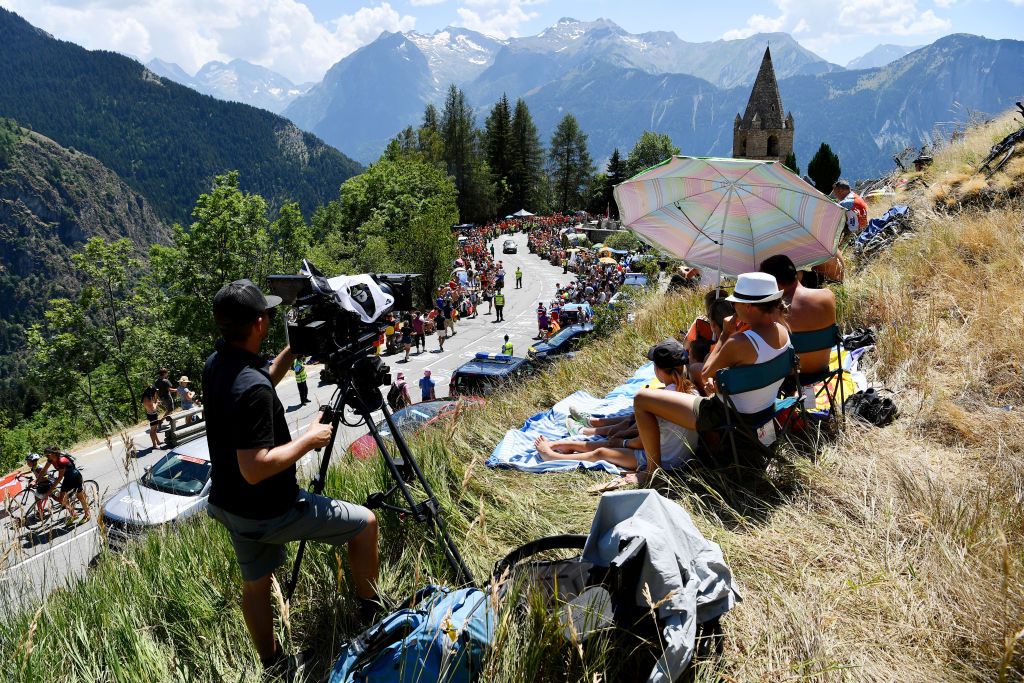
The Tour de France organisers sure have come up with a conundrum for the overall contenders in 2026. Riders like four-time winner Tadej Pogačar and two-time champion Jonas Vingegaard will have to have balanced teams, with ample support in the team time trial and tricky transition stages from powerful teammates, but also enough manpower to give tactical advantages in the high mountains.
There haven’t been many days during the Tour de France for the favourites to let their guards down since the arrival of these two champions, with Pogačar’s propensity for aggressive racing and attacks for what might seem like pointless seconds in the early stages. In 2026, the first nine stages include at least three quite heavy days, with the first uphill finish at Les Angles on stage 3, the punchy Col de Montségur coming late on stage 4, the big Pyrenean climbs on stage 6 and the undulating stage to Ussel on stage 9.
A succession of three mountains leading to the finish in Le Lioran on stage 10 – the site of Vingegaard’s last stage victory over Pogačar in 2024 brings riders to the first rest day, which they will need for the days to come, because it will be in the second week that the accumulated fatigue meets up with even higher and more numerous mountains as the race heads into the Alps.
You may like
With contenders like Pogačar, Vingegaard and Remco Evenepoel so closely matched, it will be the rider who can keep his focus and nerves under control and recover from the repeated efforts who will win in Paris. Cyclingnews takes a look at the key stages where one wrong move, bad day or bad luck can make the difference between winning and losing the 2026 Tour de France.
Stage 1 – Barcelona team time trial
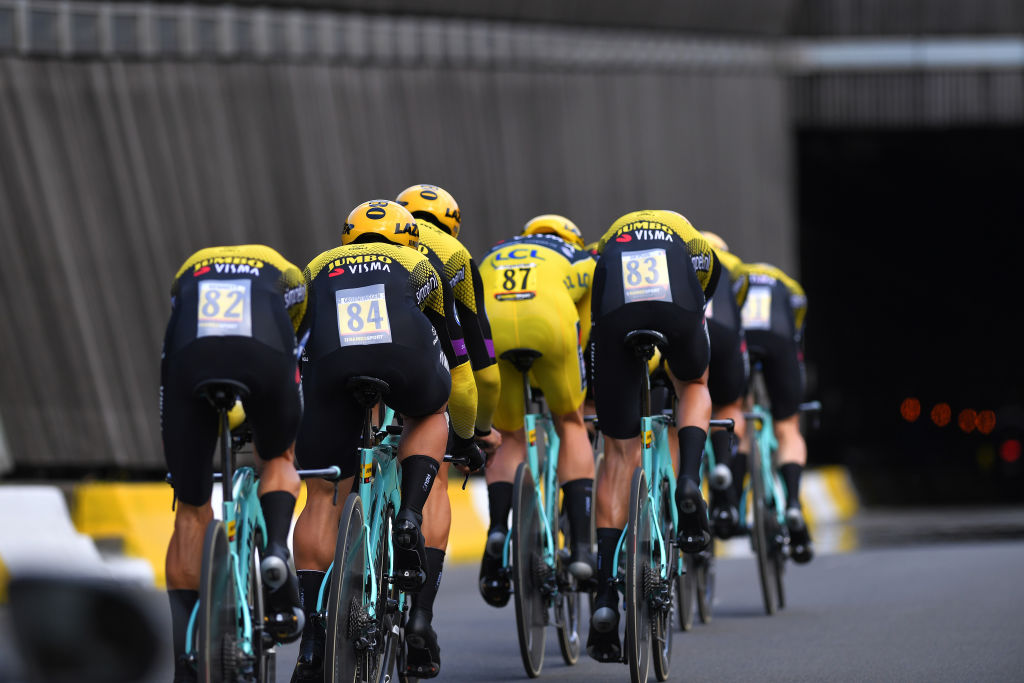
The last team time trial in the Tour de France took place in 2019 (Image credit: Getty Images)
The last time the Tour de France included a team time trial was in 2019, when Egan Bernal won the overall race. That year, Ineos Grenadiers came second on stage 2’s TTT in Brussels behind Jumbo-Visma. The 20 seconds that Bernal lost to Steven Kruijswijk ended up not mattering too much, since he had over a minute’s lead on teammate Geraint Thomas and the Dutchman. But riders like Mikel Landa (then with Movistar) lost more than a minute.
Next year, the distance is only 19 kilometres, shorter than any modern Tour de France team time trial, but the inclusion of the steep Montjuïc climb (1.1km at 5.1%) in Barcelona in the final kilometres will make the stage a tactical challenge. Additionally, the ASO’s new format, where the team’s time is decided by the first rider to cross the line rather than the fourth, will make the Côte de Montjuïc even tougher as the team will be ramping up the pace to launch their leader for the final push to the Olympic Stadium on the second ascent of the same climb.
On the plus side, not having to worry about keeping a team together will make it safer for the leader during the descent between the two climbs. The time gaps at the finish probably won’t be huge, but teams and their leaders will need to carefully work out their strategy and practice executing it before race day.
Stage 6: The First High-Mountain Showdown
The finish at the ski station of Gavarnie-Gèdre marks a major day of climbing in the Pyrenees on stage 6. The climb has only been used in a UCI race once, in the under-23 Ronde de l’Isard, but that day was cut short by an early snowfall. Lenny Martinez (Bahrain Victorious) will be familiar with it after finishing second on that day.
The first high-mountain summit finish will be preceded by the Col d’Aspin and Col du Tourmalet, on roads that have seen most of the duels between Vingegaard and Pogačar. Most likely, the stage will be similar to the 2023 Tour de France, where the race followed a somewhat similar route over the Col d’Aspin and Tourmalet before finishing at Cauterets-Cambasque, which has a similarly long but shallow profile.
You may like
That day, Pogačar got away from Vingegaard and gained 24 seconds but cracked dramatically in the final week before finishing second, more than seven minutes down, in Paris.
It might not be a day to win the race, but for riders like Simon Yates, Tom Pidcock, Carlos Rodriguez and Jai Hindley, who lost two to three minutes that day, it could very well be the place to lose it.
Stage 14: The Brutal Summit at Le Markstein
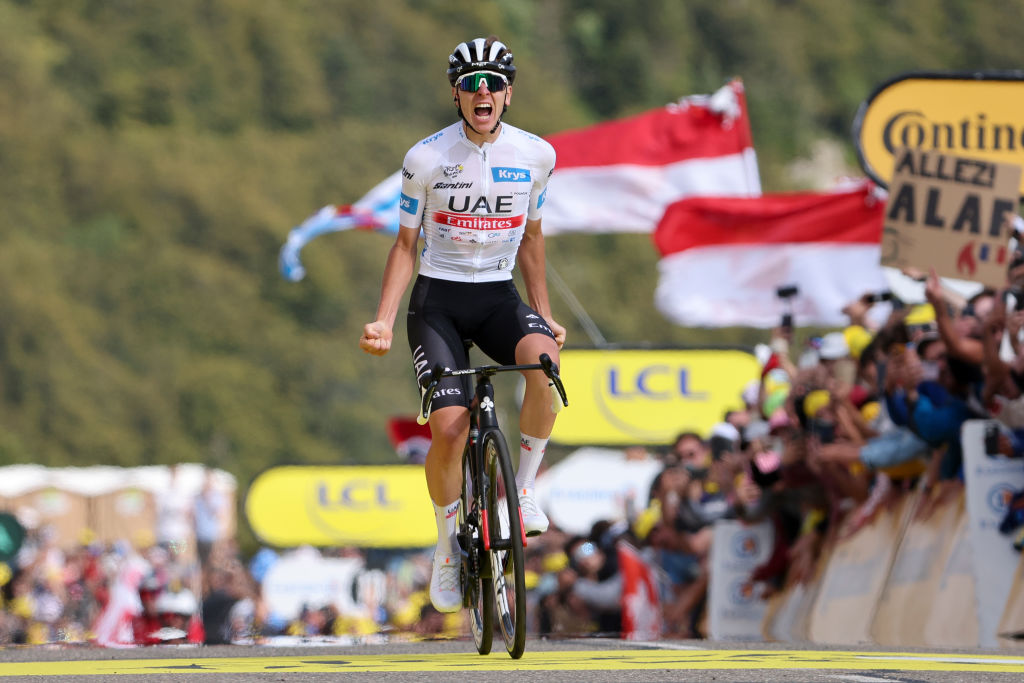
Pogačar’s 2023 victory at Le Markstein (Image credit: Getty Images)
The next dangerous day for the contenders comes on stage 14 after the twisting roads of the Massif Central and demanding stages in Alsace, the race is punctuated by a brutal summit finish at Le Markstein.
Unlike the last time the race finished here in 2023, when Tadej Pogačar won just after the Col du Platzerwasel (7.1km at 8.3%), this time the race approaches the town via the Col du Haag – a 11.2-kilometre slog at an average of 7.3%. The stage also brings riders over the Grand Ballon, Col du Page and Ballon d’Alsace during the 155km stage from Mulhouse.
Coming after the longest stage of the race, the 205km stage 13 from Dole to Belfort, which is by no means flat, this is where recovery is particularly important. Any mistake or mishap in the second week of the Tour will come back to bite tenfold in the extraordinarily testing final week next year.
Stage 16 Individual time trial – The post-rest day GC test
The Tour de France gives riders a rest day before the stage 16 individual time trial, and that can be a good thing or a very bad thing. Some riders come out of the rest day feeling fresh, others not so much. The 26-kilometre race against the clock includes a shallow 9.7-kilometre climb, averaging only 4.3%. But even a shallow grade can compound the pain of a time trial, and it is significant especially after two weeks of racing.
It can be a day of redemption for Remco Evenepoel, who will go in as the outright favourite as world champion, but Vingegaard will welcome the inclusion of some elevation gain, as he fares much better in hillier time trials over flat ones. Pogačar, versatile as ever, seems unbothered by a time trial’s profile in the Tour, and lost only 16 seconds to Evenepoel over 33km last year in Caen, but put minutes into him in the hillclimb TT to Peyragudes. Vingegaard, meanwhile, was 36 seconds behind the Slovenian on the mountain TT but lost just over a minute to his rival in Caen.
With some climbing and some flat, it might not be a day to see big gaps between those two but if the general classification is still tight, it could be a battle for seconds that can be the difference between winning and losing in Paris.
Stages 19 and 20: Alpe d’Huez – Is two better than one?
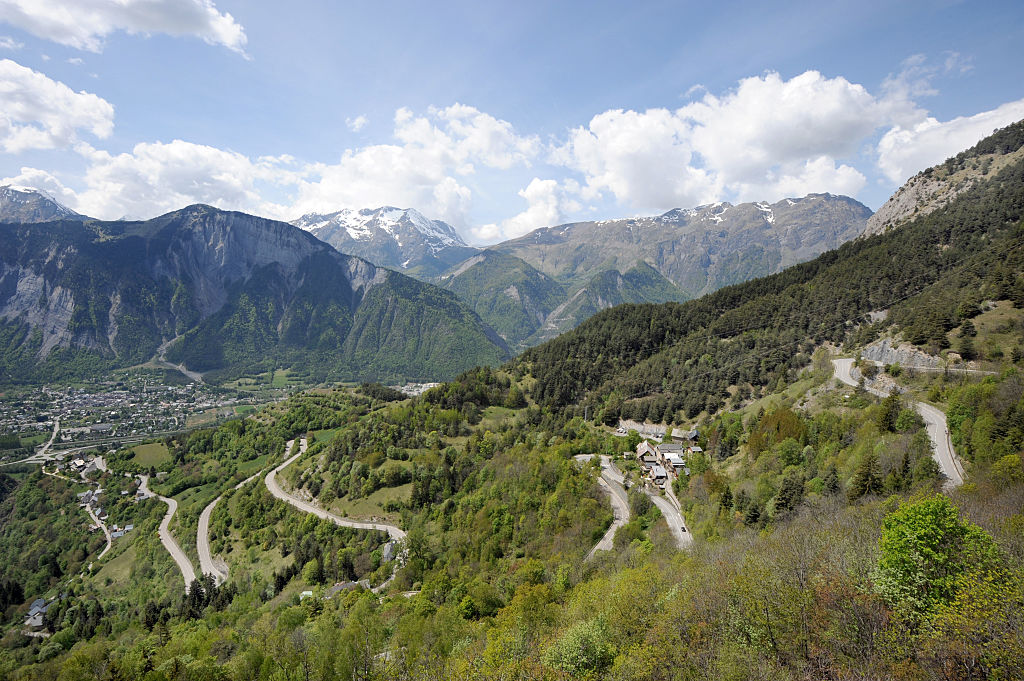
Alpe d’Huez’s double ascent will make for a stunning finale GC showdown (Image credit: Getty Images)
The biggest novelty next to the team time trial format in the 2026 Tour de France is back-to-back summit finishes at l’Alpe d’Huez. Reserve your camper spot now, because the mountain is absolutely going to be heaving with people, campers, barbecues and parties. When it comes to the Tour de France contenders, the GC men will be pushing in all of their chips, probably more so on stage 20 than on stage 19.
Stage 19’s approach is gentler, with the Col d’Ornon (5.4km at 6.4%) giving riders a warm-up for the final push to the top of Alpe d’Huez. The stage is just 128 kilometres long, so the legs will be fresher for the 21 hairpins. The GC contenders will have to keep their powder dry because the next day is merciless, brutal, savage.
Clocking in at 171 kilometres, the penultimate stage starts at Le Bourg d’Oisans and heads straight up the relentless slopes of the Col de la Croix de Fer (24km at 5.2%). A quick trip into the valley and it’s the Col de Télégraph (11.9km at 7.1%) en route to the Col du Galibier (17.7km at 6.9%) with hardly a break in between. Then, the Col de Sarenne (12.8km at 7.3%) takes riders almost to the summit at Alpe d’Huez.
In 2013, the Tour de France went the opposite direction, climbing Alpe d’Huez from Bourg d’Oisans then descending the Sarenne, which led to numerous complaints about the dangers of the route – with bad roads and no guardrails to protect riders from a 30-metre drop. Fortunately, the riders won’t have the same concerns going up, they’ll be too busy dealing with gradients up to 16% in places after three weeks of racing.
The back-to-back stages might mean that Tadej Pogačar isn’t so keen to attack on the Montmartre stage on the final day. It’s going to be a fascinating few stages to watch, and one where not only the riders’ luck, form, and recovery are put to the test – they will also need a perfect season without major injury or illness to challenge for the overall victory.