
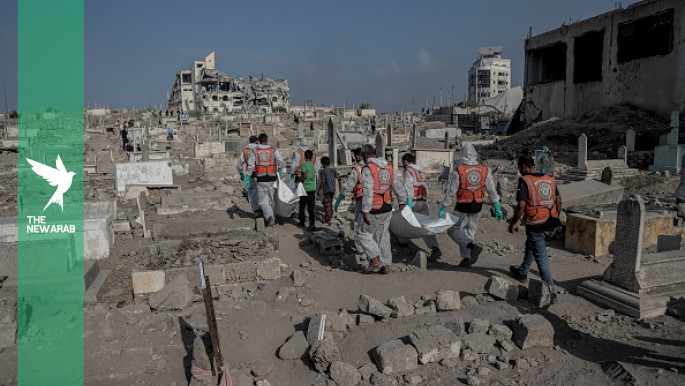
An analysis of UN data by the AFP news agency has revealed the vast scale of destruction in Gaza, where years of Israeli military assaults have left the territory buried beneath mountains of rubble.
A preliminary report by the UN Environment Programme (UNEP), released in August, warned that the debris poses a severe health threat to Gaza’s population.
UNEP estimates that at least 4.9 million tonnes of rubble may be contaminated with asbestos from older buildings, particularly around densely populated refugee camps in Jabalia, Nuseirat, al-Maghazi, Rafah, and Khan Younis.
The agency also reports that about 2.9 million tonnes of debris could contain “hazardous waste from known industrial sites.”
After two years of war, Gaza is now blanketed under more than 61 million tonnes of debris, with three-quarters of its buildings destroyed, according to UN data analysed by AFP.
As of 8 July 2025, the Israeli army had damaged or demolished nearly 193,000 buildings in the enclave — around 78% of all pre-war structures — according to satellite analysis by the UN’s UNOSAT programme.
Further analysis of satellite imagery taken on 22–23 September showed even higher destruction rates in Gaza City, where 83% of buildings have been damaged or levelled.
The 61.5 million tonnes of rubble — nearly 170 times the weight of New York’s Empire State Building — equates to roughly 169 kilogrammes of debris per square metre of Gaza’s territory.
UNEP reports that nearly two-thirds of this debris was generated in the first five months of the war.
The pace of destruction increased in the months before the current ceasefire, producing an additional eight million tonnes of debris between April and July 2025, mostly in the southern areas between Rafah and Khan Younis.