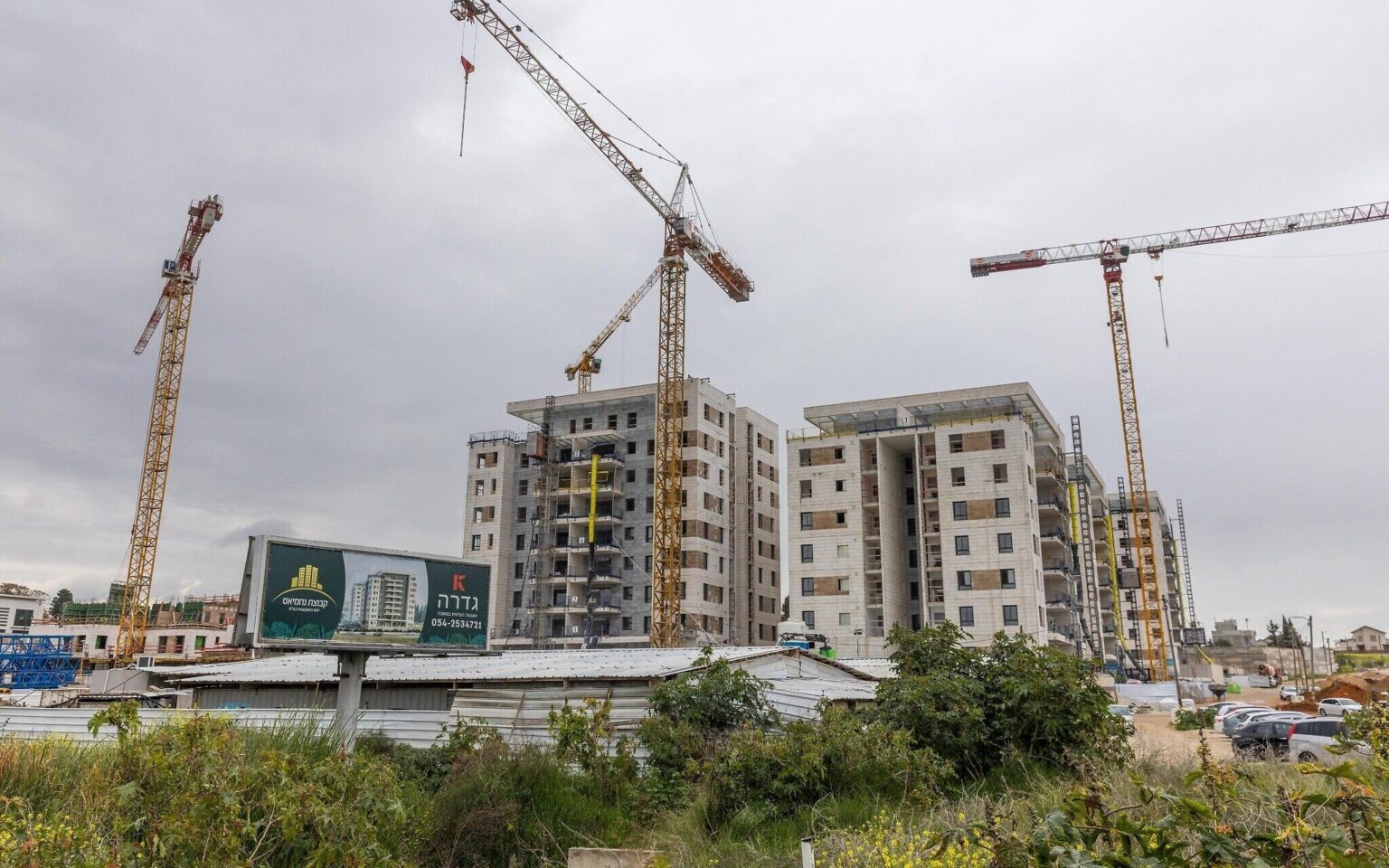
The Israeli government on Sunday approved a new national housing plan aimed at accelerating construction, strengthening local authorities, and expanding the supply of affordable homes across the country, as part of an ongoing effort to curb housing prices and ensure access to housing for all citizens.
The plan, jointly led by Housing and Construction Minister Haim Katz and Finance Minister Bezalel Smotrich, represents a NIS 1.4 billion ($375 million) investment designed to sustain the momentum generated by the government’s real estate acceleration programs over the past two years. Those programs, they say, have driven record levels of land marketing and building permits, helping stabilize housing prices after years of sharp increases.
“The data on the ground proves that focused acceleration programs deliver results,” said Katz. “We’ve seen widespread land marketing, faster construction, and a growing housing supply throughout the country. This plan keeps the momentum going, strengthens local authorities, and continues to inject oxygen into the construction sector, which remains a central growth engine for the economy.”
The plan includes several initiatives to address both the housing supply and structural challenges of Israel’s housing market. NIS 750 million ($228 million) will be allocated to encouraging construction in peripheral regions through deeper subsidies for development costs. NIS 300 million ($91 million) will go toward incentivizing local authorities to increase their populations with housing expansion projects. Older neighborhoods will receive NIS 250 million ($76 million) for strengthening urban renewal plans, while NIS 30 million ($9.1 million) will be allocated for long-term planning for privately owned lands with multiple ownerships.
Meanwhile, NIS 60 million ($18.2 million) will be invested in streamlining the recruitment of construction workers to address labor shortages. According to a separate announcement sent by the same ministries, the government will look to increase the quota of foreign workers available by 30,000, beyond the 60,000 already working in Israel.
The building industry faced a massive shortage of construction workers in the immediate aftermath of the October 7, 2023, Hamas massacre, when Palestinians from the West Bank and Gaza were barred from entering Israel and other foreign workers fled amid the war.
That plan would seek to shorten the time to bring in foreign workers by improving the screening and absorption processes, as well as signing agreements with new countries for the recruitment of workers and eliminating quotas at foreign construction companies to allow them to expand their activities in Israel.
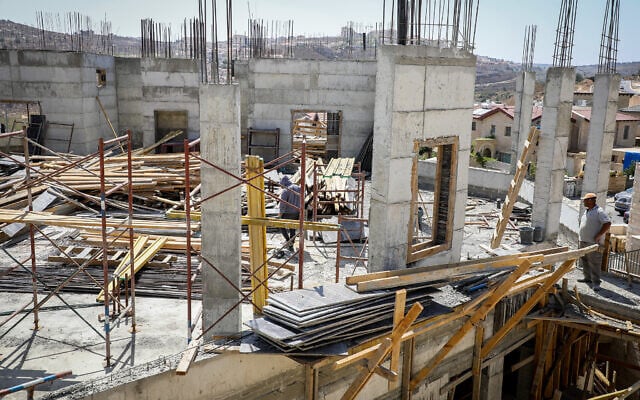
Illustrative: Palestinian construction workers at a building site in the Israeli settlement of Efrat in the West Bank, on September 29, 2020. (Gershon Elinson/Flash90)
The plan aligns with broader government priorities, including developing the Negev and Galilee regions and maintaining priority housing benefits for military reservists through discounted land lotteries under the “Apartment at a Discount” program, the ministries said.
In keeping with government policy introduced during the Gaza conflict, housing programs will prioritize military reservists first.
“Those who give to the state will receive from it in return,” Katz said.
Smotrich, who has made economic development in the periphery a key issue, said the plan was designed not only to address housing affordability but also to reshape the country’s demographic and economic map.
“The housing market is an enormous growth engine for the Israeli economy,” Smotrich said. “With the right steering, it can bring real relief to young couples and change the demographic reality in the Negev and Galilee. This plan focuses on expanding development subsidies and urban renewal in the periphery and will enable the marketing of tens of thousands of discounted housing units for eligible citizens — with a special focus on reservists.”
He added that the plan is intended to generate long-term growth, job creation, and regional development “in the areas that need it most.”
In recent years, Israel has launched a series of national programs to tackle its housing crisis and make homes more affordable, with few results to show. These have included multiyear plans to accelerate construction, expand infrastructure, and streamline planning and permit processes.
The government hopes this initiative will help stimulate the construction industry, which employs tens of thousands of Israelis and foreign workers, and drive economic activity amid concerns of slower national growth in 2026.
Housing affordability remains one of Israel’s most pressing economic issues. Over the past decade, home prices have more than doubled, fueled by population growth, limited land supply, and bureaucratic delays. Recent figures from the Central Bureau of Statistics show that housing prices have declined slightly in recent months, due in part to two years of war in Gaza, steadily high interest rates, decades in which prices climbed inexorably, and a record supply of unsold new housing.