
Sponsored by Cape Fear Valley Health.
It was New Year’s Eve in 2024, a day that signaled the end of a tough year. Nyoshi Bizzell had spent six months fighting cancer and, on this day, had taken her young daughter Aureon and friends skating. She had lost track of time until she got a call from hospital staff reminding her that she was late for her final radiation treatment.
“So, I gathered up my daughter and all her friends and we went to the cancer center together,” she said.
At the same time, her teenage son Jaden was out with his friends. He knew his mother would be ringing a bell that day, signaling the end of her treatment, and his entire group trooped over to the hospital to watch.
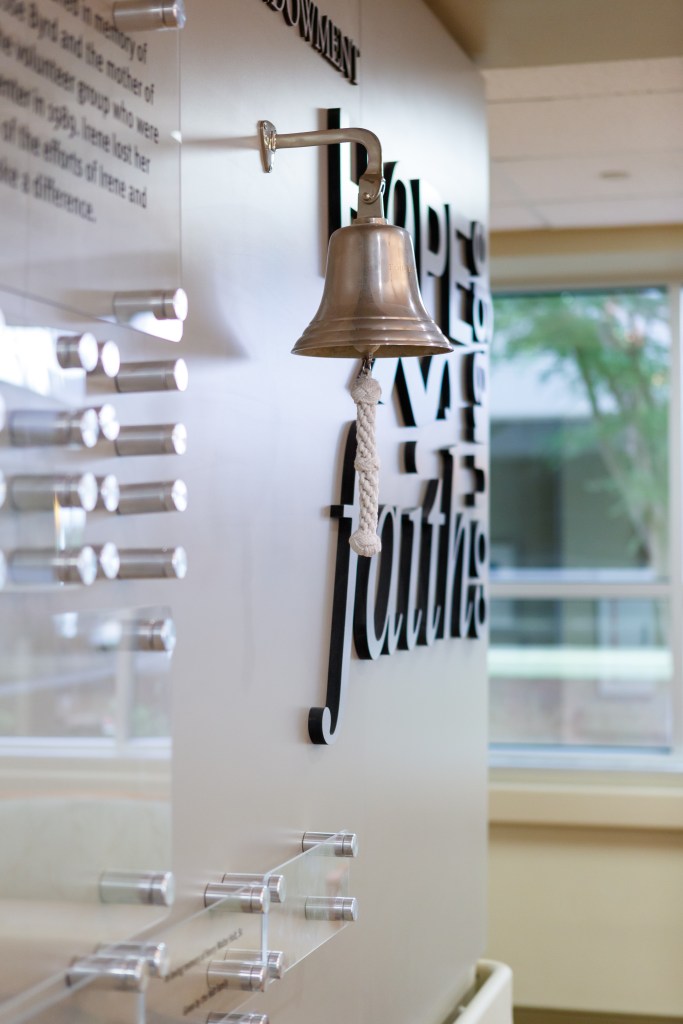 Bizzell rang her first bell—signifying the end of her chemo—on Oct. 15, 2024, about five months after her diagnosis. Credit: Tony Wooten / CityView
“I remember looking around and seeing the hospital lobby full of kids,” Bizzell recalled. She counted eight boys and girls gathered there to cheer her on.
”It was great because those kids had seen the journey I was on,” she said. “They saw me with the drainage tubes hanging off me, and they saw me go through chemo and lose my hair, so to have them there at my last and final treatment and see me ring the bell was one of those things that closed a chapter for all of us.”
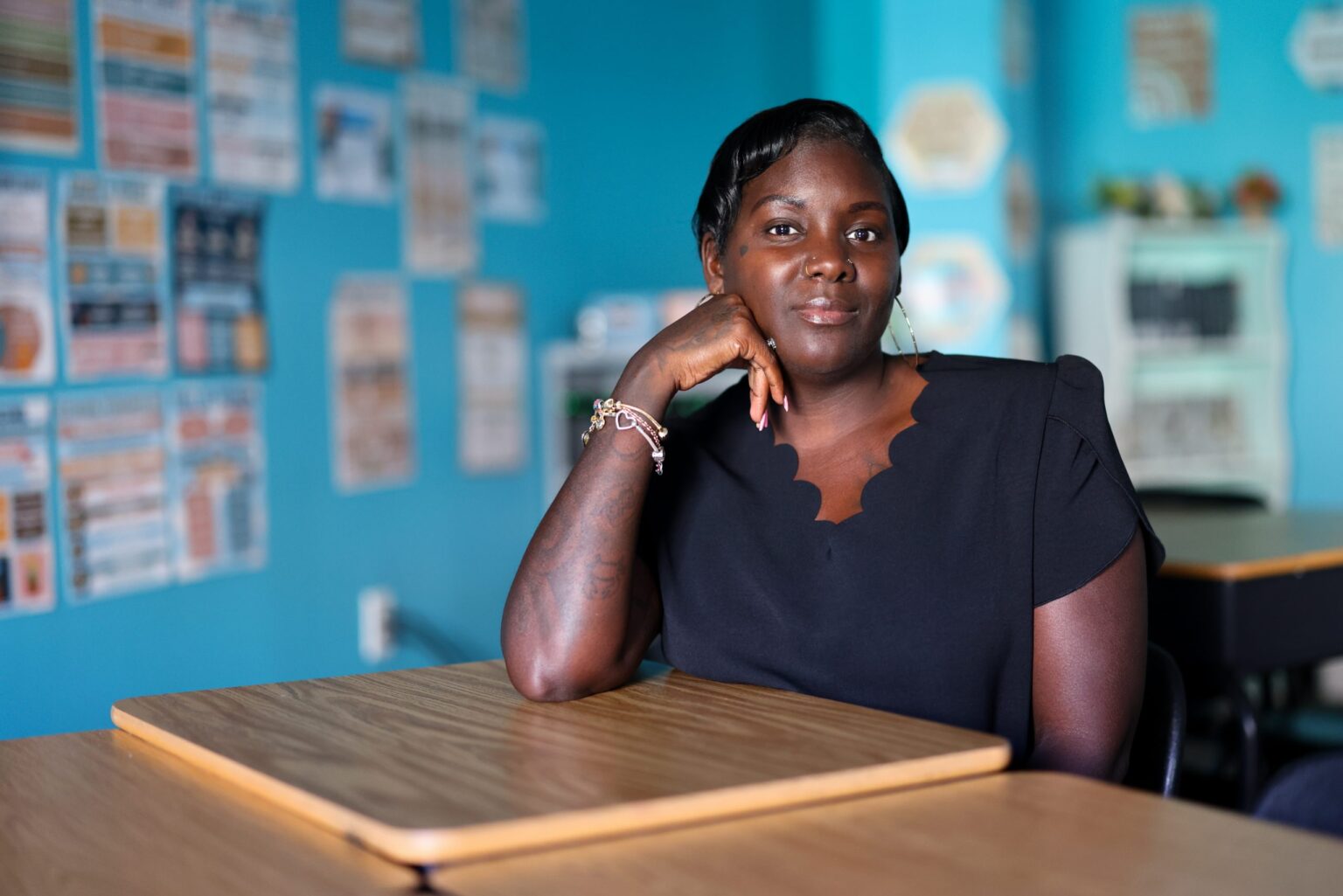
Bizzell, 41, is an 8th-grade English language arts teacher at The Capitol Encore Academy in downtown Fayetteville. She is a single mom to Aureon, her 11-year-old daughter, and Jaden, her 18-year-old son. A native of Johnston County, she once ran her own business and five years ago had started substitute teaching to earn extra money.
She realized that she not only loved teaching, but she was good at it, and now she’s wrapping up a Bachelor of Science degree in interdisciplinary studies at Fayetteville State University, expecting to graduate this December.
Bizzell received the phone call that changed her life last year, at the end of May, just before summer break. She had felt a lump in her right breast during a self-examination, but wasn’t worried. After all, her family had no history of breast cancer, and she had always been healthy.
She recalls it was right before her 40th birthday, and she was busy setting up doctors’ appointments and getting up to date on her physicals.
“I went to get the lump checked out and got a mammogram,” she said.
The mammogram detected a mass. Yet Bizzell scheduled a biopsy with no fear, because the likelihood of cancer didn’t resonate with her—or she refused to believe it could happen to her.
She was at work when she got the call telling her she had Stage 2 breast cancer with some lymph node involvement, indicating her cancer was beginning to spread.
“I remember just breaking down,” she said. A school principal, who is also Bizzell’s friend, drove her home, where she confronted one of the hardest aspects of dealing with her cancer—telling her children.
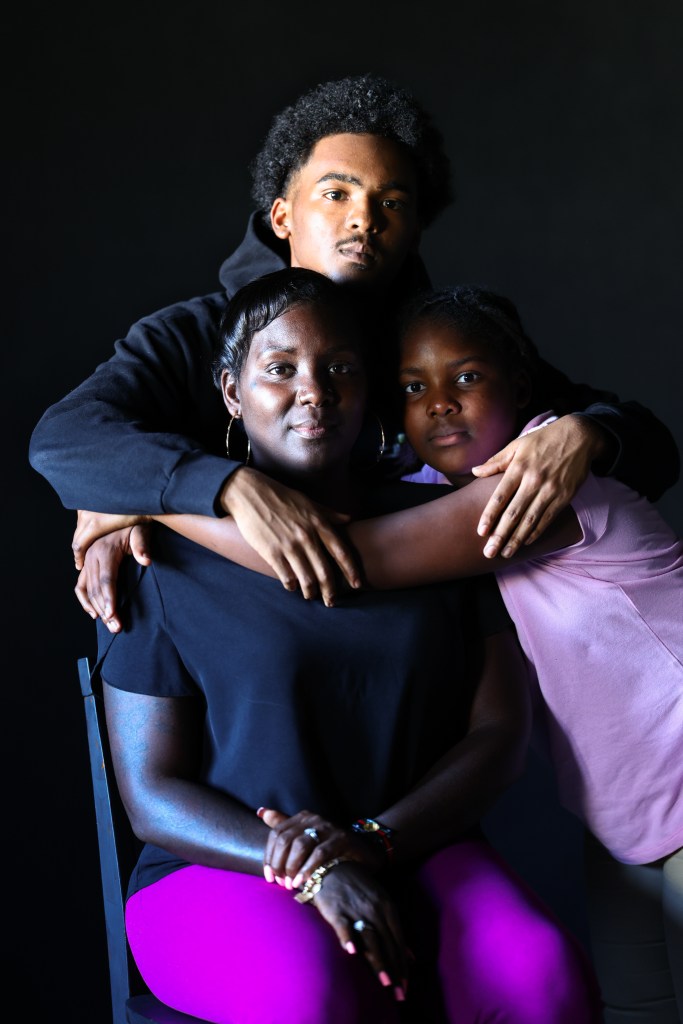 Bizzell credits her co-workers, who are like family, her son Jaden and daughter Aureon, who watched over her and cheered her on, and her medical team at Cape Fear Valley Health, who helped her feel safe. Credit: Tony Wooten / CityView
She told her son first.
“I just took a breath and told him the doctors had found a tumor on my breast,” she said, “and we don’t know what’s next, we’re just going to go from there.”
Her daughter didn’t completely understand and initially went to stay with her father. After a week she was so worried about her mother that she moved back in with her, and together with her brother, participated in caregiving and providing comfort.
Her treatment called for a mastectomy, chemotherapy, and radiation.
“People say chemo feels like death, and while I’ve never felt death, I believe that,” she said. “I couldn’t eat, could hardly drink anything, and it felt like my body was shutting down.”
She cried the day she lost her hair.
“I had locs and I kept my hair up in a little bun,” she said. “I remember taking my hair down one day, and it started falling out.”
She called a co-worker to come to her house and cut it.
“It didn’t hit me initially because I think I was kind of emotionally detached from some of the aspects of it all,” she said. “But when my co-worker got the scissors and started cutting, I just bawled.”
Bizzell experienced other physical changes, too. She lost her eyebrows and body hair. Her skin developed dark patches, and her nails started turning black. There were times she wanted to give up and stop treatment.
“I felt like my body was no longer my own, and I didn’t recognize myself,” she said. “But I couldn’t give up or stop fighting because I had my kids at school and my own kids at home.”
She rang her first bell—signifying the end of her chemo—on Oct. 15, 2024, about five months after her diagnosis.
“All my friends from work left school early to meet me in the lobby of the cancer center to see me ring my bell,” she said. “Then I moved into radiation treatments.”
She received daily doses of radiation for 30 days, and despite the side effects, which eroded her energy and left her with tight, burning skin, she went to work every day, fighting through the fog of fatigue. This time, she could see the light at the end of the tunnel.
Today, Bizzell is healing from reconstructive surgery performed by Dr. Leif Norberg, a plastic surgeon at Cape Fear Valley Plastic Surgery. Her hair is growing back. She’s regained her energy, and she’s feeling more like her old self before she was diagnosed. She feels fortunate she caught her disease early. Further testing had shown she had two tumors, even though she only felt one.
“I like to say I saved myself by doing a self-exam, realizing that something wasn’t right, and then going to the doctor,” she said. “If I had not followed up, I would have missed it, and it could have been much worse.”
Cancer is not a journey Bizzell could have attempted to navigate alone. She credits her co-workers, who are like family, her children, who watched over her and cheered her on, and her medical team at Cape Fear Valley Health, who helped her feel safe.
“I could tell that every nurse actually cared,” Bizzell said. “I interacted with them from the time I walked into the building—the ones that took my blood pressure, the ones that hooked me up to my chemo—every one of them was nurturing, and made sure I was okay at every step.”
Bizzell’s oncologist is Dr. Kenneth Manning, and she calls him “amazing.”
He calmed her nerves just by being willing to answer her questions.
“For Dr. Manning, there was no such thing as a dumb question,” she said. “And everyone I encountered at the hospital was compassionate, informative, and attentive.”
To learn more about Cape Fear Valley Health’s Cancer Care services, visit capefearvalley.com/cancer.
Read CityView Magazine’s “Arts & Culture” October 2025 e-edition here.