
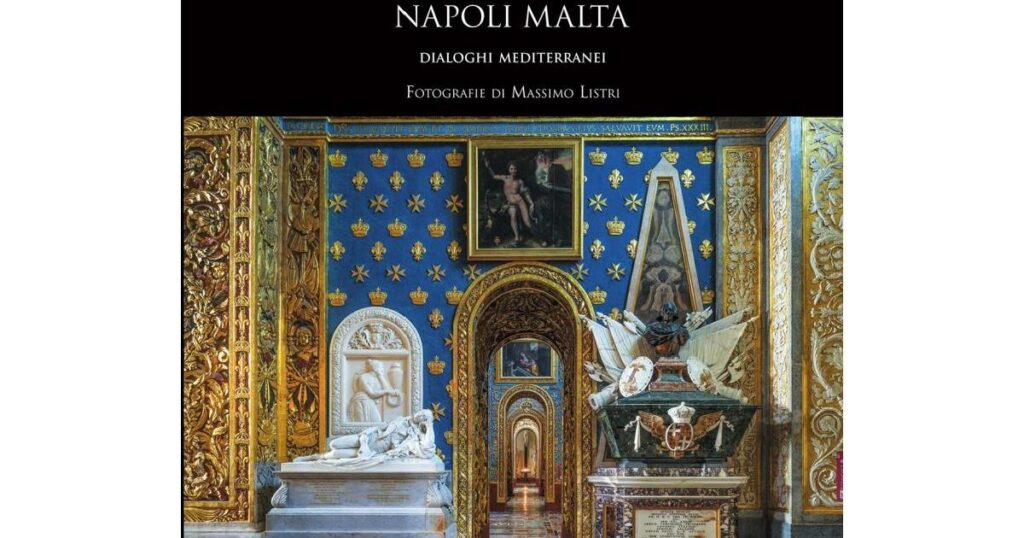
The 24th edition of the Calendario Di Meo 2026, celebrating ‘Naples and Malta – Mediterranean Dialogues’, will be officially presented at the Sacra Infermeria, Valletta, tomorrow, October 27. Promoted and produced in a limited edition and with no commercial purpose by the association Di Meo Vini ad Arte, the almanac aims to serve as an example of dialogue among different peoples and cultures.
The calendar opens with a contribution by Ian Borg, deputy prime minister and minister for foreign affairs and tourism. He writes: “In unprecedented times, with geopolitical tensions rising across the globe, the Di Meo Calendar 2026 is a message of unity. It reminds us that peace is rooted in mutual respect, shared memory and collaboration. By recognising the historic friendship between Naples and Malta, we reaffirm the enduring power of cultural diplomacy and the bonds between peoples. May this calendar inspire reflection and pride. Above all, may it remind us of the importance of unity for our shared future – in the Mediterranean, in Europe and beyond.”
Generoso Di Meo, creator of the calendar, highlights how at various points in its history, Malta was under the rule of the Kingdom of Naples and later of the Kingdom of the Two Sicilies.
“These dominations influenced Maltese culture, with profound impacts on architecture and religion. Italian was also Malta’s official language until 1934, while cultural exchanges kept relations alive and vibrant even before the unification of Italy. This is yet another reason to discover places of great historical and artistic interest, and cultural, political and religious realities that have served as bridges among the diverse cultures of the Mediterranean, in a dialogue that has always been respectful of differences and open to exchange and understanding.”
The calendar features photography by Massimo Listri, a master of architectural and interior photography. Among others, one can admire the Barrakka Gardens, the Grand Master’s Palace, the Auberge de Provence, Casa Rocca Piccola, the National Library, the Oratory of the Jesuit Church, the Manoel Theatre (all in Valletta), the Archbishop’s Curia (Floriana), the Rotunda of Mosta, Palazzo Dorell (also known as Bettina’s Palace, Gudja), the Verdala Palace (Siġġiewi), Palazzo Parisio (Naxxar) and Villa Bologna (Attard).
Each image in the calendar is accompanied by a story exploring the bond between Naples and Malta. Contributing to the texts are journalists, musicologists, professors, and art critics who narrate the ties linking the two Mediterranean cities.
The 2026 calendar is produced under the patronage of the Ministry for National Heritage, the Arts and Local Government of Malta and Visit Malta. Supporting the project are also the Fondazione Mele and main sponsors Ottogas, Aip, Gallo, Graded, L’Oréal, Gruppo Tangari-Koller and Altergon. Precious contributions also come from sponsors Ruesch, Giochi del Mediterraneo Spa, Casa di Cura Montevergine, Tecno, Medica, Miamo, CapriNatura, The Farsons Foundation, Tebro, Pentauto and Gewiss.