
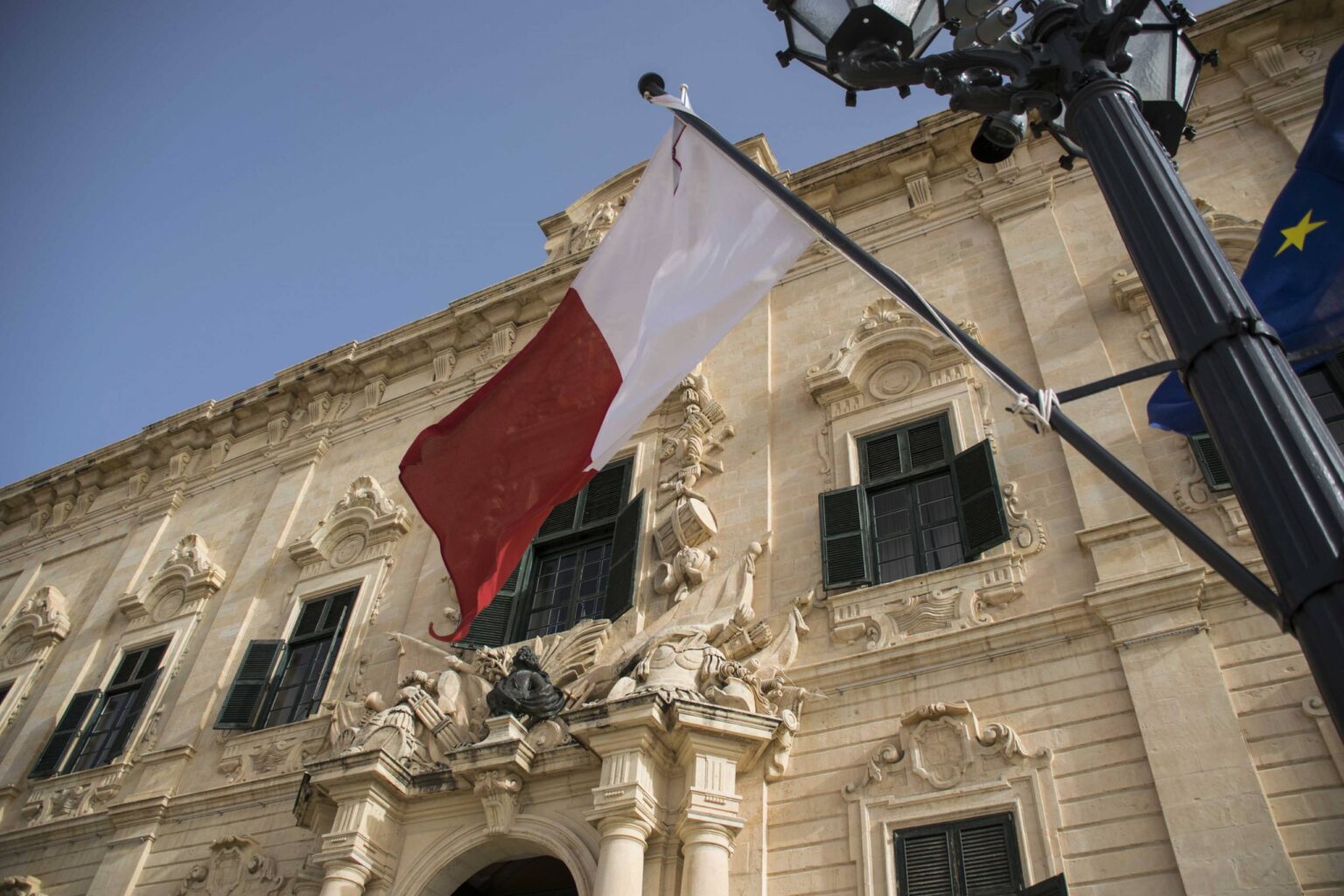
 Photo: Miguela Xuereb
Malta’s rule of law standing has slipped for another year, according to the World Justice Project’s (WJP) 2025 Rule of Law Index, released today.
The country fell one place to 31st globally, a marginal but symbolic drop that places it firmly in the bottom third of Western democracies and jars starkly with the government’s relentless narrative of progress and reform.
The report reveals a nation at a crossroads: a safe society where fundamental rights are generally respected, yet one where government power is inadequately checked, corruption is perceived as rampant within the legislature, and the wheels of justice have nearly ground to a halt.
This disquieting international assessment arrives just days after a damning report from The Daphne Caruana Galizia Foundation revealed that 46% of homicide cases from the last decade remain unresolved, with Malta’s court disposition time for criminal cases standing at a staggering 527 days, nearly four times the Council of Europe median.
A pattern of persistent weakness
The WJP data shows a steady decline in Malta’s overall score since 2021. More telling than its global rank of 31st out of 143 countries are its positions within peer groups: a lowly 23rd out of 31 nations in the EU, EFTA, and North America region, and 31st out of 51 high-income countries.
“The data indicates that Malta’s primary challenges lie in constraining government powers, combating corruption, and ensuring effective regulatory and civil justice,” the report states, pinpointing a “democratic deficit” at the heart of the archipelago’s governance.
The most alarming scores are in Constraints on Government Powers (global rank: 43rd), which saw a statistically significant decline. Sub-factors like “Sanctions for official misconduct” and “Limits by legislature” scored a mere 0.50 out of 1, painting a picture of an executive operating with impunity and a parliament failing in its core oversight role.

The Absence of Corruption factor unveils a stark institutional split. While the judiciary and police score relatively well, the legislative branch received a catastrophic score of 0.36 – the lowest of any sub-factor in Malta’s profile, suggesting profound public and expert concern that MPs use public office for private gain.
Perhaps most tangibly felt by citizens is the crisis in justice. The Civil Justice system ranks 48th globally, crippled by what the index identifies as “unreasonable delay,” which scored an abysmal 0.28. This finding provides a statistical backbone to last week’s “Justice in Paralysis” report, which detailed families waiting years, and even decades, for resolution in murder cases.
This objective, data-driven critique stands in stark opposition to the narrative peddled by Prime Minister Robert Abela’s government and its apologists. Just last week, Labour MEPs in Strasbourg dismissed European rule of law concerns as politically motivated attacks.
MEP Alex Agius Saliba questioned why Malta was “being attacked once again,” while MEP Daniel Attard accused colleagues of using “the murder of a journalist to serve their own political agenda,” describing concerns as “sheer deceit.”
This defensive posture aligns with a pattern of deflection. The government consistently points to “unprecedented” constitutional reforms, such as changes to judicial appointments. However, as the WJP index and the European Commission’s latest rule of law report note, these have thus far failed to translate into a “robust track record” of holding the powerful to account or delivering timely justice.

The government’s refusal to engage substantively with critics was further highlighted last week when an OPM employee, Neville Gafà, was filmed removing flowers from Daphne Caruana Galizia’s memorial—an act condemned by three foreign embassies but not by the Prime Minister, who invoked “freedom of expression.”
Malta’s decline is part of a wider, worrying trend. The 2025 WJP Index notes an accelerating global rule of law recession, the eighth consecutive year of decline, primarily driven by weakening checks on government power and judicial independence.
Within the EU, Malta’s performance remains an outlier for the wrong reasons. It languishes behind regional peers and is clustered with countries whose democratic credentials are frequently questioned.
The European Commission has repeatedly cited “little to no progress” in key areas for Malta, including establishing a track record in high-level corruption cases and improving transparency.

