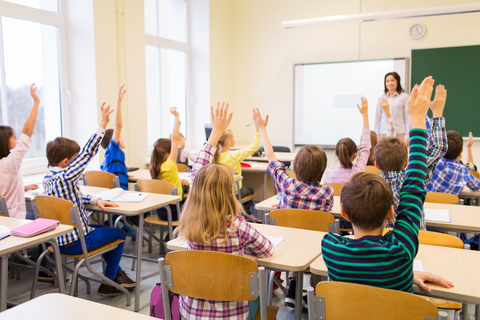
The number of private pre-university institutions in Romania has nearly tripled over the past decade, according to a new study by the Romania Education Alliance (REA). Around 6% of Romania’s school-age population is now enrolled in private education, up from just over 3% in 2015, reflecting a steady shift in parental preferences toward more flexible and internationally aligned schooling.
The strongest growth has been recorded in urban and economically active regions. In Ilfov County, the share of students attending private kindergartens, schools, and high schools has increased fivefold in ten years, from 3% in 2015 to 15% in 2025. The proportion of private education institutions has also doubled in the same period, from 18% to 35% of the total.
Parents are drawn by a mix of higher academic standards, smaller class sizes, individualised attention, and access to global curricula. Many also cite the focus on transferable skills such as critical thinking, collaboration, and creativity, as well as the emphasis on emotional wellbeing and a safe, inclusive environment.
“Private education is no longer perceived as a niche alternative, but as a strong pillar of the modern education system. The difference lies not only in infrastructure but in the educational vision — in private schools, the child is at the centre of learning, and education becomes a personalised, coherent, future-oriented process,” said Anca Macovei Vlăsceanu, co-founder and CEO of Romania Education Alliance.
The report also compares Romania’s national education system with the International Baccalaureate (IB) model, highlighting key differences in approach and outcomes. While the national system remains largely focused on theoretical knowledge and standardised testing, the IB model promotes critical thinking, project-based learning, and a global outlook.
Parents interviewed for the study believe that IB programmes are better aligned with the requirements of top universities and the skills needed for future careers in increasingly dynamic environments. At the same time, more private schools in Romania are strengthening national programmes by integrating active learning methods, practical applications, and emotional and social development into their teaching, helping students prepare more effectively for the national Baccalaureate.
According to REA, this expansion reflects both the evolution of family expectations and the growing role of private institutions in shaping Romania’s educational landscape, particularly in major urban centres such as Bucharest, Cluj-Napoca, Iași, and Timișoara.