
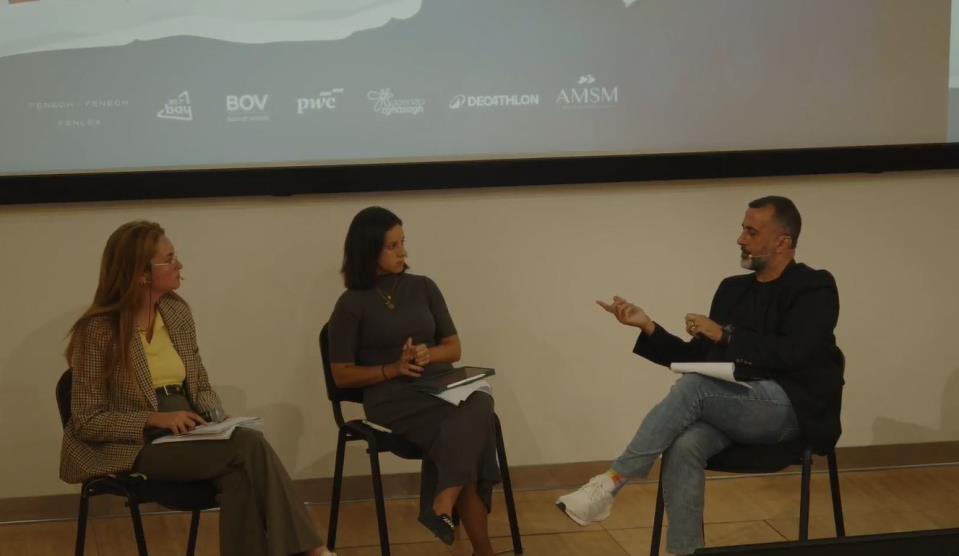

A debate on abortion held at the University of Malta brought together opposing perspectives on one of the country’s most sensitive social issues.
Organised by the Kunsill Studenti Universitarji (KSU) and moderated by broadcaster and academic Andrew Azzopardi, the event featured Marianna Debono from the Life Network Foundation representing the pro-life position, and lawyer Elise Micallef Peplow, who spoke in favour of the pro-choice stance.
Azzopardi opened the discussion by encouraging a balanced and respectful exchange, noting that such conversations are vital in addressing complex and often divisive topics. The event followed Malta’s recent legal amendment allowing abortion in cases where a pregnant woman’s life is in immediate danger—an issue that continues to generate wide public debate.
Debono, speaking for the pro-life position, argued that human life begins at conception and that an embryo, possessing a unique genetic identity, is biologically distinct and deserving of protection. She stated that this viewpoint is supported by scientific evidence and emphasised that “from conception, an embryo is a complete organism that grows and develops continuously.” According to Debono, the right to life forms the foundation of all other human rights, and its protection should remain central to Maltese law.
Addressing medical concerns, Debono referenced statements by local obstetricians indicating that pregnant women with serious illnesses, such as cancer, receive necessary treatment even when it may affect the pregnancy. She questioned claims that current laws prevent adequate medical care, insisting that both mother and child can be safeguarded. Debono also referred to studies linking abortion to long-term psychological distress, suggesting that society should prioritise practical support for women in crisis rather than expanding access to abortion. On the legal front, she said that abortion should remain a crime, but penalties could reflect compassion, especially in cases where women may not fully understand the implications of their decision.
Micallef Peplow, representing the pro-choice perspective, argued that abortion should be regarded as a form of healthcare and a matter of bodily autonomy. Citing international medical guidelines from the World Health Organization and the Royal College of Obstetricians and Gynaecologists, she said abortion can be necessary in specific circumstances, such as when there is a risk to the woman’s health or when foetal anomalies make survival impossible. She referred to cases in which Maltese women have had to travel abroad for medical termination, describing this as evidence of the limitations of current legislation.
She stated that while Malta’s law has changed to permit abortion when a woman’s life is in danger, it remains too narrow and can delay urgent care. Micallef Peplow also raised concerns about social and economic pressures faced by women, arguing that criminalisation adds to their hardship. “Women in situations of poverty, domestic violence or poor health should not face prosecution for making difficult choices about their own bodies,” she said. She called for the decriminalisation of abortion to ensure that women and doctors are not penalised for seeking or providing medical care.
On issues such as teenage pregnancy and contraception, Micallef Peplow emphasised the importance of education and access to reproductive health services. She suggested Malta could adopt approaches used in other European countries, where counselling and medical support are provided before an abortion decision is made. She also pointed out that nations with legal access to abortion often record lower rates of the procedure, largely due to comprehensive sex education and accessible contraception.
Throughout the debate, Azzopardi guided the discussion on key questions such as when life begins, what constitutes a human right, and how society should respond to vulnerable women. Both speakers agreed that the issue involves ethical, medical and social complexities, but they differed sharply on the solutions. Debono maintained that every unborn life holds inherent dignity and value, while Micallef Peplow argued that protecting women’s autonomy and health should take precedence in law and policy.
As the debate drew to a close, Azzopardi thanked both participants for engaging in a reasoned and respectful exchange. The event reflected the broader national conversation surrounding abortion, as Malta continues to navigate its position between maintaining traditional values and addressing calls for greater reproductive rights. While no consensus was reached, the discussion underscored the importance of open dialogue in understanding a subject that remains deeply divided across Maltese society.