
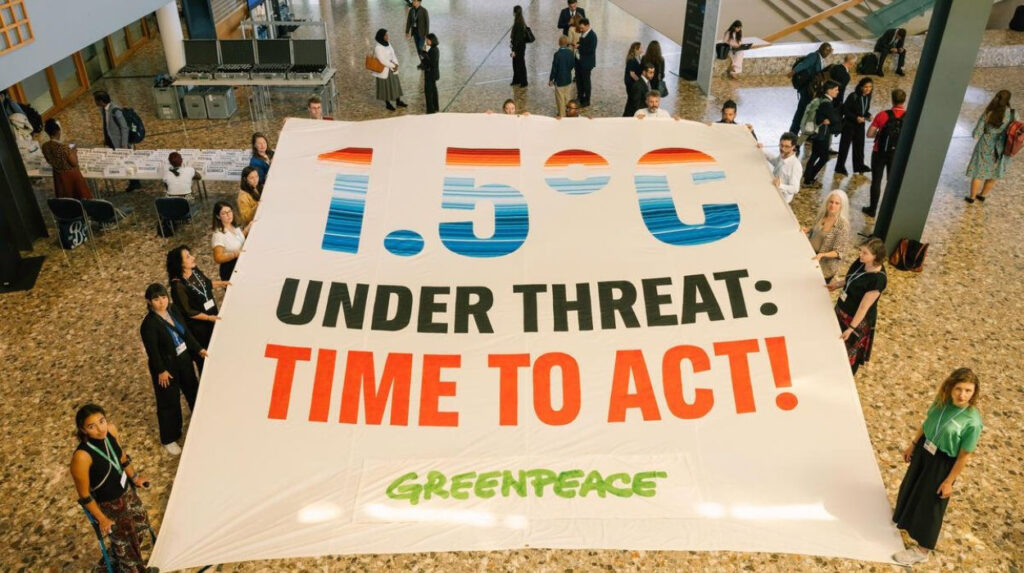
In October 2025, the European Court of Human Rights (ECtHR) delivered a groundbreaking judgment requiring governments to comprehensively assess the global climate impacts of oil and gas projects before approving new developments. While the court did not find Norway currently in violation of human rights, it underscored that failing to evaluate emissions from fossil fuel combustion anywhere in the world constitutes a breach of the European Convention on Human Rights. This ruling marks a legal turning point by integrating climate science and human rights law to impose binding climate limits on the oil industry, signaling the end of unchecked fossil fuel expansion under human rights frameworks.
The Case and Court’s Decision
The case originated from a lawsuit filed in 2022 by Greenpeace Nordic, Young Friends of the Earth Norway, and six youth activists challenging Norway’s approval of 10 Arctic oil and gas exploration licenses awarded in 2016. The applicants argued these projects violated their fundamental human rights by exacerbating climate change and jeopardizing their future.
The ECtHR unanimously ruled in favor of Norway, stating that Norway has not yet breached its human rights obligations. However, it emphasized that Norway must conduct a full environmental impact assessment considering the climate effects of burning fossil fuels extracted from approved projects. Without such analysis, approving new oil fields would violate human rights protections. Currently, no new projects assessed comply with this new standard.
Stakeholder Reactions: Climate Activism Meets Legal Accountability
The decision has been lauded by environmental advocates as a major step forward for climate and human rights accountability.
Frode Pleym, Greenpeace Norway’s head, emphasized:
“This is a major step forward. It’s a relief to see the Court recognize what science has told us for years — that new oil and gas fields threaten our most basic human rights.”
He called the requirement for comprehensive climate impact assessments before project approvals “common sense, and long overdue”.
Sigrid Hoddevik Losnegård, head of Young Friends of the Earth Norway, described the ruling as:
“a quantum leap for climate accountability” and expressed hope that it will reverberate beyond Norway’s borders, forcing governments worldwide to reconsider their fossil fuel policies in light of human rights obligations.
Meanwhile, the Norwegian government welcomed the decision for upholding their procedural approach but affirmed plans to expand climate impact assessments moving forward.
Legal and Global Context: An Emerging International Consensus
The ECtHR decision aligns with a growing body of international jurisprudence recognizing climate change as a human rights crisis requiring urgent legal and environmental action.
In July 2025, the International Court of Justice (ICJ) issued an advisory opinion affirming states’ binding obligations to prevent serious environmental damage and cooperate to reduce emissions, warning that approving new fossil fuel projects may violate international law if they increase climate risks.
Similarly, recent rulings such as the 2024 Dutch KlimaSeniorinnen decision have underscored governments’ duties to incorporate climate considerations explicitly in licensing fossil fuel developments.
This ruling firmly establishes that climate harm caused by fossil fuel combustion anywhere must be factored into national licensing decisions, injecting human rights law with scientific rigor and launching a new era of legal climate limits.
Implications for the Oil Industry and Climate Governance
This judgment holds profound implications for the oil industry and governmental climate policy.
Firstly, it demands that governments can no longer ignore the full lifecycle emissions of fossil fuels when approving new projects. This is the first binding establishment by a major human rights court making climate impact assessments mandatory, transforming previously voluntary, fragmented practices into legal imperatives.
Secondly, it provides new legal grounds for individuals, civil society, and NGOs to challenge fossil fuel approvals in courts, strengthening judicial avenues for climate justice.
The oil industry faces unprecedented scrutiny, as failure to demonstrate compliance with robust climate assessments could expose projects to legal suspension, reputational damage, and financial risks.
Finally, the decision reinforces global climate targets, particularly the Paris Agreement goal of limiting warming to 1.5°C, by curbing new fossil fuel infrastructure that could lock in emissions incompatible with these goals.
Balancing Act: Court’s Careful Approach
The ruling delicately balances acknowledging emerging climate science and law without immediately punishing Norway’s past actions. While it upheld Norway’s procedural integrity to date, the court unequivocally signals that going forward, any fossil fuel project lacking a full climate impact assessment risks violating human rights.
This approach reflects legal prudence and offers states time to adjust policies and processes, all while unambiguously setting higher legal standards for fossil fuel governance.
A Watershed Moment for Climate and Human Rights
The European Court of Human Rights’ ruling setting climate limits on the oil industry represents a watershed moment. By embedding climate considerations into human rights obligations, the court reshapes the legal landscape to hold governments accountable for the far-reaching impacts of fossil fuel projects.
As Frode Pleym aptly summarized,
“This judgement sets limits to how badly the Norwegian government can damage our future. It’s a victory for reason, science, and everyone fighting for a livable planet.”
This decision will resonate beyond Norway, influencing courts, policymakers, and civil society globally to adopt similar binding climate accountability measures.