
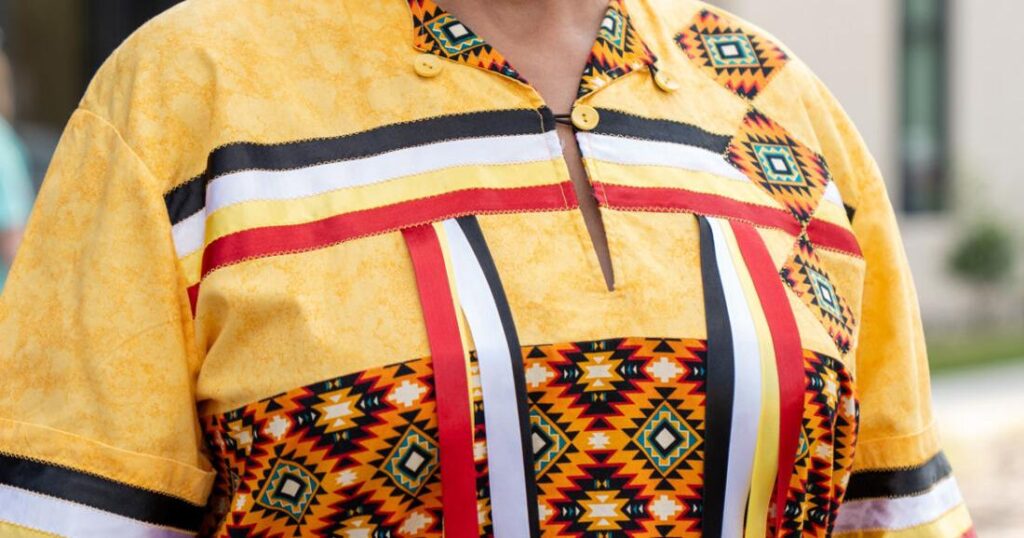

Bonnie Hall.
Coastal Point | Submitted
When Nanticoke Tribal Historian Bonnie Hall addresses guests at Native American Day on Saturday, Nov. 1, she will offer an overview of the history of the Nanticoke tribe, as well as giving an update about renovations to the Nanticoke Indian Center and Nanticoke Indian Museum, where Native American Day will be held from 11 a.m. to 3 p.m. that day.
Admission to both the event and the museum will be free on Native American Day.
There will be storytelling by Ragghi Rain, as well as Native traditional dancing, drumming, singing and flute performances. Vendors will sell Indian fry bread, Indian tacos, succotash, T-shirts, hats, books, memorabilia and a book about the Nanticoke language, “Once It Has Been Spoken … It Cannot be Unspoken.”
Hall will be presenting “The Nanticokes Lasting Legacy: Yesterday, Today and Tomorrow” and said she will remind those attending “of the importance of celebrating the diversity of a folks.”
“Since the Nanticokes are considered the First People of the First State, it’s important to understand about the Nanticoke tribe and how we have persisted over time, how we have had to be very resilient and have had to go along with changes that have taken place, how we have worked hard to keep our elders and our youth engaged and to keep our life ways and our culture alive and well.
“We work very hard to preserve that. We have so many people who are moving here to Delaware. No matter where you go, there’s a new development going up. Some of the people who are new here don’t even realize we are even here, so these presentations are so important to educate folks and teach them who we are,” Hall told the Coastal Point.
She will inform guests about current renovations to the Indian Center, on John J. Williams Highway (Route 24), which are the result of $2.9 million in state and federal grant funding and donations, including from The Freeman Foundation, and upcoming renovations to the museum, which is located a few miles away.
“We had a great partnership with the Delaware Center for the Inland Bays and DNREC to install the first phase of the living shoreline at Thompson Island, which is a very sacred place for us,” Hall noted. “The [Indian] Center is expanding. It will double in size. We want to put a commercial kitchen in the Center to help us with our special occasions, like Native American Day, so we can prepare foods there and have plenty of room for storage. We want to partner with the Delaware Food Bank to provide the opportunity for local neighbors to have access to food, for the public,” she said.
Staff will get new offices, and there will be a computer area, reception area and meeting space.
“We’re really excited about that. That building was once a one-room schoolhouse and a school. We have to protect the integrity of the existing building, so I was happy when we finally did get the final architectural renderings. We will be able to recognize the original building,” she said.
Later, new playground equipment will be installed.
For the museum, $950,000 in grant money was awarded to replace windows, lighting and carpeting.
“We don’t have enough money to expand the museum right now but have some architectural drawings for our vision down the road, and we hope to write additional grants,” Hall said.
Hall will also tell guests on Nov. 1 about an upcoming Maryland Public Broadcasting Service documentary, “Liberty of Conscience: the Founding of Maryland.” About 15 Nanticoke tribal members are in the documentary, which will be broadcast on PBS at 8 p.m. on Sunday, Nov. 16.
It was filmed in April on St. Mary’s River in Maryland and explores “indigenous life before the English arrived, settlers marching into the native village carrying the British flag and the colors of the Calvert family, fur trading between the natives and settlers, and indigenous leaders meeting with the Council of Maryland.”