Huge news as Vow achieves cell cultivation quantities that were recently and are still seen as impossible:
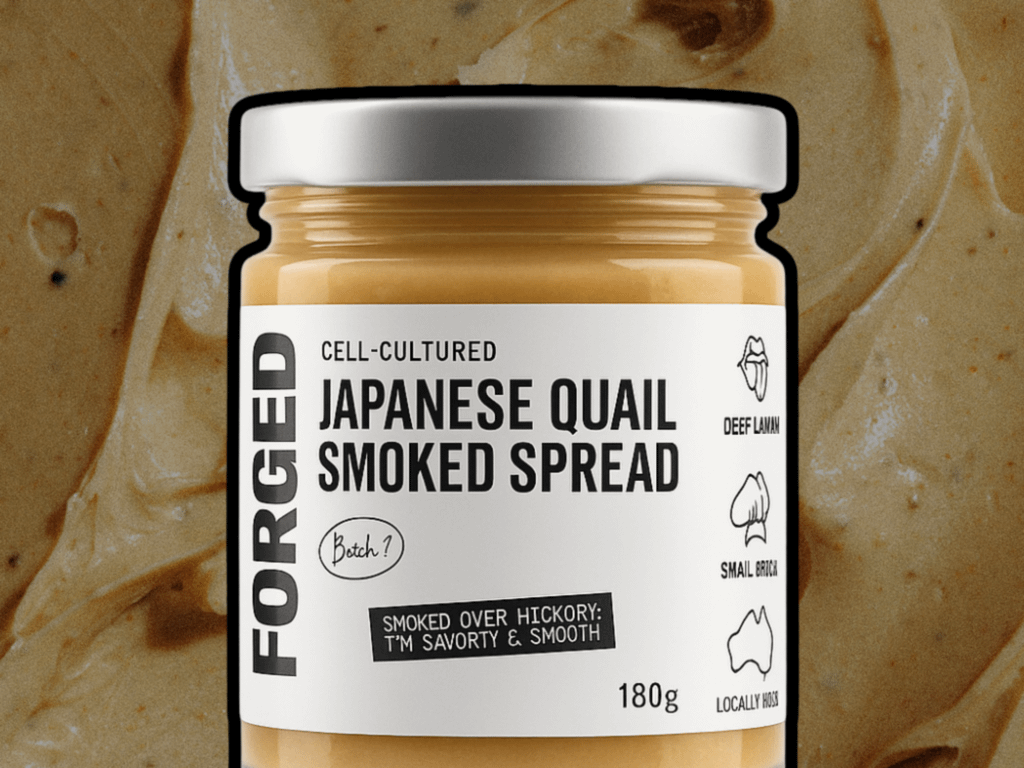
“Under its consumer brand Forged, Vow has launched three direct-to-consumer products powered by its cultured quail, marking the first time consumers can buy multiple cultivated meat products for at-home use.
In addition its cell cultivation capacity has extended to 35,000 litres within its second factory, which it says was 20 to 50 times cheaper to build than competitors. It operates the **largest food-grade cell culture bioreactor** at 20,000 litres, and claims to have completed the **largest cultivated meat harvest in history** (538 kg).
By the end of the year, Vow expects to reach production levels of up to 900 kg per harvest, scaling to 10,800 kg monthly. Longer-term improvements that utilise the full factory capacity will allow it to eventually surpass 20,000 kg a month.”
For reference, on average, a cow provides about 300kg of boneless meat after about 2 years.
ahenobarbus_horse on
If it is priced similarly to the other things that they’re selling, it is in the neighborhood of around $140 per kilogram. Which is pretty expensive for beef, I’ve heard. The other thing that we don’t know is how it will taste. Of course you can do a lot to things to make them taste good but the best beef tastes good with nothing more than salt on it.
I have no dog in this fight, but it does seem like these facts are not included in the article when it turns to talking about the scale that it can achieve and comparing what they produce to regular old beef.
ITfarmer on
Picturing one very large and fugly trophy head hanging in someone’s office there.
lig4nd on
Do people actually have any comprehension of what these artificial meat products are? Myocyte/fibroblast cells from the quail are harvested, and then adapted for robust growth in vats. To get these cells to grow in liquid cultures, they are by definition, cancer. Mutations accumulate so that the cells ignore cell cycle checkpoints and are so anabolic that does not represent normal physiology (except tumours).
In Australia, there is no regulatory body that requires full genome sequencing of the cell lines for creation of these new edible products. If and when sequencing is required, no person with a biology or medical background would touch this stuff let alone eat it.
Just go vegan or have those BeyondMeat type products, it’s better than cooking up and eating a tumor.
Valgor on
So cool seeing more cultivated products get out there! Going to a talk on Monday about cultivated leather. A cultivated meat company by me just got USDA approved and will start selling chicken to local restaurants. Jeff Bezos gave some money to a research center by me. This stuff can’t come fast enough.
No_March5195 on
Im all up for cultivated meat and proteins, bring on the future!
BMW_wulfi on
I know this makes me a conspiracy theorist but some part of me deep down just thinks this is all going to go so wrong somehow.
Like asbestos or something like that. We don’t know until we know sort of thing. I have no evidence for this.

7 Comments
Huge news as Vow achieves cell cultivation quantities that were recently and are still seen as impossible:
“Under its consumer brand Forged, Vow has launched three direct-to-consumer products powered by its cultured quail, marking the first time consumers can buy multiple cultivated meat products for at-home use.
In addition its cell cultivation capacity has extended to 35,000 litres within its second factory, which it says was 20 to 50 times cheaper to build than competitors. It operates the **largest food-grade cell culture bioreactor** at 20,000 litres, and claims to have completed the **largest cultivated meat harvest in history** (538 kg).
By the end of the year, Vow expects to reach production levels of up to 900 kg per harvest, scaling to 10,800 kg monthly. Longer-term improvements that utilise the full factory capacity will allow it to eventually surpass 20,000 kg a month.”
For reference, on average, a cow provides about 300kg of boneless meat after about 2 years.
If it is priced similarly to the other things that they’re selling, it is in the neighborhood of around $140 per kilogram. Which is pretty expensive for beef, I’ve heard. The other thing that we don’t know is how it will taste. Of course you can do a lot to things to make them taste good but the best beef tastes good with nothing more than salt on it.
I have no dog in this fight, but it does seem like these facts are not included in the article when it turns to talking about the scale that it can achieve and comparing what they produce to regular old beef.
Picturing one very large and fugly trophy head hanging in someone’s office there.
Do people actually have any comprehension of what these artificial meat products are? Myocyte/fibroblast cells from the quail are harvested, and then adapted for robust growth in vats. To get these cells to grow in liquid cultures, they are by definition, cancer. Mutations accumulate so that the cells ignore cell cycle checkpoints and are so anabolic that does not represent normal physiology (except tumours).
In Australia, there is no regulatory body that requires full genome sequencing of the cell lines for creation of these new edible products. If and when sequencing is required, no person with a biology or medical background would touch this stuff let alone eat it.
Just go vegan or have those BeyondMeat type products, it’s better than cooking up and eating a tumor.
So cool seeing more cultivated products get out there! Going to a talk on Monday about cultivated leather. A cultivated meat company by me just got USDA approved and will start selling chicken to local restaurants. Jeff Bezos gave some money to a research center by me. This stuff can’t come fast enough.
Im all up for cultivated meat and proteins, bring on the future!
I know this makes me a conspiracy theorist but some part of me deep down just thinks this is all going to go so wrong somehow.
Like asbestos or something like that. We don’t know until we know sort of thing. I have no evidence for this.