
Published on
November 4, 2025

Kashmir’s Pampore region has become a must-visit destination for tourists from Spain, Iran, and India, all eager to witness the breathtaking beauty of its vibrant saffron fields. Known as the “Saffron Town” of Kashmir, Pampore’s stunning landscapes, with rows of blooming saffron flowers, offer an authentic agritourism experience that has captured the attention of travelers from across the globe. The growing allure of these vibrant fields, especially during the saffron harvest season, is drawing an increasing number of international visitors, who are enchanted by the region’s natural beauty, cultural heritage, and unique agricultural practices. As tourists flock to Pampore, the region is quickly establishing itself as a key agritourism landmark in India, with a perfect blend of rich tradition and scenic charm.
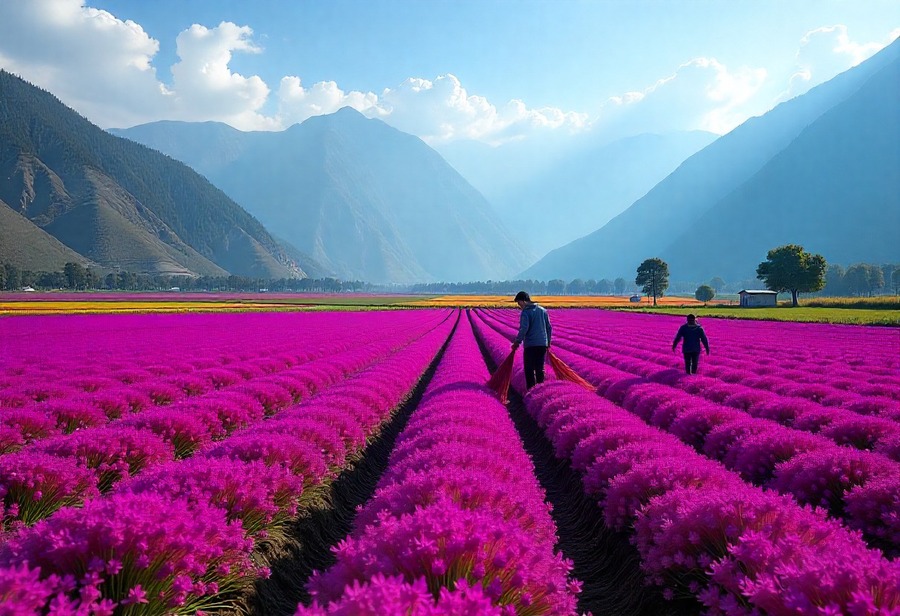
Under the soft warmth of the November sun, the saffron fields of Pampore stretch endlessly across the landscape, their vibrant purple hue captivating every visitor. This serene and picturesque scene is framed by tourists armed with cameras, who wander through the rows of crocus flowers, marveling at the beauty of nature’s delicate work. It’s harvest time, but this season, the scene is more alive with tourists than ever before, making it a unique moment for both the local farming community and the ever-growing number of travelers.
Nestled in the heart of Kashmir, the Pampore plateau — often referred to as the “Saffron Town of Kashmir” — has long been celebrated for its saffron cultivation. The town has been the epicenter of the saffron trade for centuries, with its distinctive purple crocus flowers marking the arrival of autumn. Known for producing some of the finest saffron in the world, Pampore’s fields have historically been a quiet, agriculturally driven space. However, in recent years, it has become increasingly popular with tourists, and this year, there’s been a noticeable surge in visitors. For the first time in many years, the sight of saffron harvests is no longer a solely agricultural event; it’s a multi-dimensional experience that intertwines nature, culture, and tourism.
The saffron fields are more than just a landscape — they are a symbol of the region’s agricultural heritage. As autumn arrives, the fields come to life with the delicate purple blossoms of crocus flowers, which are then carefully harvested to produce saffron. Tourists can now be seen strolling through the fields, capturing the moment on their cameras, and engaging with the farmers who nurture these delicate plants. This interaction between visitors and farmers is a defining feature of agritourism in Kashmir, offering a deeper understanding of the labor and love that goes into producing one of the world’s most expensive spices.
One of the key attractions for visitors is the opportunity to participate in the saffron harvest itself. Tourists are invited to join local farmers in the labor-intensive process of collecting the flowers, extracting the precious threads of saffron, and preparing them for sale. This hands-on experience allows travelers to immerse themselves in the local culture and gain insight into the challenges and rewards of saffron farming. The delicate process of harvesting saffron is an art form in itself, requiring patience and skill, and visitors find it fascinating to learn about the centuries-old techniques that are still used today.
While saffron is grown in other parts of the world, including Spain and Iran, Kashmir’s saffron is highly regarded for its distinct quality and superior color, aroma, and flavor. The climate and soil conditions of the region contribute to the unique characteristics of Kashmir’s saffron, making it a sought-after commodity globally. Farmers in Pampore take immense pride in the quality of their saffron, and they are quick to highlight the difference between their product and that of other saffron-producing countries. This pride is not just about the product itself but about the tradition and legacy that has been passed down through generations.
The allure of saffron, however, is not the only draw for tourists. Over the years, other agricultural activities in the region have also become increasingly popular with visitors. For example, the apple orchards in areas like Shopian and Sopore have been attracting tourists during the summer months, with visitors eager to pick fresh apples directly from the trees. This interest in agricultural tourism speaks to a growing trend among travelers seeking more authentic, immersive experiences that connect them to local cultures and traditions. Kashmir’s agricultural landscape, rich in both natural beauty and cultural significance, offers a rare opportunity for such experiences, where visitors can directly engage with the land and the people who work it.
But despite the rise in tourism, the saffron industry faces significant challenges. The region’s farmers have reported a decline in saffron production this year, primarily due to erratic weather patterns and a lack of adequate irrigation infrastructure. The climate in the Kashmir Valley has been unpredictable, with periods of intense rainfall followed by drought conditions, making it increasingly difficult for farmers to maintain the delicate balance needed to grow saffron. Moreover, the scarcity of proper irrigation facilities has only exacerbated the situation, further limiting the potential for a robust saffron harvest. These factors have led to concerns about the long-term sustainability of saffron farming in the region.
Despite these challenges, the saffron fields of Pampore continue to captivate visitors. The sight of the fields, with their carpets of purple flowers, remains as mesmerizing as ever. For many travelers, this unique blend of nature, agriculture, and culture offers an unforgettable experience. The rise in agritourism not only helps raise awareness about the region’s agricultural practices but also provides economic support to local farmers. As tourists flock to Pampore to experience the saffron harvest, they are indirectly contributing to the livelihood of the farming community, which has been grappling with the impacts of changing weather patterns and economic challenges.
Tourists from Spain, Iran, and India are flocking to Kashmir’s Pampore to experience its vibrant saffron fields, making it a must-visit agritourism destination. The region’s unique beauty, cultural heritage, and saffron cultivation draw travelers seeking an authentic and scenic agricultural experience.
As the saffron harvest season comes to a close, the fields of Pampore will soon return to their quiet, agricultural rhythm. However, the memories of this year’s harvest, enriched by the influx of tourists and the growing interest in agritourism, will linger. The balance between preserving the region’s agricultural heritage and embracing new opportunities for tourism is delicate, but it holds the potential to transform Kashmir’s saffron farming industry into a thriving, sustainable sector that benefits both the local community and visitors alike. For now, the purple glow of the saffron fields remains a beacon for those seeking to experience the beauty and traditions of this extraordinary region.
