


Heatwaves will continue to increase in Switzerland.
KEYSTONE
MeteoSwiss and ETH Zurich present new climate scenarios: Switzerland is warming significantly faster than the global average, extreme heat, summer droughts and heavy precipitation are increasing, and snow cover is shrinking.
- Switzerland is well above the global average in terms of global warming; the increase in this country since pre-industrial times is already around 2.9 degrees.
- Four trends will shape the future: more hot days and tropical nights, drier summers, heavier precipitation and significantly less snow.
- Tropical nights will become much more frequent in cities; in Ticino, heatwaves could regularly make outdoor work more difficult. The scenarios form the basis of the federal strategy for climate adaptation.
Switzerland is one of the regions particularly affected by global warming. This is indicated by the new 2025 climate scenarios presented jointly by MeteoSwiss and ETH Zurich on Tuesday – in the presence of Federal Councillor Elisabeth Baume-Schneider. Warming in Switzerland is already at around +2.9 degrees compared to pre-industrial times, while globally around +1.3 degrees is being measured.
“The new climate scenarios give us a more concrete picture of climate change in Switzerland over the next few decades. They help us to assess developments and plan suitable measures – to protect our environment, our cities and our agriculture,” said Baume-Schneider at the presentation.
The researchers clearly identify four core trends.

Heatwaves in Switzerland will increase.
Sebastian Christoph Gollnow/dpa
Heat stress is increasing significantly. Regions at lower altitudes – especially cities – will experience significantly more hot days and tropical nights in the future. On average, the hottest day of the year will be around 4.4 degrees warmer than today.
In Zurich, around five times more tropical nights are expected by the end of the century than in the comparable period 1991-2020. In Ticino, the situation will become even more acute: in Lugano, global warming of two degrees could result in up to 37 tropical nights in just ten weeks.
Extreme heat not only has a negative impact on health, but also on the economy. Outdoor work is becoming increasingly difficult and physical and mental performance is declining. Older people and children are particularly at risk.
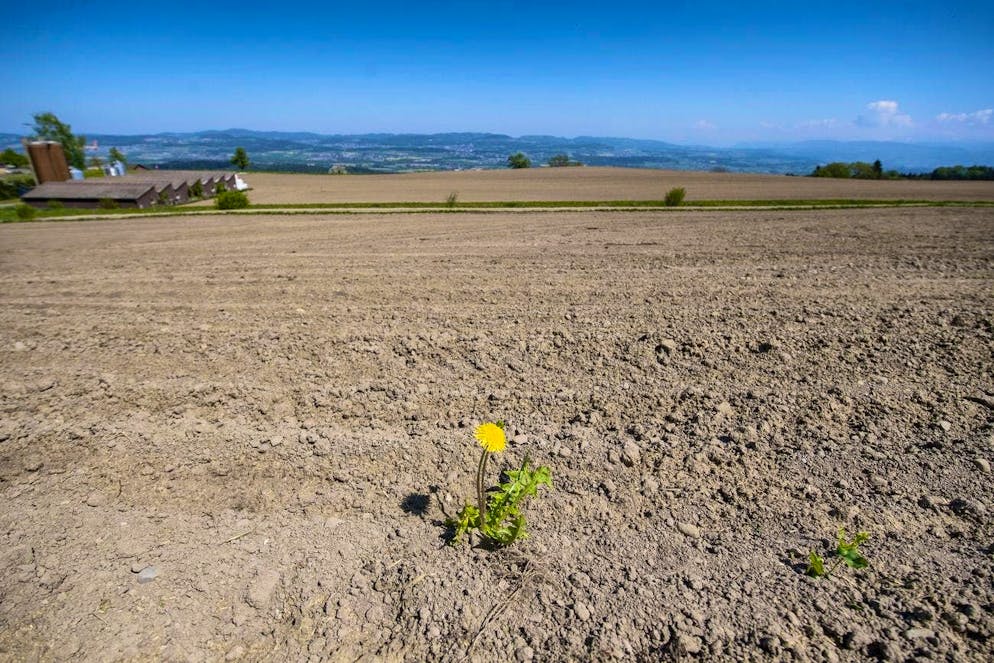
Switzerland will remain increasingly dry in the future.
KEYSTONE
Summers are becoming increasingly dry in parallel with global warming. In the past 40 years, summer drought has already increased noticeably – in future it will be around 44 percent more intense.
The reason lies in the combination of rising temperatures, higher evaporation and decreasing precipitation. As a result, soils are becoming much drier and the risk of forest fires is increasing significantly. In Sion, there could be a high risk of weather-related forest fires on up to 27 days a year in future.
Dry summers also have an impact on agriculture and energy production: Crop failures, falling water levels and restrictions on shipping are possible consequences.
Heavier and more frequent heavy precipitation
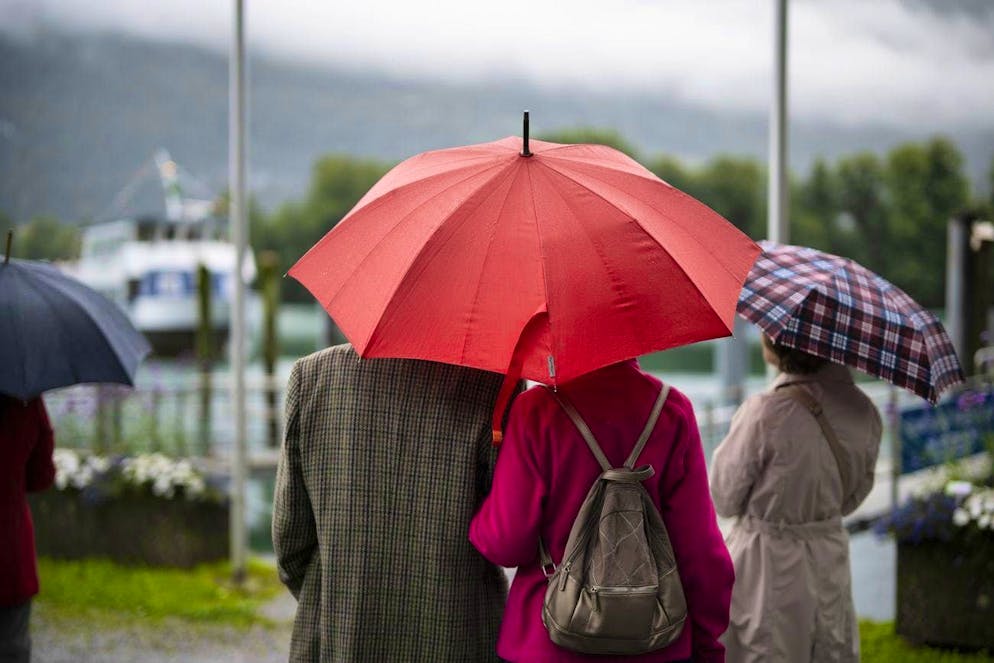
Heavy precipitation is likely to increase.
KEYSTONE
At the same time as the longer dry spells, storms will increase. The air can absorb up to seven percent more water per degree of warming, which significantly increases the intensity of precipitation.
The researchers expect more frequent heavy rainfall in all seasons, especially in the form of short, intense thunderstorms. Such heavy rainfall increases the risk of flooding, flash floods and hailstorms – with consequences for houses, infrastructure and businesses.
Even if the total amount of precipitation decreases in summer, individual events will be more intense. So it will rain less often, but all the more heavily.
Less snow and rising zero degrees
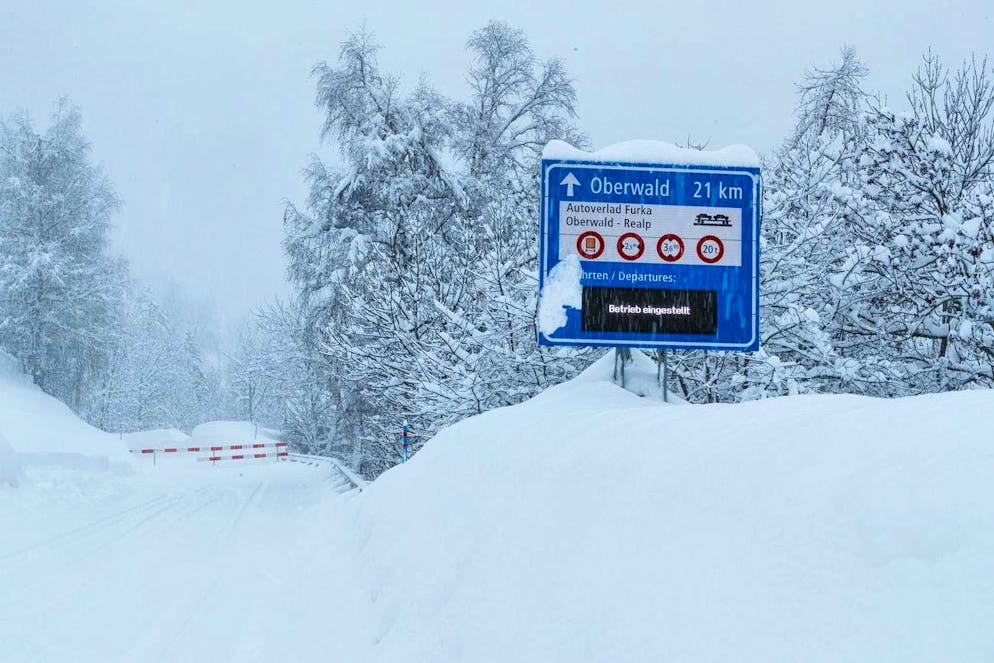
An increasingly rare sight: thick blankets of snow in Switzerland.
Keystone/Andrea Soltermann
Warming is also affecting the Alps. The winter zero degree line is rising by around 550 meters on average – from around 900 to around 1450 meters above sea level. This means that the natural snow line will shift significantly upwards.
At low and medium altitudes, more rain will fall in future instead of snow. The snow cover will become thinner and remain shorter. Up to eight centimetres of snow could be lost in the Alps every decade.
This has consequences for winter sports resorts, the water balance and ecosystems. Many ski resorts will have to prepare for a future without a reliable snow season, while the meltwater is increasingly lacking in summer.