
Published on
November 7, 2025

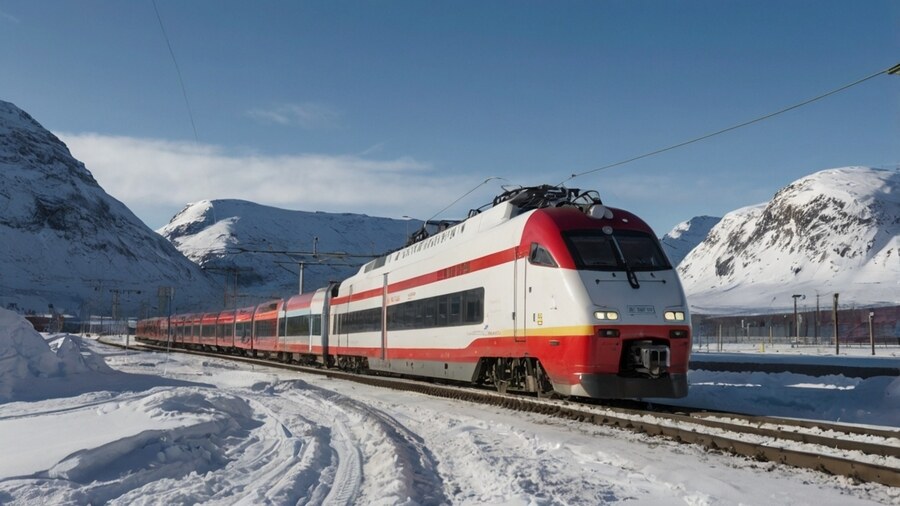
Norway and Sweden have come together to launch an ambitious initiative aimed at revolutionizing railway technology for the most challenging climates. By establishing the “Arctic Test Arena,” this pioneering project will test advanced railway systems and equipment in the extreme conditions of the Arctic, where harsh winters, heavy snowfall, and rapid weather changes provide an unparalleled testing environment. The collaboration between the two countries is set to push the boundaries of railway technology, ensuring that rail systems are durable, reliable, and capable of withstanding the most demanding conditions. This project is expected to provide invaluable insights that will not only enhance rail infrastructure in cold climates but also contribute to global advancements in sustainable transport solutions.
Norway and Sweden have embarked on a revolutionary project to test cutting-edge railway technologies in one of the world’s most extreme environments. Stretching 473 kilometers across the Ofotbanen and Malmbanan rail lines, this ambitious initiative is creating an unparalleled testing ground for rail systems and equipment. By using the Arctic’s severe climate, the project aims to push the boundaries of railway innovation and improve the durability of rail infrastructure in the face of extreme weather conditions.
The Arctic: A Perfect Testing Environment for Railway Technology
This project, dubbed the “Arctic Test Arena,” is the result of a collaboration between the Norway Railway Directorate and Swedish railway authorities. Combining infrastructure from both countries, the initiative will test a variety of advanced railway technologies, including trains, equipment, and digital solutions. The unique environment of the Arctic, with its brutal winters, heavy snowfall, and rapid weather changes, offers conditions that cannot be replicated in warmer regions, providing a true test of railway resilience.
Unlike testing in milder climates, which can take up to a decade to reveal system weaknesses, the Arctic’s harsh conditions expose flaws much faster. The project aims to deliver results in just one year of testing, making it a more efficient and effective way to assess the performance of rail systems. By putting these technologies to the test in extreme conditions, the initiative promises to provide highly reliable data that will enhance the development of future rail solutions.
The Arctic’s Challenges Fuel Technological Advancements
Operating railways in the Arctic poses significant challenges due to the extreme cold and unpredictable weather patterns. However, these very difficulties make the region an ideal environment for testing new technologies. The Arctic’s severe conditions offer an opportunity to assess the strength and reliability of rail systems in ways that milder climates cannot. By subjecting technologies to the harshest elements, engineers and researchers can identify vulnerabilities and refine systems to ensure their durability.
The project takes full advantage of the Arctic’s ability to accelerate the discovery of flaws in technology. With extreme cold and snow, as well as rapid temperature fluctuations, these conditions are a powerful catalyst for understanding how railway systems respond under stress. The project’s results will help improve technology that can withstand similar challenges worldwide, particularly in regions where extreme weather is a recurring concern.
Strengthening Collaborative Efforts Between Norway and Sweden
The Arctic railway testing project is also an opportunity to deepen scientific cooperation between Norway and Sweden. Several key organizations are participating, including Bane Nor, Norway’s Public Roads Administration, and research institutes such as Sintef Narvik and the Arctic University of Norway (UiT). These organizations are working together to conduct extensive research into various aspects of railway technology.
More than 60 researchers, engineers, and experts are engaged in the project, exploring different facets of railway performance. A key focus is the digital monitoring of train operations to ensure safe and efficient system performance. Other areas of study include measuring wheel profiles and assessing rail deformation, which is critical for ensuring the safety and longevity of railway infrastructure. Researchers are also investigating the behavior of railway sleepers and rails under loads of up to 32.5 tons, a crucial aspect of rail durability under extreme conditions.
A Vision for Sustainable Transportation
One of the driving forces behind this initiative is the pursuit of more sustainable transport solutions. By testing new technologies in such a demanding environment, the project aims to improve the environmental performance of railway systems and advance sustainable transport practices. The Arctic Test Arena also serves as a center for research on cold engineering, which addresses the specific challenges of building and maintaining transportation infrastructure in freezing temperatures.
The knowledge gained from this testing will not only benefit the regions directly involved but could also have a broader global impact. As the project explores how to make railway systems more resilient in colder climates, it opens the door to improving transportation infrastructure in other parts of the world that experience similar environmental challenges.
A Step Towards Global Innovation in Rail Transport
The collaboration between Norway and Sweden, as well as the creation of the Arctic Test Arena, is positioning the region as a key player in the future of railway technology. By creating a real-world laboratory for testing new systems, the project is contributing to the development of rail infrastructure that can operate reliably and sustainably in the harshest environments. This initiative is not only shaping the future of transportation in the Arctic but also offering insights that will be crucial for railway systems globally.
Norway and Sweden have partnered on a groundbreaking initiative to test advanced railway technologies in the Arctic, aiming to revolutionize rail systems for extreme climates and ensure greater durability and reliability.
As the project moves forward, it promises to yield groundbreaking advancements in railway technology, setting new standards for durability, reliability, and environmental sustainability in the transportation sector. Ultimately, the Arctic railway testing project will contribute to a future where railways are better equipped to handle the challenges of extreme climates, ensuring that rail travel is safe, efficient, and resilient no matter the weather.
