
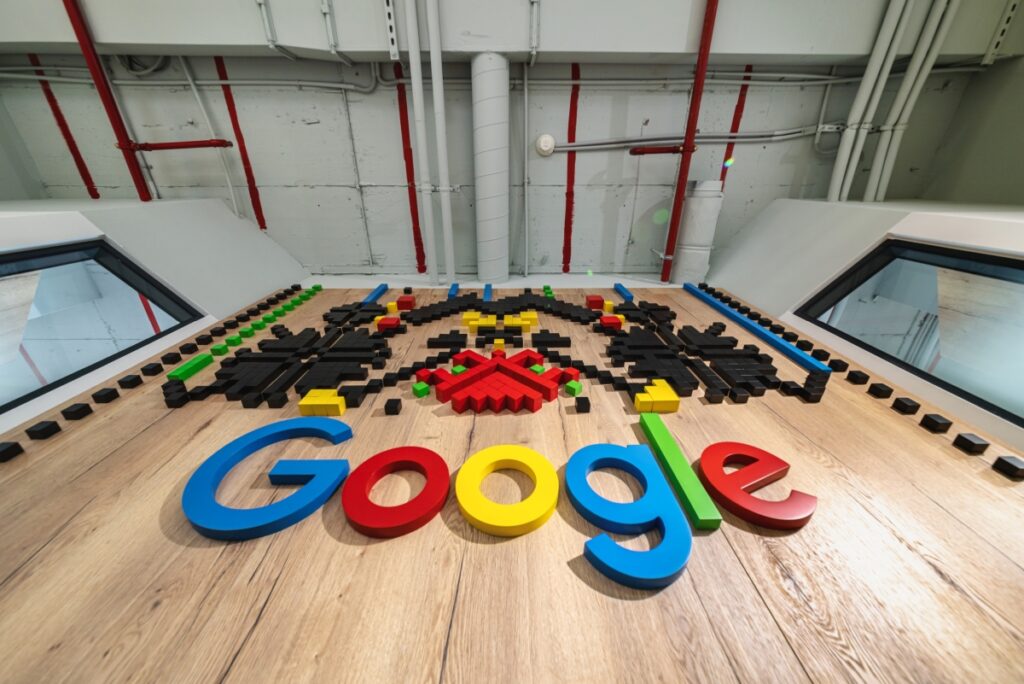
It has been 15 years since Google arrived in Romania. From an office with a few employees, which started in November 2010, the local Google team has grown to over 400 people working in two offices. The activities in the local office have constantly diversified, and now Google has a true innovation centre in Bucharest, with dedicated teams providing consulting services in digital advertising, research and development services for wearables, Cloud, and Android.
In its 15 years in Romania, Google has expanded its local projects, from making Romania’s beauty and cultural heritage digitally accessible to supporting digital education and online safety for students, promoting the local entrepreneurial environment, and boosting economic growth. The current focus is on artificial intelligence (AI), with all recently localized products based on AI. Furthermore, Google Romania is focused on boosting the use of AI and supporting educational initiatives in the field of artificial intelligence.
 Elisabeta Moraru
“Google is and will continue to be a trusted partner for Romania. Our 15 years of activity represent a solid foundation for the next chapter, one that will be defined by artificial intelligence. We will continue to support the development of digital skills, accelerate innovation in the business environment, and contribute to the digital transformation of society as a whole through partnerships and localized products. At the same time, we will continue to develop the technologies used in Pixel devices in Romania,” said Elisabeta Moraru, Country Director of Google Romania.
Local office and technology developed in Romania
Romania is currently Google’s largest development centre for wearable devices in EMEA (Europe, Middle East, and Africa). Bucharest is on the map of innovation centres for Google technologies, and the solutions and services developed in Romania are incorporated into smartwatches and Pixel phones used around the world. Several teams of engineers work in Bucharest, covering areas such as Google Wearables Health Experiences and Fitbit Consumer Services, alongside Google Research and Google Cloud infrastructure solutions.
The teams of engineers in Romania develop features related to personal health and safety, fitness, and body condition, used by Pixel product users around the world. This fall, the local Google engineering team expanded innovation by incorporating the developed features into an AI-powered health and fitness coach.
“We have a new software product that was launched and announced at the Made by Google event, where it was very well received by those who tested it. Together with our partners, professional athletes, and coaches, we want to offer users a personalized health and fitness coach tailored to their needs, based on artificial intelligence, which provides them with the most suitable training plans and the best guidance to improve their health and well-being,” said Lavinia Neagoe, Director of Engineering & Bucharest Technology Site Lead, Google.
Education, digitization, and economic development

Google’s programs in these areas aim to support Romanians in developing the skills to use technology confidently and safely, with a recent focus on new AI technologies. Here are some local initiatives developed by Google Romania over the past 15 years, with an impact on various areas of society:
● Google Digital Workshop for students

Google has organized nine hubs in Romania’s most important university centres, where it runs online and offline courses in digital marketing, programming, online safety, and career development. Over half a million people have participated in courses organized as part of the Google Digital Workshop program for students, in partnership with 15 universities in Romania.
● Google for businesses and entrepreneurs
Through various programs, such as the Digital Workshop and Google for Startups, Google Romania offers ongoing support to SMEs in our country. To date, Google has provided courses and dedicated consulting for over 10,000 entrepreneurs, who have received specialized advice on how to digitize their businesses. Furthermore, over the last two years, the curriculum has been updated with modules dedicated to artificial intelligence, through which SMEs can learn the skills necessary to exploit the potential of new AI technologies—from AI Module or Gemini to AI tools in Google Workspace or cloud solutions.
● Google.org grants for non-governmental organizations
Since 2012, Google has awarded nearly $6 million in grants through Google.org to non-governmental organizations (NGOs) in Romania for the development of social and educational programs. To date, more than 1.5 million pupils, teachers, students, and entrepreneurs from urban, rural, and disadvantaged backgrounds have participated in programs developed by NGOs funded by Google.org.
● Google for public administration
Starting in 2023, Google Romania, together with the National Institute of Administration, has been running programs to educate public administration staff in the field of artificial intelligence. Approximately 8,500 civil servants from Romania and the Republic of Moldova have participated in training sessions on artificial intelligence for increasing productivity and online safety and cybersecurity concepts. Google Romania will continue these programs with the goal of reaching as many civil servants as possible.
The YouTube ecosystem: promoting content creators
Since its launch in Romania in 2013, YouTube has become one of the most important channels for Romanian creativity, and the ecosystem of content creators has grown steadily. In addition to quantitative growth, the diversity of Romanian-language content has advanced exponentially, covering areas of interest to the Romanian public.
In figures, more than 13 million Romanians (aged over 18) watch videos on YouTube. Every day, a person in Romania watches, on average, over 50 minutes on YouTube. Advertisers and companies in Romania are also dedicating more and more resources to developing their presence on YouTube through their own channels, creating exclusive content, and running dedicated campaigns. Since its launch, YouTube Romania has become a place where Romanians can find quality content and where companies can find the right opportunities to reach their target audience.
Society and culture: Promoting Romania’s heritage through digitization
Since the launch of the local office, promoting Romania’s natural, cultural, and historical heritage has been a constant focus for Google. Through digitization and publication projects on Google Maps Street View and Google Arts & Culture, Google is showcasing Romania’s beauty and heritage to a global digital audience.
The first important step in this direction was taken in 2012, when Google covered the entire country with panoramic images. Since then, Street View cars have returned periodically to Romania—most recently this year—to update images of our country. In addition, special projects have been developed by the local Google office to add some of Romania’s landmarks to Street View. In 2015, Salina Turda was opened to virtual visitors on Street View. In 2018, in collaboration with the World Wide Fund (WWF), Google Romania put the Danube Delta on Street View, with over 1,500 km of canals and roads. In 2023, much of Via Transilvanica, the long-distance route that crosses Romania, was photographed and can be explored digitally on Google Street View.
Google Arts & Culture focuses on preserving the world’s cultural heritage. The first Romanian collections were launched on the platform in 2014, when three of the most popular museums—the Brukenthal National Museum, the National Museum of the Romanian Peasant, and the ASTRA National Museum Complex—as well as other heritage associations in Romania published their collections on Google Arts & Culture. In the following years, many other cultural partners in Romania added their virtual collections to the platform: from the traditional Romanian blouse – “ia” – included in an exhibition dedicated to fashion and style, to Peleș Castle or the Palace of Parliament.