
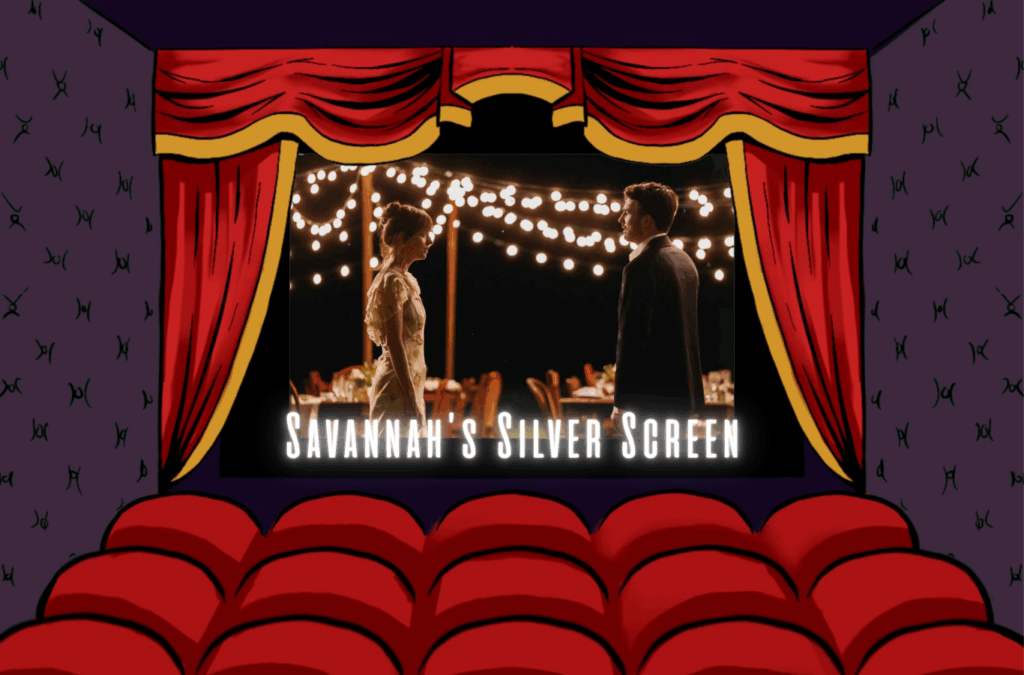
“Materialists” plays into the softness within the modern age of dating while also unveiling the reality of trying to find the one. With its warm, plush color palette and memorable dialogue, this film reaches into your soul and holds your heart in a way that will leave you thinking about it even after the credits roll.
Starring Dakota Johnson, Pedro Pascal and Chris Evans, Celine Song’s “Materialists” is about a matchmaker, Lucy, in New York City who is trying to find partners for her clients that check all of the right boxes. As she does so with both ease and difficulty, she herself indulges in the dating world and looks for someone who is disgustingly, achingly rich.
Towards the start of the film, there is a scene celebrating Lucy’s ninth wedding of her matchmade clients. She later attends the wedding, getting bombarded with matchmaker requests from the guests and even eyed by the groom’s brother, Harry. What stood out to me about the wedding scenes were the colors and lighting choices.
As Lucy is speaking to Harry at one of the dinner tables, the audience can see her slightly navy blue dress, the white wedding cake and gold accents of the lights and Lucy’s jewelry. The different contrasts of these colors pull me into different focuses of the scene.
The dress singles out Lucy as the main character, and it characterizes her as someone that people are drawn to and can trust with a vulnerable part of themselves, which is their dating preferences. The cake’s whiteness is able to place emphasis on the category of the occasion, and it highlights the level of a traditionally valued aspect in the wedding.
The lights and the accents of the jewelry symbolize wealth and status, where the lights are something more likely to be real gold, meanwhile Lucy is trying to emulate it. This is made clear when she repeats over and over about wanting a rich husband. However, this want is out of fear, not greed.
As for the lighting choice, it pulled me in because of its warmth. This sort of warmth is consistent throughout the movie, and it leaves me feeling comforted by what I’m watching. No matter the characters’ emotions, I am content with what I see, and it leaves me with a feeling of how everything will work out in its own way.
I am a sucker for both cheesy and meaningful dialogue, and this film has it all. From consistent one-liners about dying alone to a monologue about how familial trauma molds you as you are now, the dialogue is nothing but duality in every sense of the word.
My favorite piece of dialogue is when Lucy is narrating about how she has been dreaming about the first people who got married, asking the questions of how they knew they matched perfectly. In asking different questions, like if they were politically aligned or well-matched in their attractiveness, the narration pushed me to think about the deeper layers of the film.
Placing people into boxes of where they fit on someone else’s attraction spectrum is a slippery slope, but it has become the norm in this modern age of love and dating. In this dialogue about dreaming, the film testifies to how a human being cannot be categorized or lumped into a chest for another human being to pick through.
The film is a measurement of love and what someone is willing to do to either obtain that love or chase material wealth. I am also a big fan of dreams as a concept in movies, so that contributed to my infatuation also.
I may be biased when speaking about the direction style since Song is in my top five of favorite directors, but it is like no other. When I step into Song’s world as a viewer, the mood is calm and softspoken; it feels as if you are in a coffee shop, and you are simply hearing the many conversations happening around you.
Song proved this first with “Past Lives,” but “Materialists” only sealed the deal. Plus, they both have disgustingly amazing soundtracks. This film checks all of my boxes, and I hope it checks yours too.
★ ★ ★ ★ ☆