
Surging gold prices are leading British buyers of luxury watches to trade down to less precious metal alternatives, according to the UK’s biggest seller of Rolex and Omega timepieces.
Brian Duffy, the chief executive of Watches of Switzerland, said he had seen “more price sensitivity in the UK”, although in the United States there was still a “real preference” for 18-carat gold.
“We can change the mix in a relatively small way, but still change it and just make sure that we’ve got choices, options [and] affordability for the client,” Duffy said.
Gold prices have hit record highs this year, driven by global economic and geopolitical uncertainty, a weaker dollar and strong central bank buying. The precious metal is seen as a safe-haven asset by investors and has also benefited from the expectation of further interest rate cuts.
Spot prices for gold reached a record high of $4,381.21 an ounce on October 20, taking its gains over the past three years to 170 per cent. While it has since slipped back to hover around the $4,000-an-ounce mark, analysts have forecast prices could rise to $4,500 by mid-2026.
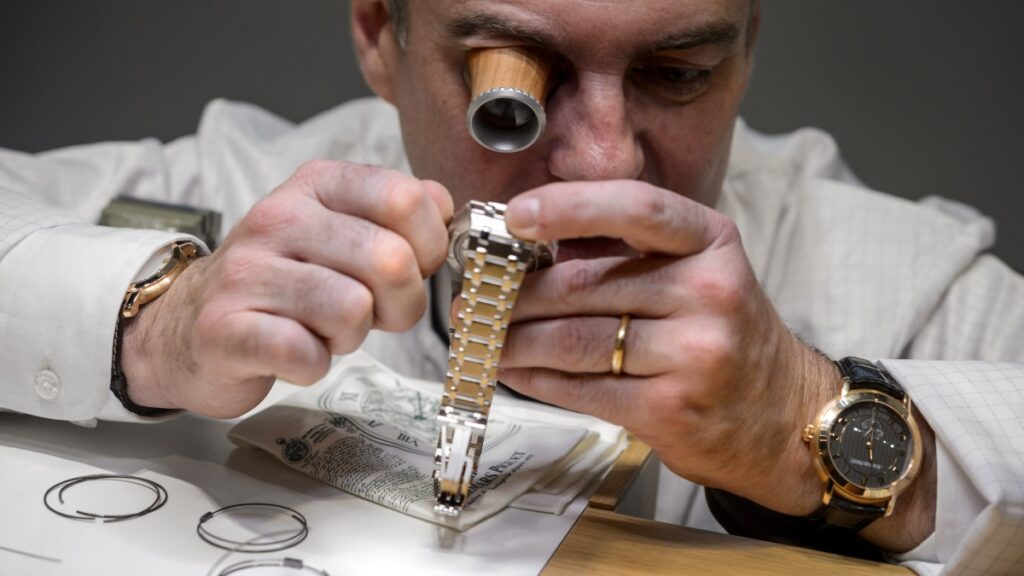
“The increased cost of gold has been passed through to prices to some degree,” Duffy said, noting the importance of variations such as gold-incorporated straps and bimetal, or two-tone; combining stainless steel with the glamour of gold. Other methods to reduce cost include stripping out complexity by using a three-hand date instead of a chronograph.
“You can get pretty much the same watch or movement and functionality standpoint at very different price points and it’s again one of the strengths of the industry,” Duffy said.
“They’re getting a great timepiece, but you may not choose to stretch all the way up to what are high prices if you’re looking at pure 18-carat gold.”
Watches of Switzerland, founded in 1924 by Maurice Lane, employs about 3,000 people across the UK, Europe and the United States, selling watch brands including Rolex, Cartier, Omega and Audemars Piguet. The Rolex Cosmograph Daytona in yellow gold retails for £41,200 on Watches of Switzerland’s website as of November 9. Duffy said that price increases among Rolex watches had been the most modest of all brands this year.
The mettle of the industry has also been tested by President Trump’s tariffs, which have led to price increases in the United States. Trump imposed a punitive 39 per cent levy on Swiss imports in August, a rate that still stands despite the efforts of the export-heavy country, which is a global hub of watchmaking.
Duffy, however, described Watches of Switzerland’s US business as a “standout performer” in its most recent half-year update as sales rose by 20 per cent year-on-year. The stock has gained 18 per cent over the past six months despite Trump’s tariff salvo, with the company reassuring markets over the impact of the Swiss levies.
Still, in the UK a cocktail of rising product prices and an increase to national insurance contributions have affected profitability at a number of showrooms, leading to 20 closures this fiscal year, higher than the 16 the company said it planned to shut down in April. About half of the staff affected have been redeployed elsewhere in the business.
“It’s expensive to be a retailer in the UK,” Duffy said. “Honestly, if we look at our numbers overall, even allowing for these stores, we’re still looking at a 2 per cent increase in the UK, and then overall UK and US together our business is up 10 per cent.”
The businessman, who has been chief executive of Watches of Switzerland for more than a decade, was keen to stress the success of the group’s Rolex boutique on Old Bond Street, which is one of the largest in Europe. The store was performing “very, very well” in terms of waiting lists and with sales of 18-carat gold watches, he added, noting strong demand from younger buyers.