
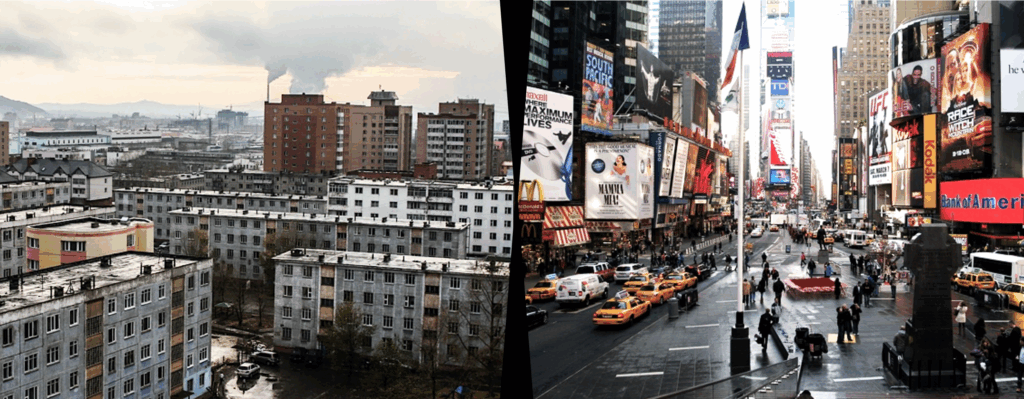
Contrary to the narrative emanating from unions’ headquarters and repeated by the media, the main effect of unions is to benefit certain privileged workers. In thereby restricting the labour supply, they oppress the most disadvantaged members of the labour force by pushing them off the economic ladder. The overall effect of unions is not to protect workers but to create a net economic loss as economic production declines and the least privileged workers are shut out of the labour market.
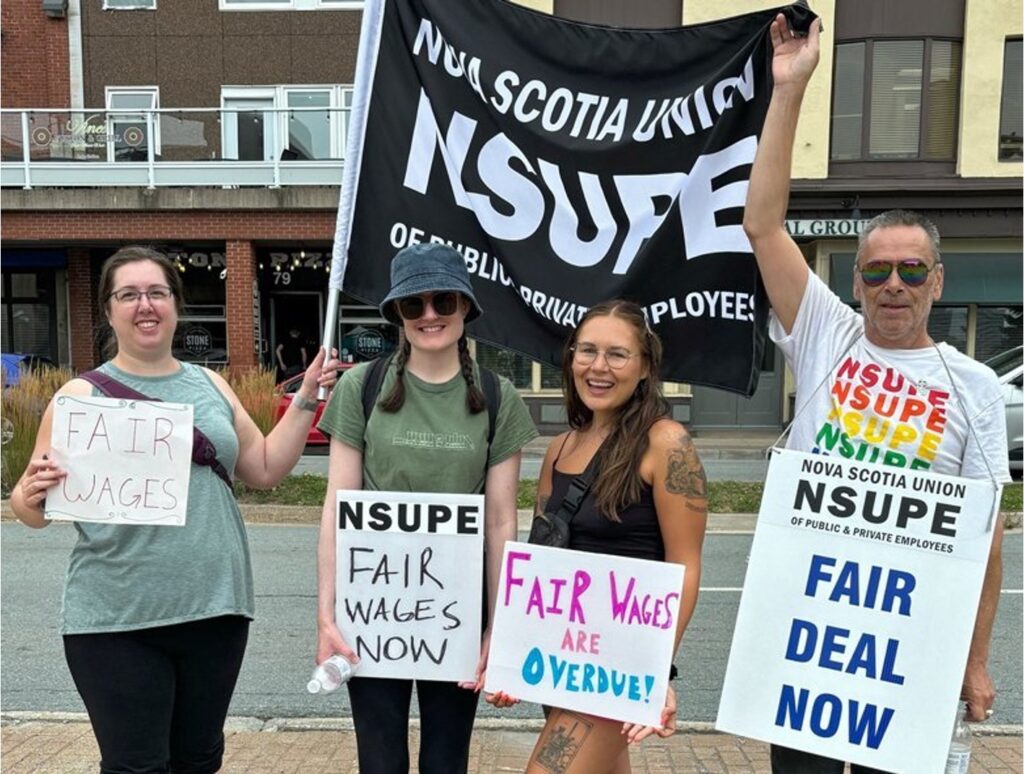 xWho protects workers? To keep wages high, unions limit the supply of labour, benefitting certain privileged workers while pushing the most disadvantaged members of the labour force off the economic ladder. (Source of photo: Confederation of Canadian Unions)
If not unions, another possible answer to the question “Who protects the worker?” is government. After all, there are minimum wage laws, laws around overtime pay and many other workplace regulations with similar economic intent and effects. But what are the actual effects of such policies?
When the minimum wage is increased, some workers’ wages will rise, but many other workers will lose their jobs. A minimum wage of, say, $17 per hour, is a law that tells employers they are not allowed to hire workers whose productive capacity is only $14, $15 or $16 per hour or for tasks that, regardless of the worker’s productivity, are only worth that much – unless that employer is willing to lose money. Instead, employers in that situation are most likely to replace low-productivity labour with machinery and technology, or simply go without. The Canadian experience has shown that workers priced out of jobs by minimum wage increases include teenagers who do not have much job experience, recent immigrants, workers who have physical or cognitive disabilities, and many others who have a lesser ability to generate output.
Comprehensive literature reviews confirm the negative employment effects of minimum wage laws and that these are concentrated on the most disadvantaged members of the labour force. In fact, even many workers whose wages rise because of the minimum wage are worse off, because to absorb the higher cost, employers must reduce non-wage benefits – benefits that many workers prefer to higher wages.
 xPriced out of the labour market: Research establishes that minimum wage laws deny jobs to the most vulnerable members of the labour force – teenagers, certain recent immigrants and workers with disabilities. (Sources of photos: (left) ILO PHOTOS NEWS, licensed under CC BY-NC-ND 2.0; (right) Walmart Corporate, licensed under CC BY 2.0)
In reality, neither unions nor governments protect workers. What protects workers is free-market competition. Walmart employees, for example, are protected by Canadian Tire, Dollarama and Staples – Walmart’s competitors and rival employers. If Walmart tries to exploit its employees by paying less than they are worth – for example, by paying employees worth $20 per hour only $16 – its competitors would happily expand and hire those underpriced workers away from Walmart at $17, or $18, $19 or even $19.90 per hour, because by doing so they could increase their profits.
Myth #2: Government Protects Consumers
The other segment said to be left behind by free-market capitalism is the consumer. Those who think capitalist businesses can easily exploit workers will naturally believe they also exploit consumers, and that government must step in to stop the exploitation. Anyone who thinks government protects the consumer, however, should look at the recent record of government.
Canada’s federal government (along with the provinces) oversees a health-care system in which the average wait time for orthopaedic surgery is 57 weeks, gives agricultural producers artificial monopoly rights worth $48 billion, has everyone drinking through paper straws that dissolve in our drinks, recently mused about helping grocery shoppers by imposing special taxation on grocery stores, and proposes to ban the sale of new vehicles powered by internal combustion engines which, data earlier this year show, account for more than 90 percent of Canada’s light-duty vehicle market. In all these instances of government “protection”, the Canadian consumer is the loser.
More evidence against the theory of government as providing consumer protection was presented in a recent McKinsey & Company article which compared Canadian consumers’ satisfaction with government-provided services against services provided by the private sector. Despite being subject to constant criticism and political attacks in recent years, banks and credit unions scored a 57 percent satisfaction rate and grocery stores scored 54 percent. Similarly, 57 percent of Canadians reported being satisfied with e-commerce sites and 50 percent with their mobile phone service.
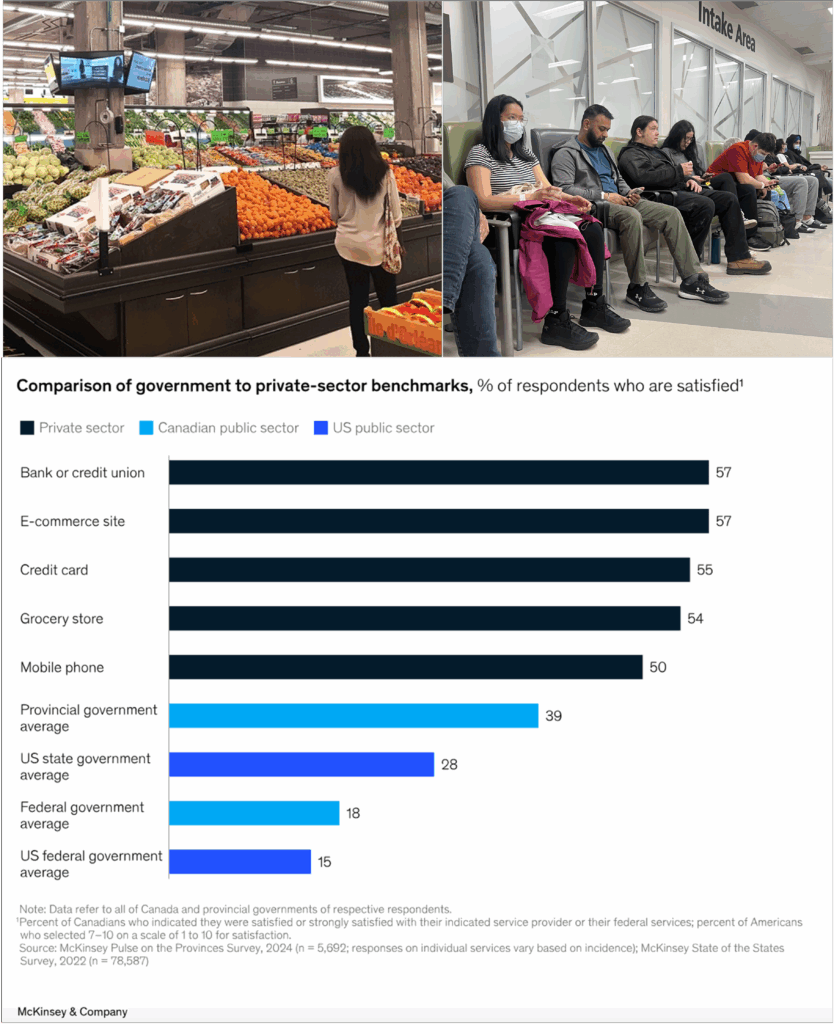 xCompetitive advantage: Even widely vilified private-sector companies like banks and grocery stores get higher consumer satisfaction scores than government-provided services like health care. (Sources: (left photo) Indrid Cold, licensed under CC BY-SA 2.0; (right photo) Vanprasad/Shutterstock; (chart) McKinsey & Company)
In fact, even when the government appears to be providing consumer protection by promoting private-sector competition, it does more harm than good. Take the recent case of politicians and activists accusing grocery stores of effectively fixing prices. Loblaw is currently being forced to pay $500 million to consumers because of a class-action lawsuit for allegedly colluding with competitors to raise bread prices. Isn’t this a case of government protecting consumers by ensuring competition? The answer is no.
Notwithstanding possible coordination between competitors on bread prices, the grocery market as a whole is fiercely competitive. This means stores with high bread prices would only be able to retain customers if they outperformed stores with cheaper bread on other criteria such as quality, service or convenience, or offered enough other cheaper products that their higher-priced bread didn’t matter to most consumers. Grocery stores’ profits as a percentage of sales are in the low single digits; there’s simply no room for government to “protect” consumers by dictating what certain stores can charge for bread.
In reality, the source of consumer protection is the same as the source of protection for workers: free markets and competition. As long as the market is competitive in the sense that government is not imposing barriers to entry by new competitors, consumers will be free to choose among different options and will be protected from exploitation by producers.