
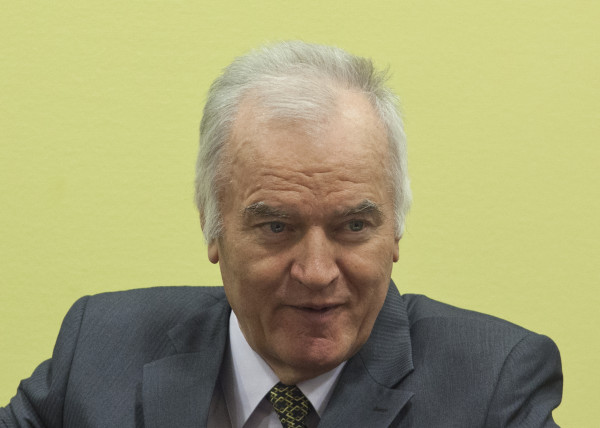
Ratko Mladic in court at the Hague Tribunal during his trial. Photo: ICTY.
The International Residual Mechanism for Criminal Tribunals, IRMCT, on Tuesday rejected the request of the former Bosnian Serb military commander Ratko Mladic for temporary release to visit the grave of a close relative and attend the memorial service.
Mladic, who is serving life sentence for his role in the 1995 genocide in eastern Bosnia and Herzegovina and other crimes committed during the 1992-95 war in Bosnia, filed the request on November 5, after the relative passed away. Mladic asked to be released for seven days, during which time he would be under constant police supervision.
But the IRMCT’s president, judge Graciella Gatti Santana, noted that the “threshold for release of a temporary nature on compassionate grounds to attend a family member’s memorial service is exceptionally high, and that release for this purpose has not been granted in the past for individuals detained at the UNDU [United Nations Detention Unit] following their final conviction”.
She added that there was no reason for Mladic to “be treated differently”.
The judge also noted that, considering that his previous requests had been refused “based on the concerns that he would not return to custody” and that he evaded justice for 16 years before being taken into custody in 2011.
The court also refused an early release request filed in July. Mladic’s lawyers had asked the IRMCT to release him on humanitarian grounds because he has been transferred to palliative care and may only have months to live.
Calling for the 83-year-old to be granted provisional release or conditional early release, the motion argued that “Mladic’s limited life expectancy is a central humanitarian issue that should be given decisive weight”.
During his time in custody in the Netherlands, Mladic has had several serious medical problems and has suffered two strokes and a heart attack.
His lawyers have repeatedly claimed that he has not been getting proper treatment and that his health problems have been underestimated. The UN court has repeatedly declined requests for him to be hospitalised for treatment.
As head of the Bosnian Serb army, Mladic oversaw the mass execution of over 8,000 mainly Bosniak people around Srebrenica in 1995, after his forces overran the town.
In June 2021, the IRMCT confirmed his life sentence for his role in the worst atrocities seen in Europe since World War II.
The appeals chamber upheld the initial verdict, convicting him of genocide of Bosniaks from Srebrenica in 1995, the persecution of Bosniaks and Croats across the country, terrorising the population of Sarajevo with a campaign of shelling and sniping during the siege of the city and taking UN peacekeepers hostage.