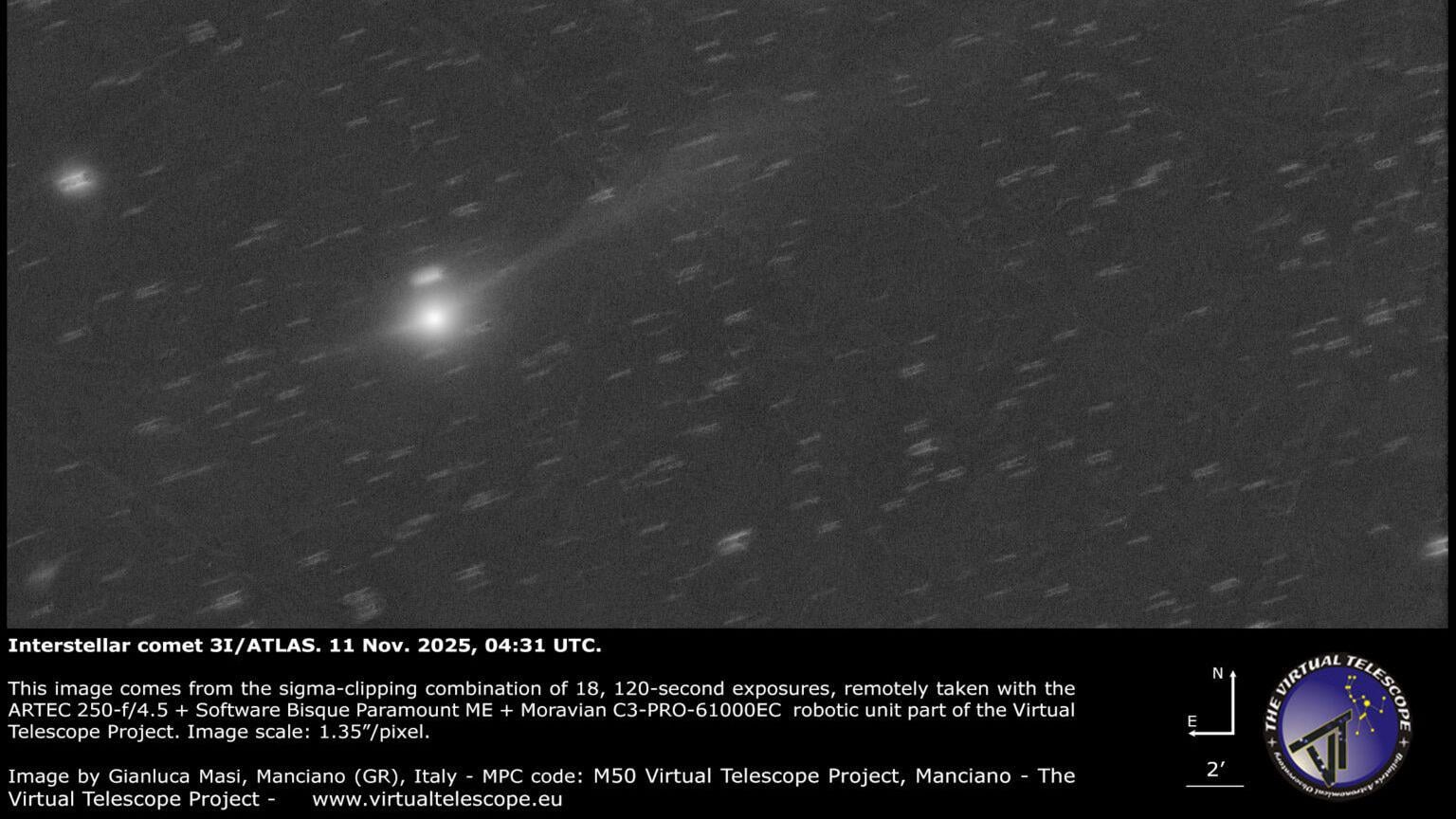
Interstellar comet 3I/ATLAS’s tail is still growing, new image shows
https://www.space.com/stargazing/interstellar-comet-3i-atlass-tail-is-still-growing-new-image-shows

Interstellar comet 3I/ATLAS’s tail is still growing, new image shows
https://www.space.com/stargazing/interstellar-comet-3i-atlass-tail-is-still-growing-new-image-shows
4 Comments
[deleted]
The r/3i_atlas sub is fully convinced I’m a paid disinfo agent
For saying the tail makes it a comet lol
Odds this posts gets deleted within the next couple of hours.
Yep, that’s what happens when an icy body approaches the sun. Radiation ablates and outgasses material from the surface, creating a tail of ionized gas. The intensity of the radiation, and thus the size of the tail, is directly related to the distance from the sun, so it grows as it gets closer, and even has a small but measurable impact on the velocity, since the outgassing material is directional, and produces a small amount of thrust.
If the object is made of material that outgasses a lot, like ice, and produces a substantial tail, then that is the literal definition of a comet.
A fun bit that’s a little unintuitive at first, since we’re intuitively used to air resistance, is that the tail always points directly away from the sun, rather than flowing behind the direction of travel, since it’s the solar radiation creating it.
That means a comet’s tail, after in passes the perihelion and is now moving away from the sun, will be moving in the direction of its tail, which makes perfect sense, of course, but is a little trippy to see since we are so used to tails… tailing.