
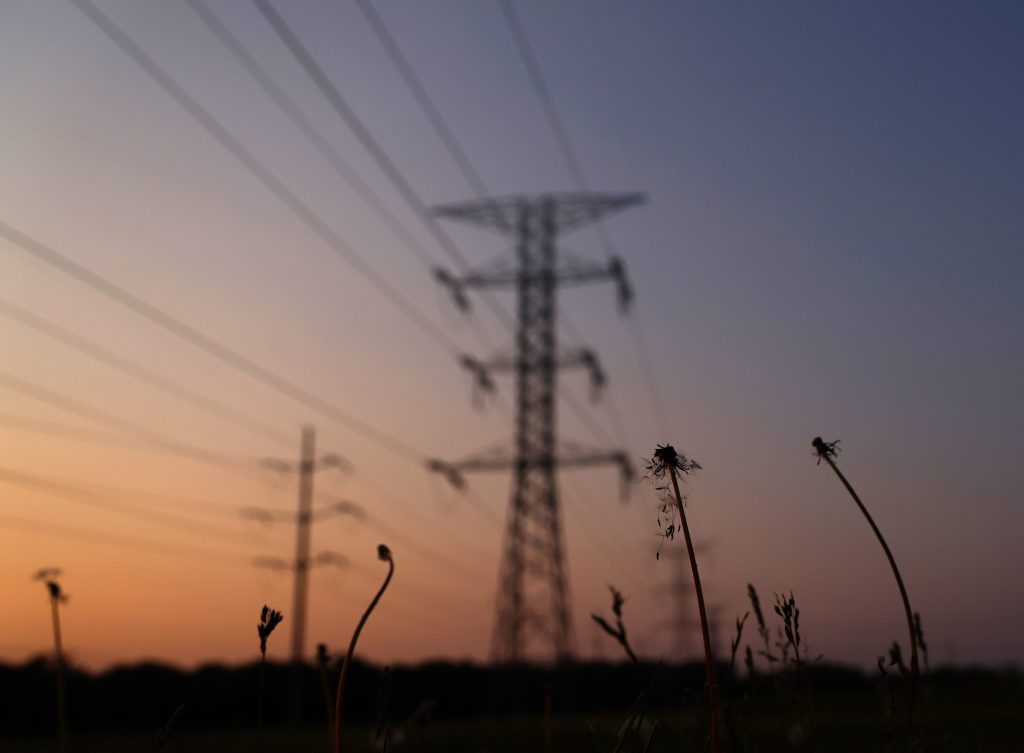
Thanks for the article “Energy bill gives Illinois regulators new powers” (Nov. 9). Under new state energy legislation, the Illinois Commerce Commission (ICC) will have new powers to help ensure the state can produce enough electricity to meet its growing energy and economic needs. An “all of the above” strategy is likely to be required for a longer period than originally anticipated to meet that demand. Over time, it’s likely market forces will favor clean renewable energy versus fossil fuels, since clean energy is often lower-cost and faster to get onto the grid.
But there is a wild card here. Illinois could face higher electricity bills not just because of its own demand shortfalls but also because of shortages in other states. Different areas of our state are part of multistate regional transmission organizations (RTOs). These RTOs are responsible for ensuring the reliability and integrity of the multistate electric grid can be met across the grid. If the RTOs don’t do their job, the ICC can’t fully deliver on its job. So, where’s the oversight for these RTOs and how do we get them to move faster on ensuring capacity and reliability?
Congress has a key role to play in enabling and encouraging sufficient RTO capacity growth. Comprehensive national permitting reform legislation is needed for building interstate transmission capacity. If the U.S. is only building interstate transmission capacity at 25% of the needed rate, demand will always be tight, and Illinois will never be fully in control of its own energy pricing.
Permitting reform must be fair and include early community input and a reasonable statute of limitations on judicial reviews, while still maintaining environmental and community protection. Tell your U.S. representative that we need comprehensive permitting reform now that includes clean energy, so we secure America’s affordable energy future.
— Andrew Panelli, Homer Glen
Encouraged by muskrats
Thank you again for another enlightening article about our environment and its many, many challenges (“Muskrats fight invasive cattails and help restore biodiversity, study finds,” Nov. 4). The article about the muskrat’s role in fighting invasive cattails in Illinois wetlands was very informative and so well written. I appreciate that Tribune editors have the consciousness to place this article on the front page as today’s news otherwise can be so draining. Adriana Perez’s byline always brightens my day. There are those who still care to share how important even smaller ecosystems are to humankind’s overall well-being and survival.
It was such a shame to read that the U.S. Supreme Court stripped protections from wetlands in 2023, especially because they improve water quality, provide habitats, store floodwaters, moderate climate and maintain surface water flow during dry periods. And they’re among the most productive ecosystems in the world, along with rain forests and coral reefs.
Mother Nature gave us the tools, and it has been up to us to use them wisely. Which we so oftentimes do not do. Thankfully, we have had little helpers like the muskrat, beaver and other creatures doing work for us.
At least I feel we are being kept informed by dedicated journalists like Perez.
— Beth Preis, Northbrook
Casualties of opioids
Out of every 100,000 people, American Indians and Alaska Natives suffer about 65 overdose deaths. That is a statistic America can’t ignore.
My mother is a Native. I am a Native. You want to talk about who in this country deserves help? We have always been here, and we will always be here. Until Americans choose to lend a helping hand to Native people, they will have no idea of this crisis.
Come home, America. We are each other.
— Jordan McClements, 2024-25 Edward E. Lindsay scholar, Northwestern University
Kindness of a clerk
I recently lost my license and had to go to the drivers service facility in the Loop. The process was quicker and more efficient than I expected. As I was awaiting my turn with the cashier, a young woman who did not speak English was paying for a service but was short several dollars and became upset. I watched as the cashier reached into her purse and pulled out several dollars that she gave to this young woman so she could complete the transaction.
Government workers often take a lot of flak. In this situation, the cashier showed much empathy and class.
The world is kinder than watching the news suggests.
— Steve Sherman, Chicago
Athlete with character
It’s hard to find anything positive in the news lately. But Tribune freelance sports writer Steve Reaven did just that. His article “Stewart leaves no doubt” (Nov. 11) reported on Warren senior running back Aaron Stewart, who will both play football and wrestle (two-time state champion) next year at the University of Illinois. His coach, Bryan McNulty, described him as the best player Warren has ever had. I read about all his significant accomplishments, including an unreal 2,871-rushing-yard season.
But what brought a smile to my face was the character that matches that talent. No cockiness or focus on his own achievements or personal disappointment. Warren was eliminated by Bolingbrook last Saturday. But Stewart’s concern was for his teammates, many of whom played their last football game.
Thank you to Reaven for stressing the amazing character of this young man. And best wishes to Stewart. I’m guessing there will be no dancing or grandstanding in the end zone at Illinois.
Act like you’ve been there — because you have.
— Patti Marino, River Forest
Loss of Bob Weber
Bob Weber’s “Motormouth” column was one that I looked forward to every Sunday. His straightforward and sometimes funny responses were very informative. While I am unable to recall a specific tip that he gave me, I sure did learn a lot from him.
While he will never truly be replaced, I hope the Tribune finds someone to step into his shoes.
— Jeff Johnson, Naperville
Note to readers: As part of our annual Thanksgiving tradition, we’d like to hear from you about what is making you feel thankful this year. (Sincere thoughts only, please.) Email us a letter of no more than 400 words by Sunday, Nov. 23 to letters@chicagotribune.com. Be sure to include your full name and your city/town and use the subject line “Thankful.”
Submit a letter, of no more than 400 words, to the editor here or email letters@chicagotribune.com.