
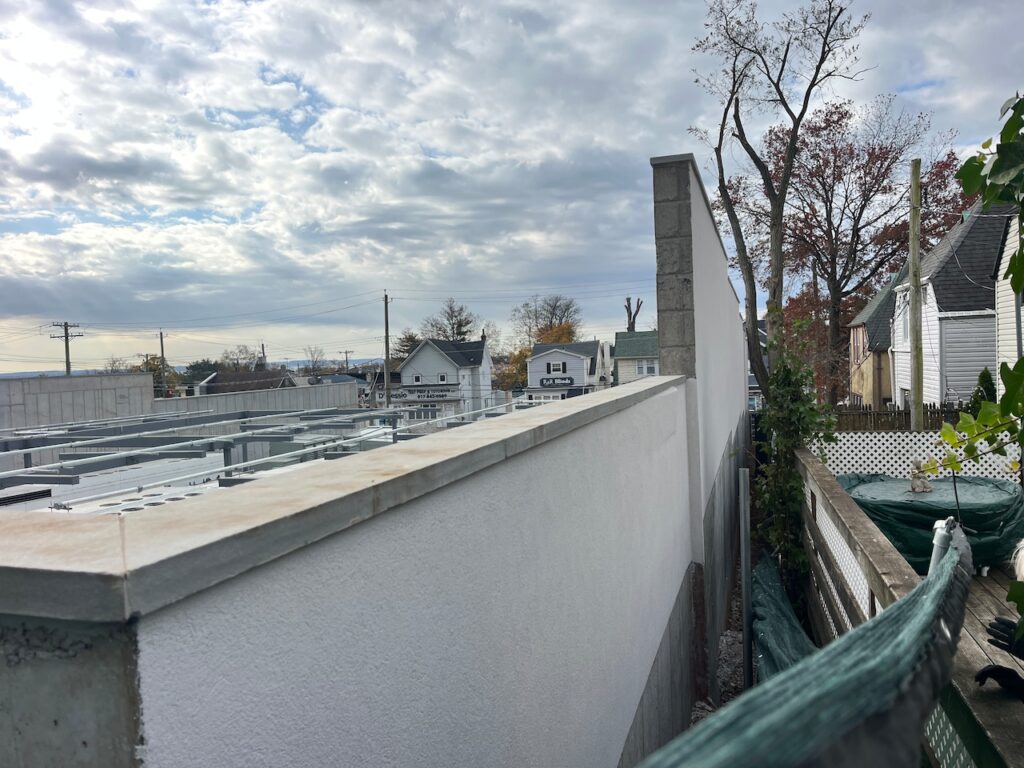
STATEN ISLAND, N.Y. — For decades, Robert Colacino enjoyed the quiet of his Great Kills backyard, neighbored only by a doctor’s office and enveloped by at least 15 to 20 mature trees. But two years ago, developers demolished that office and leveled the trees. Now, his property abuts a battery energy storage system and is fenced in by a massive concrete wall.
“It’s an eyesore, just horrendous for a residential area,” Colacino said. “If you went to the corner of Nelson Avenue and Hylan Boulevard, where that Dunkin’ Donuts and the gas station are, you would swear it was a bunker in Beirut.”
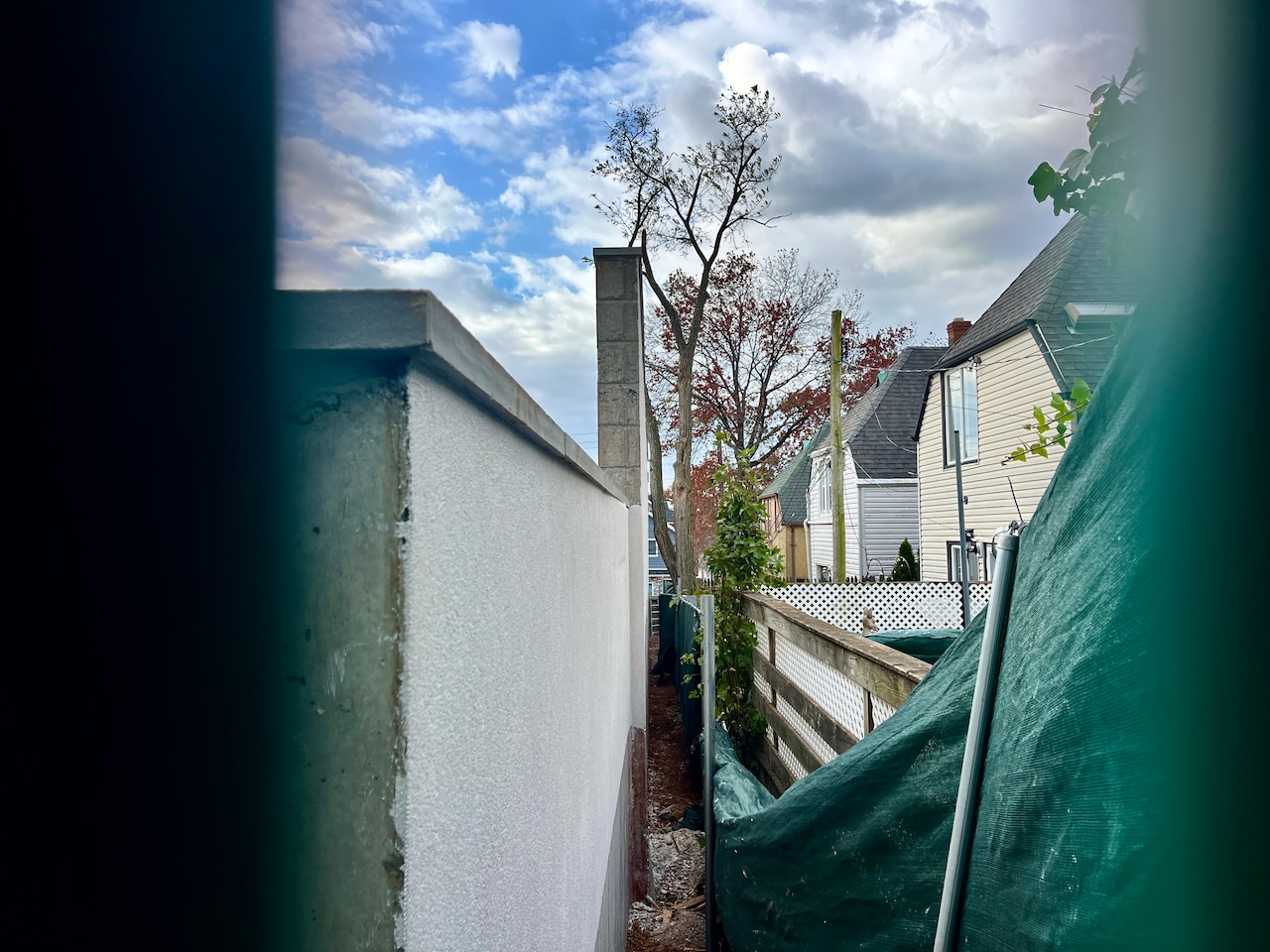
Colacino, a retired FDNY firefighter, said the reality of living behind a battery energy storage system was tough to accept, but when the project’s developer erected three large perimeter walls around the structure last month, it added insult to injury.
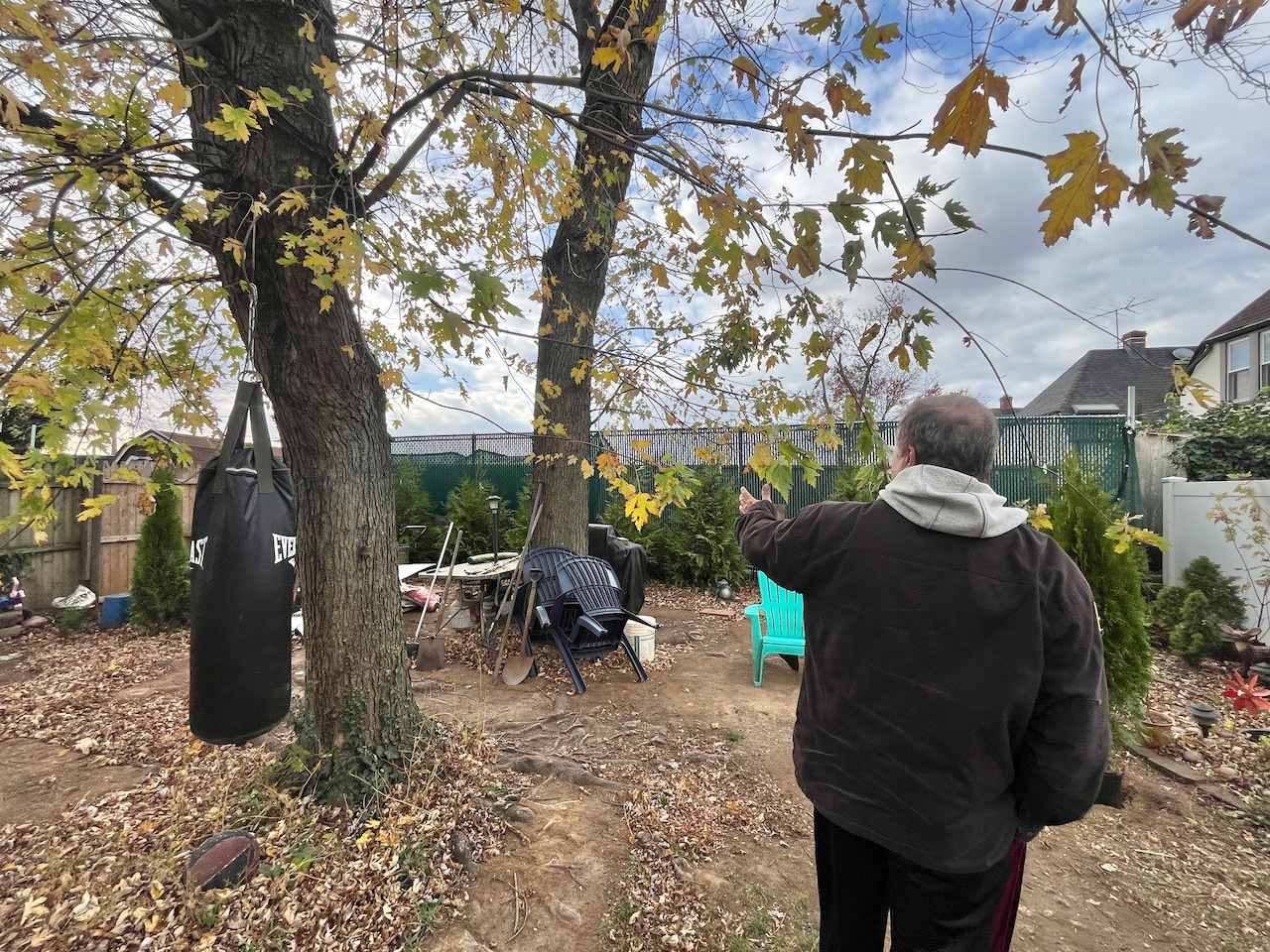 “The whole construction process has been nothing but a hassle, constant noise affecting quality of life,” Colacino said while standing in his yard.(Staten Island Advance/SILive | Jan Somma-Hammel)
“The whole construction process has been nothing but a hassle, constant noise affecting quality of life,” Colacino said. “And now we wake up to these massive walls. This doesn’t belong here, and these walls they’ve built around it for safety, for noise, whatever they’re for, prove it.”
A technology that uses a group of batteries to store electrical energy, allowing the energy to be released later when needed, the storage system sites — commonly referred to as BESS — essentially act as backup power sources for homes or the grid, particularly during peak demand or power outages. They are often used in conjunction with renewable energy sources like solar power.
Developers and green energy proponents tout the lithium-ion structures — which started popping up in several NYC neighborhoods in 2022 — as quiet neighbors that are a necessary agent for renewable change. They are designed to remove pressure from the city’s stressed grid, using rechargeable batteries to store electrical energy from various sources, and then releasing that stored energy when needed.
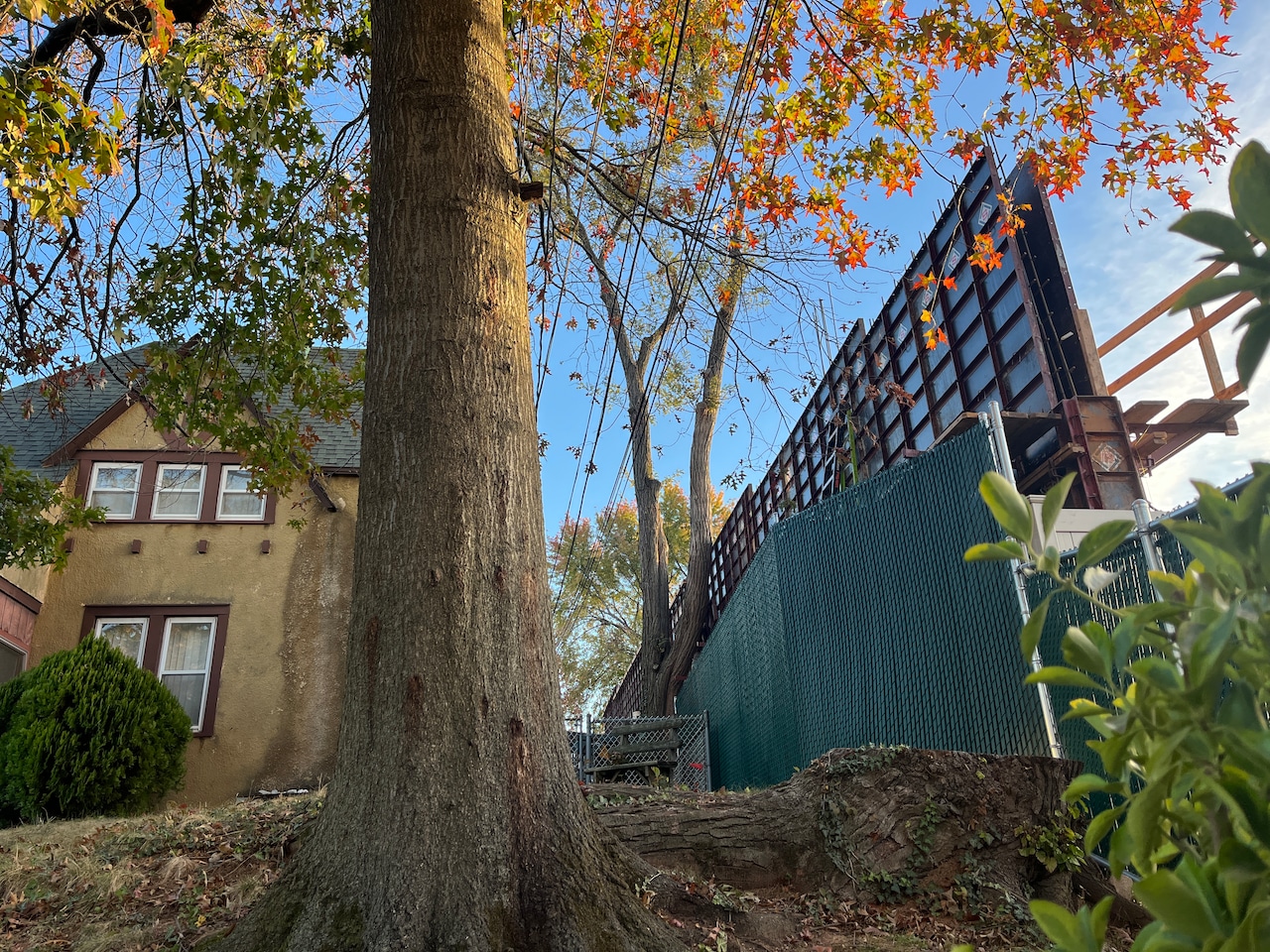
 Neighbors said this battery energy storage site replaced at least 15 to 20 mature trees located at 287 Nelson Ave. in Great Kills.(Staten Island Advance/SILive | Jan Somma-Hammel)
But over the past two years, borough residents and local officials have voiced concerns about their siting. Community Boards voted against their proximity to bakeries and storefronts and elected officials issued a moratorium on applications filed within residential districts. In one instance, an energy developer retracted plans to place batteries in a Bulls Head church parking lot.
Plans to construct an eight-acre battery energy storage system on a busy strip of Victory Boulevard in Travis were also recently scrapped after the company responsible for its development missed several key decommissioning plan deadlines.
This particular battery energy storage system, located at 287 Nelson Ave., and sandwiched between several residential homes and a Citgo gas station, was allowed because of the property’s as-of-right zoning — even though its placement was questioned and battled by local politicians since 2023.
The walls that now surround it are different and significantly larger than those installed at other battery energy sites in the borough, but NineDot Energy, the project’s developer, noted that they are part of NYC’s standard regulatory process for fire safety and noise mitigation.
 Three large concrete perimeter walls were constructed in October to surround the Great Kills battery energy storage site, a step that developers say is part of NYC’s standard regulatory process for fire safety and noise mitigation.(Staten Island Advance/SILive | Jan Somma-Hammel)
“Every site we build includes some form of perimeter walls or fencing, designed in accordance with FDNY and Department of Buildings requirements for all battery storage projects in New York City,” NineDot previously told the Advance/SILive.com. “What’s being built at the Nelson Ave. site are not retaining walls. They are engineered sound and fire barriers that were reviewed and approved as part of the standard FDNY and DOB permitting process.”
According to Nine Dot, the design of the barriers is guided by a Hazard Mitigation Analysis and an Acoustical Analysis, which evaluate fire safety and noise mitigation to ensure full compliance with FDNY rules and the NYC Noise Code.
“Every site we build has walls or fencing around it. While each site design is unique, the rules we follow are the ones laid out by the FDNY and DOB for all battery storage projects in New York City,” the company noted on its website.
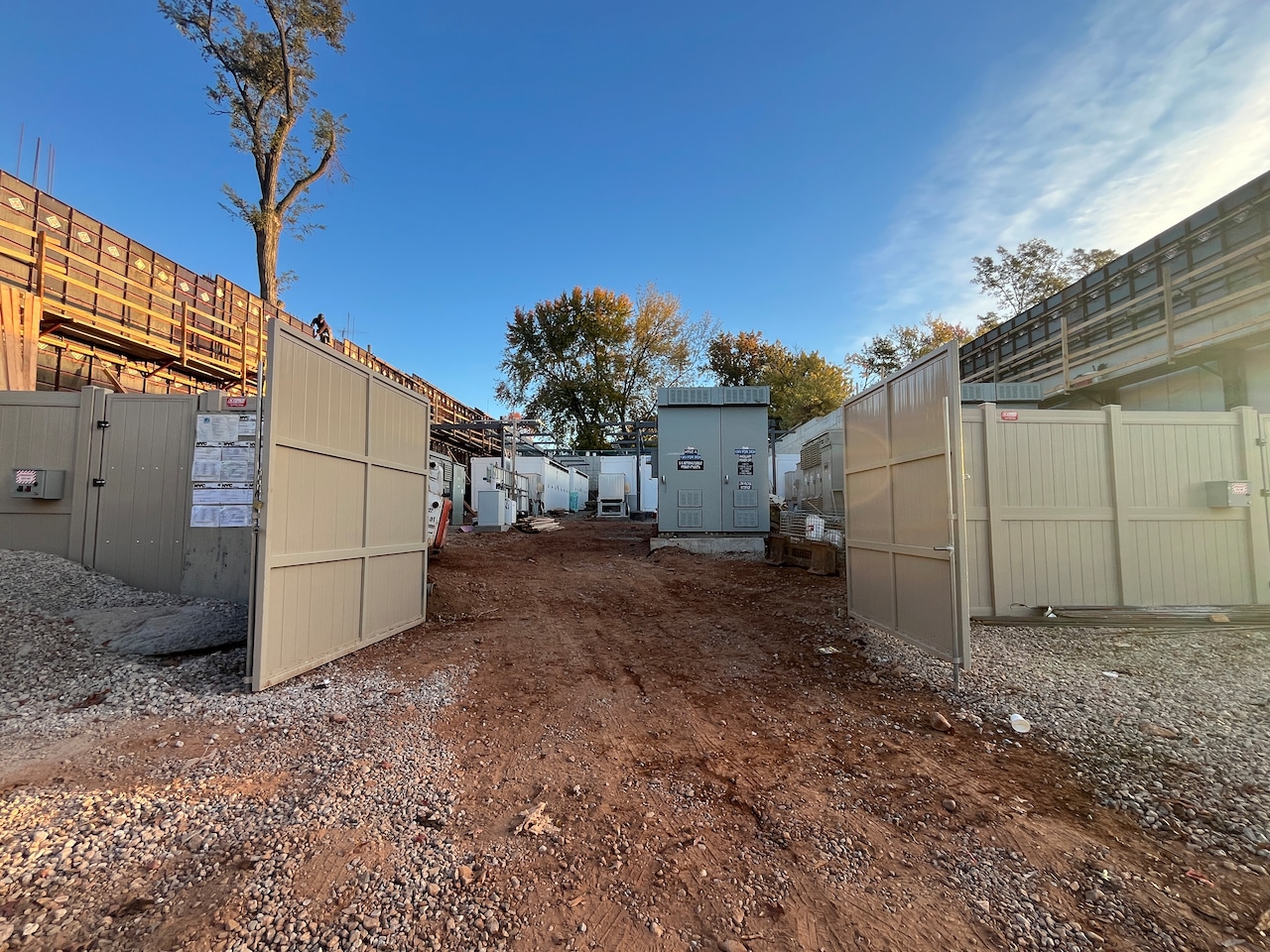 The battery energy storage site on Nelson Avenue is sandwiched between several residential homes and a Citgo gas station.(Staten Island Advance/SILive | Jan Somma-Hammel)
NineDot added: “Overall, these walls are another example of our commitment to safety and our strong partnership with FDNY — widely regarded as the most expert fire department in the world.”
But Colacino said he does not find solace in that reasoning and even shared video with the Advance/SILive.com of the “persistent” hum emitted by the battery packs that are adjacent to his property.
“If these sites are so safe and quiet, why build the wall?” he asked.
Colacino’s neighbors said they agree.
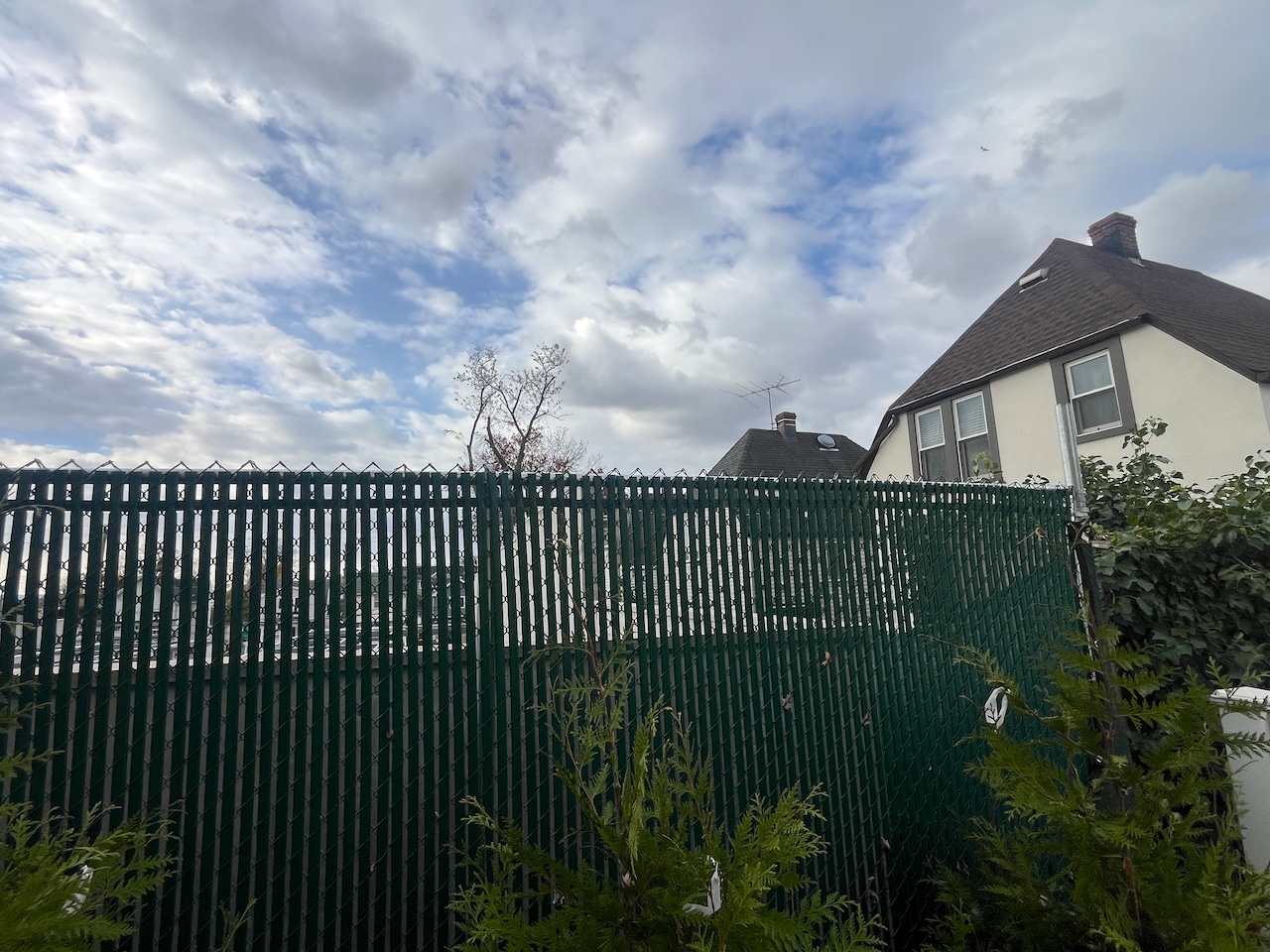 A green construction fence was erected by developers two years ago. Colacino planted bushes in hopes of concealing it.(Staten Island Advance/SILive | Jan Somma-Hammel)
“This is a nightmare,” one resident said, requesting anonymity. “I used to be able to see the ocean from my kitchen window and now all I see is a wall.”
Another resident added: “It really is shocking that this can happen almost overnight. It used to be so beautiful here, so many trees. If I took one tree down on my property I would face a ton of fines. They changed the whole face of this neighborhood with absolutely no penalty.”
If you purchase a product or register for an account through a link on our site, we may receive compensation. By using this site, you consent to our User Agreement and agree that your clicks, interactions, and personal information may be collected, recorded, and/or stored by us and social media and other third-party partners in accordance with our Privacy Policy.