
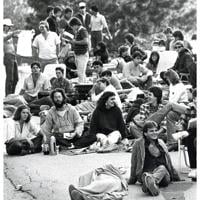
This year marks the 40th anniversary of the original 1985 Farm Aid benefit concert, which took place at Memorial Stadium on the University of Illinois campus.
Motivated by the economic difficulties of Midwestern farmers during the 1980s farming crisis, a variety of musical artists led an effort to hold a concert with the goal of donating all proceeds to struggling farms.
The organization effort for Farm Aid was led by country music star Willie Nelson. The idea to raise funds for domestic causes first came to him during conversations with fellow artists while recording “We Are the World” earlier in 1985.
Having grown up around farming in his hometown of Abbott, Texas, Nelson had long been aware of the unique struggles facing American farmers, but he never took credit for the original idea, opting instead to point out the list of people who mentioned it to him.
However, he did most of the work to make the idea reality, first by bringing it to the attention of Illinois Gov. James Thompson.
Two days later, the University of Illinois agreed to host the concert on campus. A week after that, Nelson and John Mellencamp announced the concert to the world.
Farm Aid organizers found themselves scrambling to make the event happen on Sept. 22, only 36 days after the concert was announced. From talent booking and publicity to staging and security, all hands were on deck for the next couple of weeks.
Nelson took on a major portion of the planning, including sorting out ticket prices, determining how to best handle the proceeds, and personally asking artists such as Neil Young and the Beach Boys to perform.
The final lineup included major musical acts from a variety of genres, both current and past, with names such as Bob Dylan, Billy Joel, Joni Mitchell, Bon Jovi, Lou Reed and Tom Petty.
During the planning process, Nelson spent time at the Minnesota State Fair, hearing firsthand from farmers about the issues they had been facing.
Many farmers expressed a desire to keep politicians out of the plans, with many feeling that the government had played a major role in the failing farming industry at the time.
Nelson and Gov. Thompson worked together to receive input from farmers and agricultural leaders from across the country. In addition to the donation of proceeds, they also set up a hotline, 1-800-FARMAID, to receive donations over the phone. The hotline continues to receive donations to this day.
Excitement for the concert began to build as more artists signed on to perform. Thousands of ticketbuyers lined up, with some camping overnight outside, at the UI Assembly Hall (now the State Farm Center). Over half of the tickets were sold in the first day of sales alone, with individual tickets costing $17.50. Groups from across the country began donating goods to assist the concert organizers. The concert was quickly gaining steam, with only a handful of weeks to go.
Sept. 22 finally dawned in East Central Illinois, after a frantic few weeks of planning. Rain started about 15 minutes into the 15-hour concert and continued throughout the day, but concertgoers were undeterred. Decked in plastic ponchos, the crowd of over seventy thousand was determined to enjoy the lineup ahead.
The local community played an important role in concert proceedings. Security and traffic control were handled in large part by the Champaign and Urbana police departments, and transportation to the stadium was provided by MTD.
Volunteers from the local community assisted in many areas, from setup to cleanup.
The News-Gazette even reported that 20 football players from the Urbana High School team spent the entire day selling concessions. Concert planners praised the local community for their role in preparations, with some stating, “You couldn’t work with better people.”
Ultimately, over $8 million in aid was raised at the concert alone, with organizers expected to see over $50 million in the subsequent year. Today, the organization provides support services to farmers via their hotline and the Farmer Resource Network.
Upon the success of the first concert, Nelson planned a follow-up the next year, which took place on July 4, 1986, in Manor, Texas, with similar success. The concert has now become an almost yearly occurrence since then, with communities across the country hosting the event.