
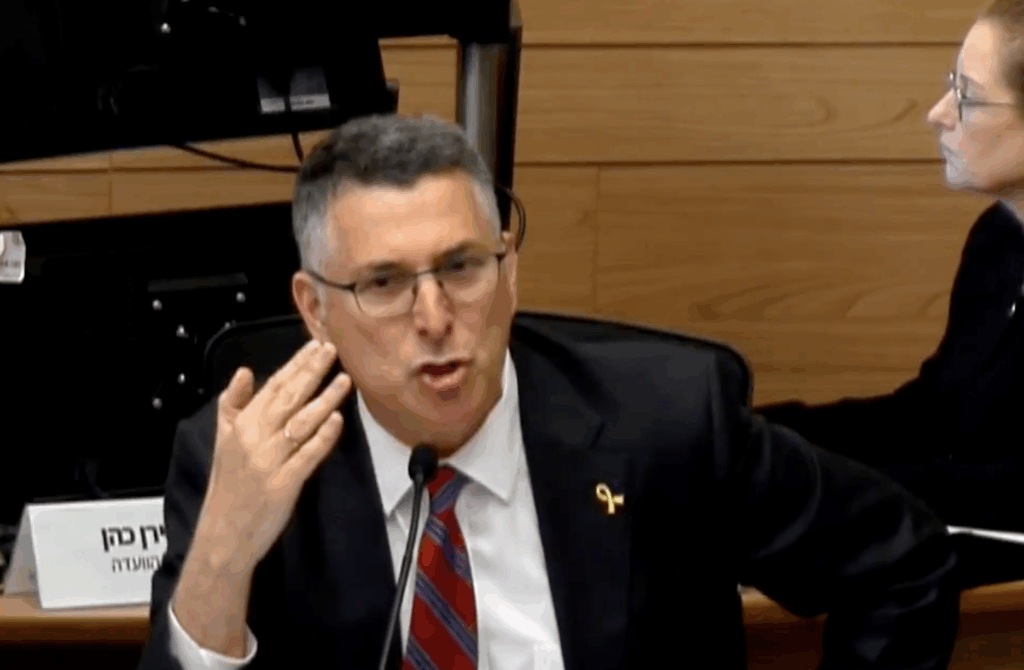
The Knesset Constitution, Law, and Justice Committee on Monday held a charged discussion on a bill to gut the office of Attorney General Gali Baharav-Miara, whom Prime Minister Benjamin Netanyahu’s government is seeking to oust as part of a wider bid to weaken the judiciary.
The government-backed bill, put forward by committee chair MK Simcha Rothman of Religious Zionism, would split the attorney general’s position into three jobs — legal adviser to the government, prosecutor general, and government representative in the courts — and give the government complete control over appointments to those roles. The bill, which Baharav-Miara opposes, passed a preliminary reading in the Knesset plenum late last month.
Appearing before the committee on Monday, Foreign Minister Gideon Sa’ar, who as justice minister in the previous, anti-Netanyahu government in 2022 appointed Baharav-Miara, cast the office of the attorney general in Israel as a “dictator-like” body mired in conflicts of interest that serves as judge, jury, and executioner.
Rothman gave each lawmaker on the committee just 20 seconds to question Sa’ar after his remarks. He then kicked out four opposition lawmakers who protested that too little time had been allotted: MKs Yoav Segalovitz, Vladimir Beliak, and Karin Elharar of Yesh Atid, and MK Efrat Rayten of The Democrats, all of whom served in the previous governing coalition with Sa’ar.
In his remarks, Sa’ar said that while Israeli democracy has at some points benefitted from “the power accrued by the Attorney General’s Office,” the role’s authority has expanded radically in recent years into “dictator-like control over legal representation and advancement of legislation.”
“There is no parallel in the democratic world to the concentration of so much power in the hands of an unelected authority,” Sa’ar said, adding that the role has a “built-in conflict of interest.”
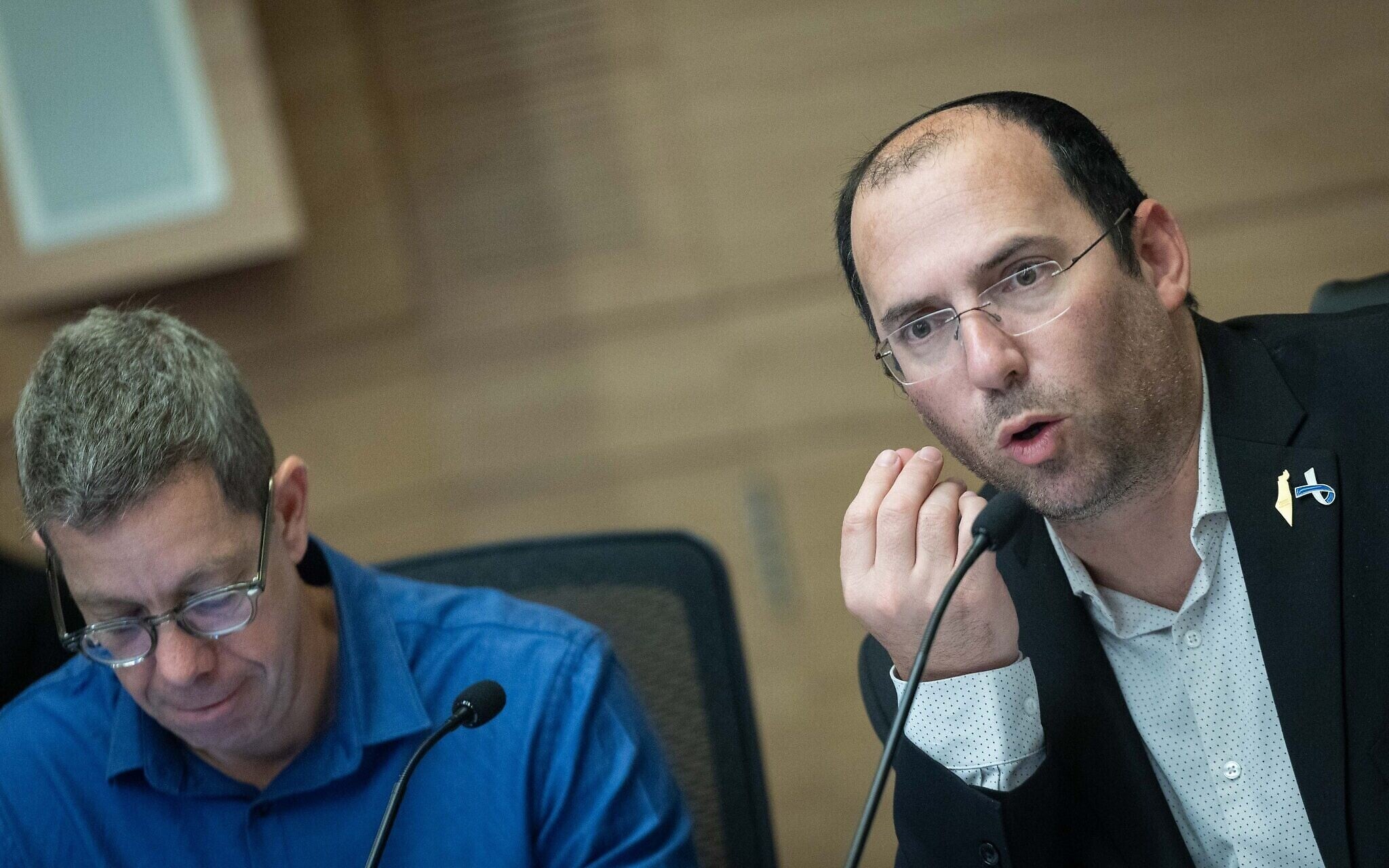
MK Simcha Rothman, right, leads a hearing of the Constitution, Law, and Justice Committee at the Knesset in Jerusalem, November 17, 2025. (Yonatan Sindel/Flash90)
It was unreasonable to expect ministers to confer with an attorney general who could launch a criminal probe against them and would thus be “both their counsel and potential executioner,” he said.
The conflict of interest was especially flagrant, he said, in Baharav-Miara’s opposition to the government’s appointing its own investigator in the Sde Teiman abuse video leak case, from which the government has demanded she recuse herself, due to her initial shuttering of the case last year.
The Attorney General’s Office was acting “like angels floating over conflicts of interest” in the case, Sa’ar said. “They don’t recognize their own conflicts of interest even when they’re written in giant letters three feet in front of them.”
Elharar, the opposition lawmaker, said the government was itself conflicted in splitting up the attorney general’s role given the ongoing corruption case against Netanyahu.
Sa’ar, meanwhile, accused his critics in the Knesset and judiciary of hypocrisy, saying they had themselves once gone along with plans to split the attorney general role.
The former foreign minister said he had shared his intention to split the role in conversations with both Baharav-Miara and State Attorney Amit Aisman before appointing them. Sa’ar said he did not recall either of them objecting at the time.
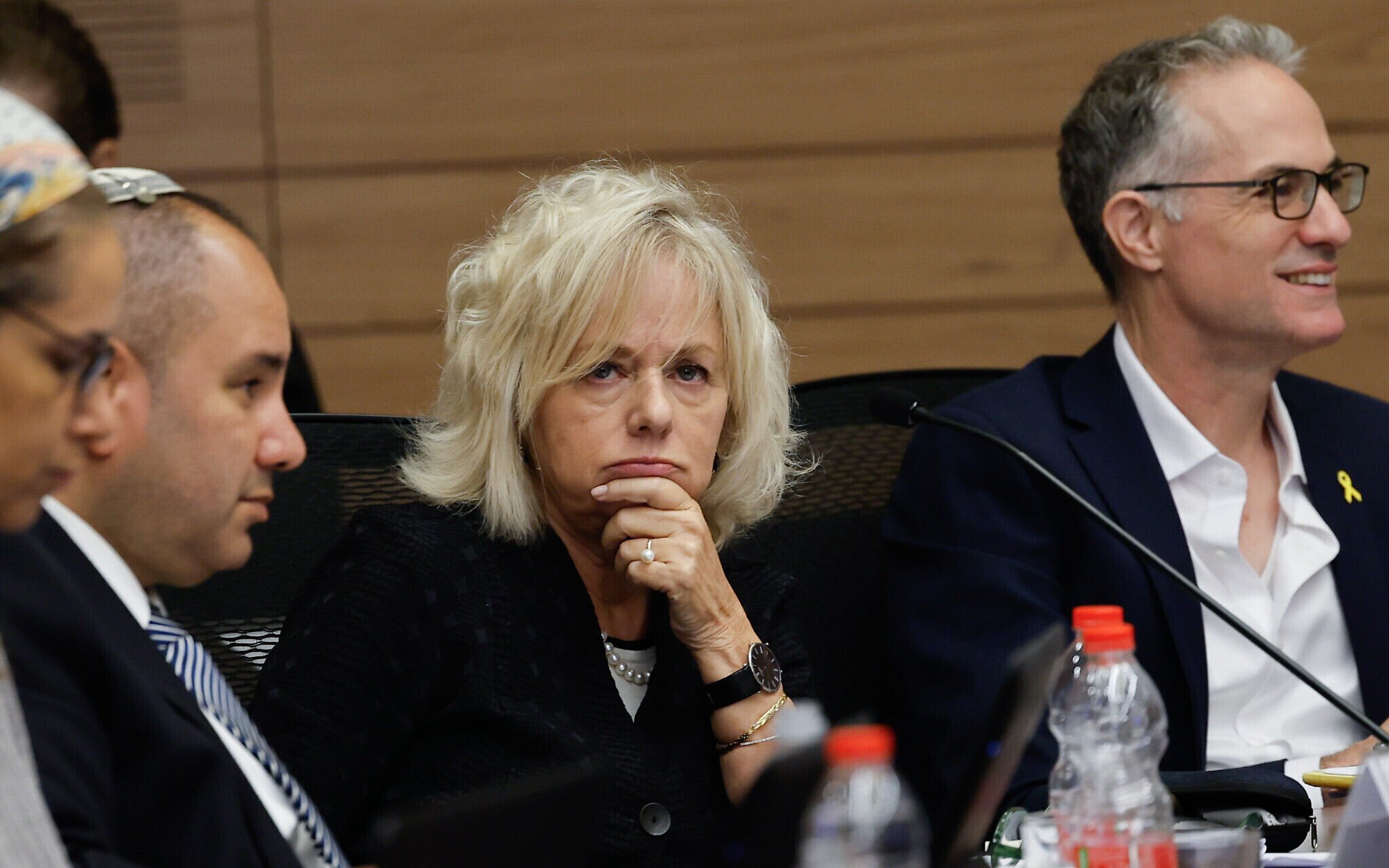
Attorney General Gali Baharav-Miara attends a hearing of the Knesset Constitution, Law, and Justice Committee at the parliament in Jerusalem, September 30, 2025. (Oren Ben Hakoon/ Flash90)
In addition, Sa’ar said, in the coalition agreement between Yesh Atid and his own faction at the time, New Hope, “it was written that the parties agree that the attorney general’s role must be split.”
Yesh Atid released a statement on X accusing Sa’ar of lying. “The proposal that was part of the coalition agreements in the previous government isn’t even remotely similar to the deranged and destructive version now before the Constitution Committee,” said the party, which is headed by Opposition Leader Yair Lapid and was the largest faction in the previous coalition.
New Hope hit back with the relevant clause, which states: “The parties agree on the need to partition the role of attorney general. Accordingly, the justice minister will submit for government approval a proposal on the aforementioned partition.”
“Lapid, as usual, has no idea what he’s talking about,” wrote the party, which broke off from Netanyahu’s Likud party in 2020 and is expected to be dissolved back into the Likud before the next election, set to take place by October 2026.
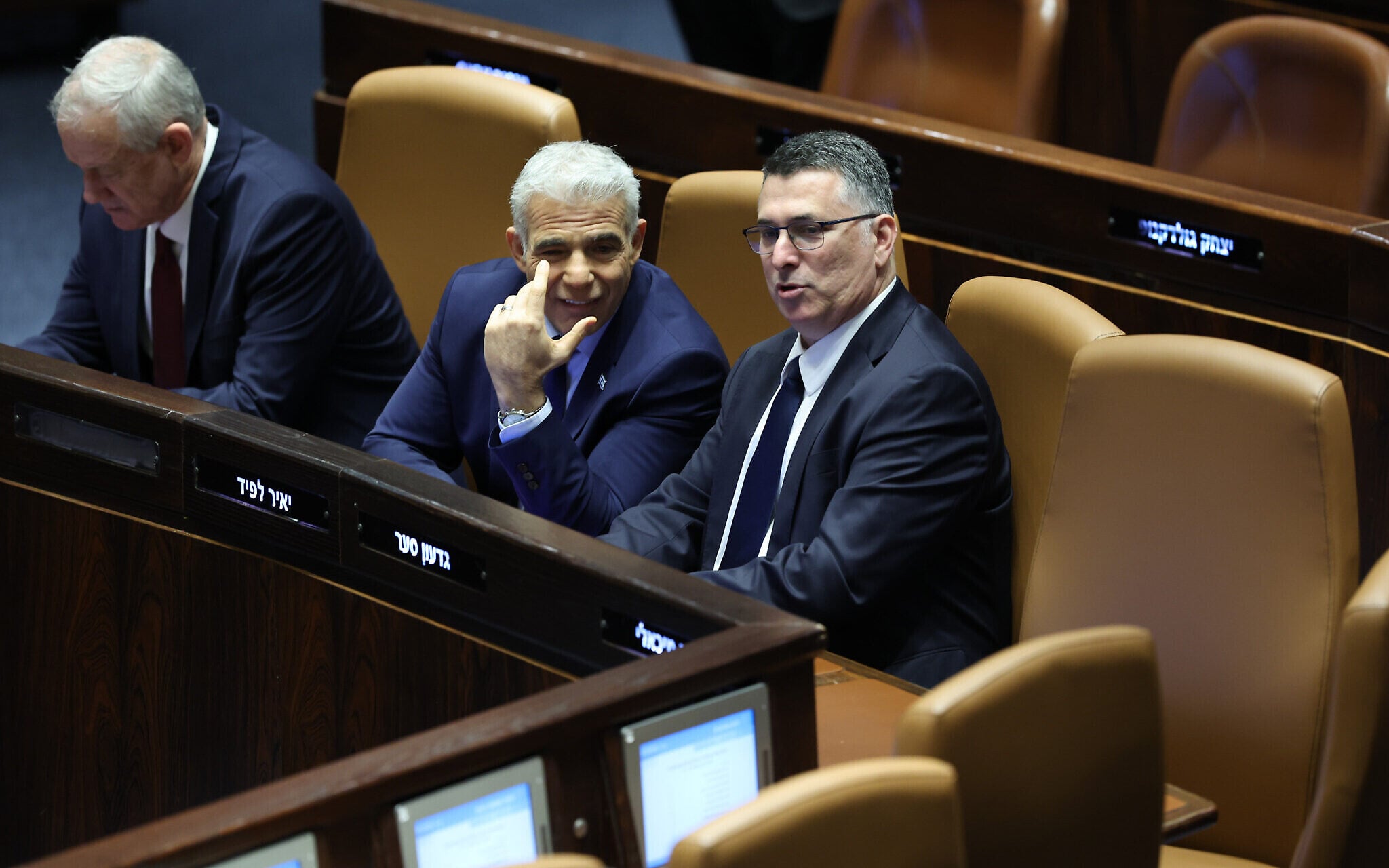
(R-L) Then-outgoing justice minister Gideon Sa’ar, then-prime minister Yair Lapid, and then-defense minister Benny Gantz attend the swearing-in ceremony of Prime Minister Benjamin Netanyahu’s new government at the Knesset in Jerusalem, December 29, 2022. (Yonatan Sindel/FLASH90)
The current government has clashed with Baharav-Miara, the attorney general, since its first weeks in office, in large part over its judicial overhaul.
Justice Minister Yariv Levin, architect of the overhaul, accuses her of stymying the will of the people by thwarting key policies, decisions, and legislation of the elected government.
In her capacity as the government’s chief legal adviser, Baharav-Miara determines whether its decisions accord with the law.
The attorney general’s legal determinations are seen as binding on the government, unless the High Court of Justice says otherwise — a state of affairs stemming from a landmark 1993 High Court ruling that was never codified by the Knesset.
Critics of the bill to break up the attorney general role say the legislation would politicize the criminal prosecution and deal a death blow to the already-sparse system of checks and balances on executive power in Israel.

Activists protest against the government’s judicial overhaul, in Tel Aviv, on July 29, 2023. (Miriam Alster/Flash90)
Speaking at the committee hearing on Monday, Sa’ar declined to say if he would support annulling the binding nature of the attorney general’s legal opinions.
“I’m not sure it’s necessary to get into that in the context of this draft bill,” said Sa’ar when The Democrats MK Gilad Kariv questioned him on the matter.
Sa’ar entered the current Knesset in late 2022 as part of the National Unity joint slate led by former defense minister Benny Gantz. That slate initially sat in opposition to Netanyahu’s government, and Sa’ar, along with other opposition leaders, often assailed the judicial overhaul.
National Unity joined the government days after the Hamas onslaught of October 7, 2023, which sparked the war in Gaza, but Sa’ar bolted both the alliance with Gantz and the government the following March after Netanyahu failed to appoint him to the war cabinet.
Gantz quit the government three months later, citing disagreement with Netanyahu over the conduct of the war. Sa’ar, without Gantz, returned to the government in September, and was appointed foreign minister in November.
Jeremy Sharon contributed to this report.