
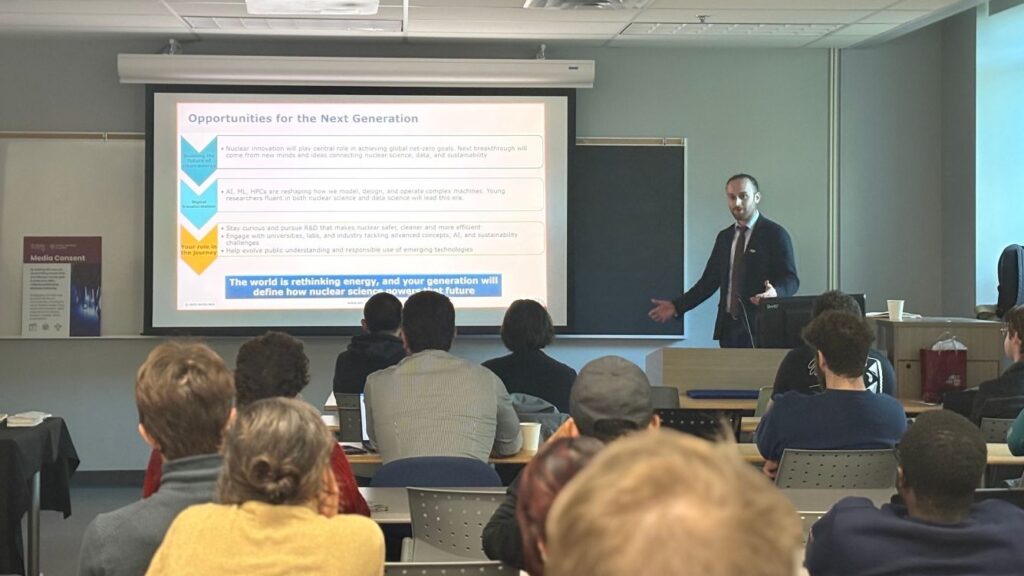
Research on advanced fuel cycles and the use of artificial intelligence and machine learning (AI/ML) is increasing within academic and research institutions, reflecting trends across other research and development areas. As part of these efforts, the NEA presented a lecture dedicated to frontier topics in nuclear science hosted by McMaster University on 27 October 2025. The presentation brought together students, researchers and faculty members to explore current research themes, with particular focus on the role of artificial intelligence in nuclear applications.
The NEA presentation shed light on the activities of the NEA Working Party on Scientific Issues of Advanced Fuel Cycles (WPFC), and the Joint Project on AI Platform for Nuclear Research and Education (AIxpertise) which aims to build a structured platform for data, benchmarking and training of AI-enabled nuclear research.
The lecture also highlighted active research areas supported by the NEA Nuclear Science Committee (NSC) and its initiatives, including fuel-cycle scenario modelling, studies of innovative fuel concepts, approaches to fuel cycle closure and advances in fuel-recycling technologies, as well as the integration of AI and machine learning tools within nuclear science.
Key points from the presentation included:
- An overview of NEA activities in advanced fuel-cycle science and the contributions of WPFC expert groups;
- A description of the AIxpertise Joint Project and the role of academia in supporting the advances of AI/ML in the nuclear sector; and
- Opportunities for universities and academia to get involved and support international efforts in deploying advanced fuel cycles and AI/ML in the nuclear industry.
By actively engaging in various NEA activities, McMaster University has maintained a strong partnership with the Agency. The lecture also underscored the potential for expanding collaboration in the rapidly growing field of AI within the nuclear sector.