
Key Points and Summary – Japan’s new prime minister, Sanae Takaichi, has openly warned that a Chinese attack on Taiwan would threaten Japan’s security, pulling long-running assumptions into the open: any Taiwan war risks becoming a wider regional conflict—and a nuclear one.
-Dr. Robert Kelly explores whether U.S. and Chinese nuclear arsenals would restrain both sides or fuel dangerous escalation, especially if U.S. strikes on the mainland were misread as targeting China’s nuclear forces.
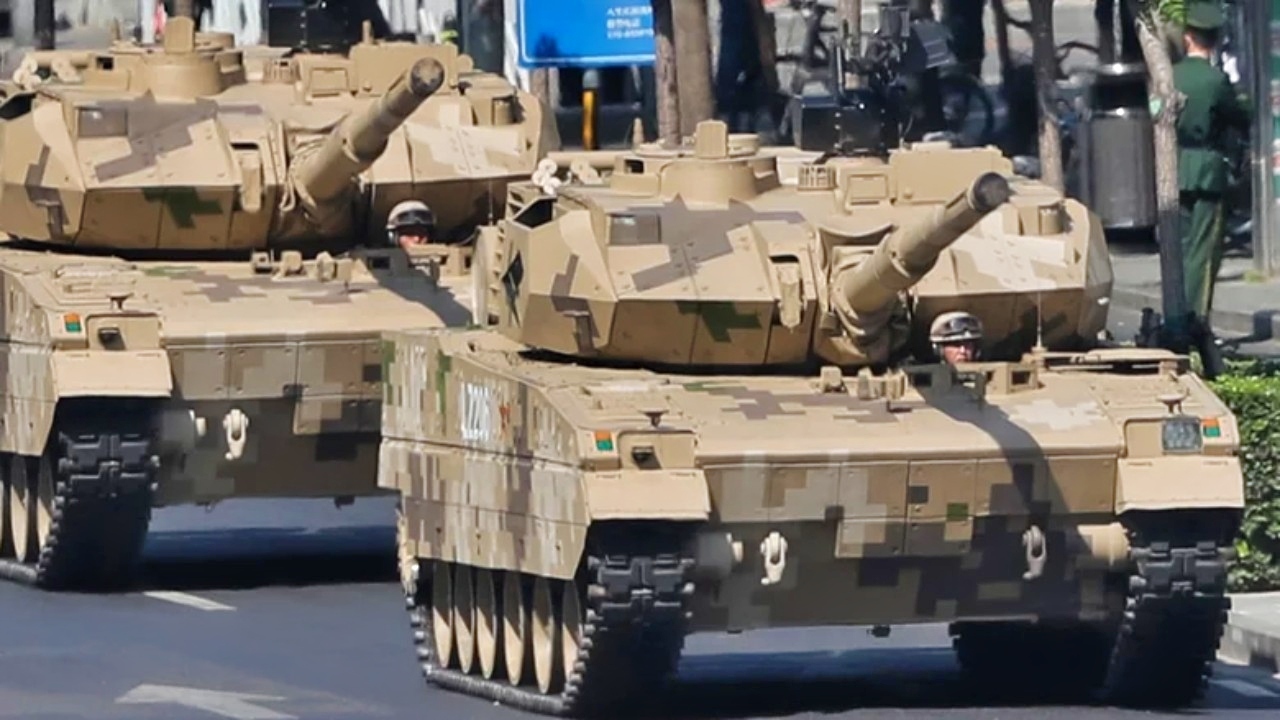
Type 15 Tank from China. Image Credit: Creative Commons.
-Drawing on cases like India–Pakistan and the Cold War, he argues that Taiwan could become the defining test of whether “nuclear peace” really works in the 21st century.
Will Nukes Constrain a Clash Over Taiwan?
Japan and China are in an escalating war of words over Taiwan this month. Japan’s new prime minister, Sanae Takaichi, has publicly indicated that aggressive Chinese moves against Taiwan would constitute a national security threat to Japan.
This is correct. Japan appears to be shedding its strategic ambiguity regarding Taiwan because of rising talk—not refuted by China—that China might attack Taiwan sometime in the next decade.
Takaichi is now trying to calm these tensions. China has an interest in amity as well. Japan and China trade substantially. Embargoes and retaliatory tariffs emerging from this row would hurt both economies.
But Takaichi’s comments bring into the open what has long been suspected—that Chinese aggression against Taiwan would likely spiral into a regional conflict, because many small and democratic countries in East Asia would see a Chinese attack as a bid for regional leadership or a revanchist effort to intimidate the region, similar to Russian President Vladimir Putin’s invasion of Ukraine.
Nuclear Risk and War in Taiwan
In the background of any such conflict would be the nuclear weapons of both China and the United States. It is widely thought that the US would help defend Taiwan, which raises the potential for nuclear escalation between the two superpowers.
Inadvertent escalation—where China misreads US strikes on Chinese sites as an effort to destroy its nuclear weapons and therefore launches those weapons—is a particular concern.
A small initial nuclear exchange could easily escalate. No one quite knows how decision-makers would react to limited nuclear warfare, but hysteria and overreaction are one obvious possibility.
For example, in the current Netflix film A House of Dynamite, which features nuclear weapons, the story ends this way.
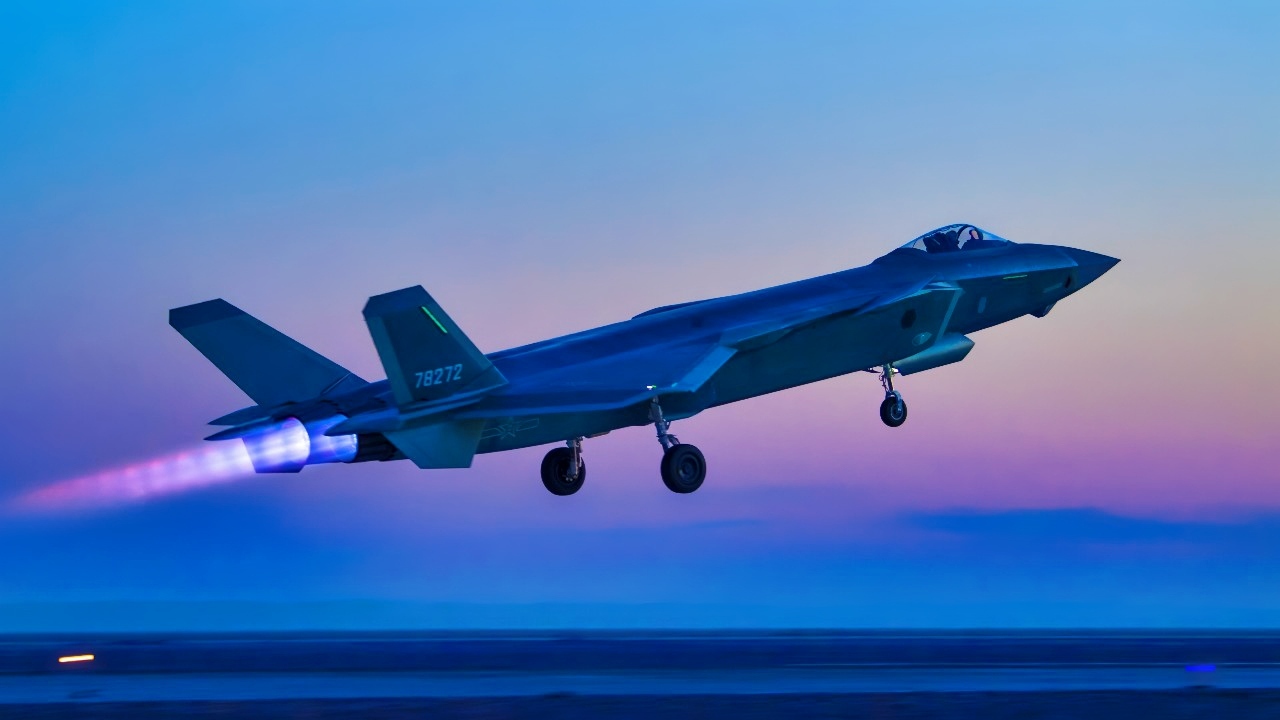
China J-20 Amazing Colors. Image Credit: PLAAF.
The president is considering a massive global response to a single missile targeted at America.
But there is another possibility—that fears of nuclear escalation will act as a powerful constraint.
For decades, international relations scholars have argued that nuclear weapons are so destructive—even just a few detonations on home soil would be an unparalleled national catastrophe—that they discourage even the most reckless leaders from foolishness.
India and Pakistan, for example, have limited their conventional conflicts for fear of nuclear escalation.
And the Soviet Union astonishingly chose to give up in the Cold War rather than make a bid for redemption in the late 1980s by attacking Western Europe. NATO nuclear threats almost certainly discouraged Soviet elites from ‘gambling for resurrection.’
There is even a term for this idea—the ‘nuclear peace.’ Nuclear escalation—even its potential—is so terrifying that it dissuades aggressors from taking large chances.
Taiwan as a Test of Nuclear Peace
The current Russo-Ukrainian conflict conforms to the nuclear peace logic. Despite Putin’s regular bluster and nuclear threats, he has not horizontally or vertically escalated the war.
That is, he has neither expanded the war by attacking NATO, nor escalated Russia’s use of force in Ukraine by using tactical nuclear weapons to force a breakthrough.
We do not know Putin’s precise logic for his regional and conventional limitations on the war, but historians will surely examine whether nuclear escalation fears were considered.
In Taiwan contingencies, nuclear escalation fears should be more dispositive. Allied assistance to Taiwan would be harder than to Ukraine. NATO is large, wealthy, and adjacent to Ukraine.
The US and Japan are much further away from Taiwan. China is also much stronger than Russia.
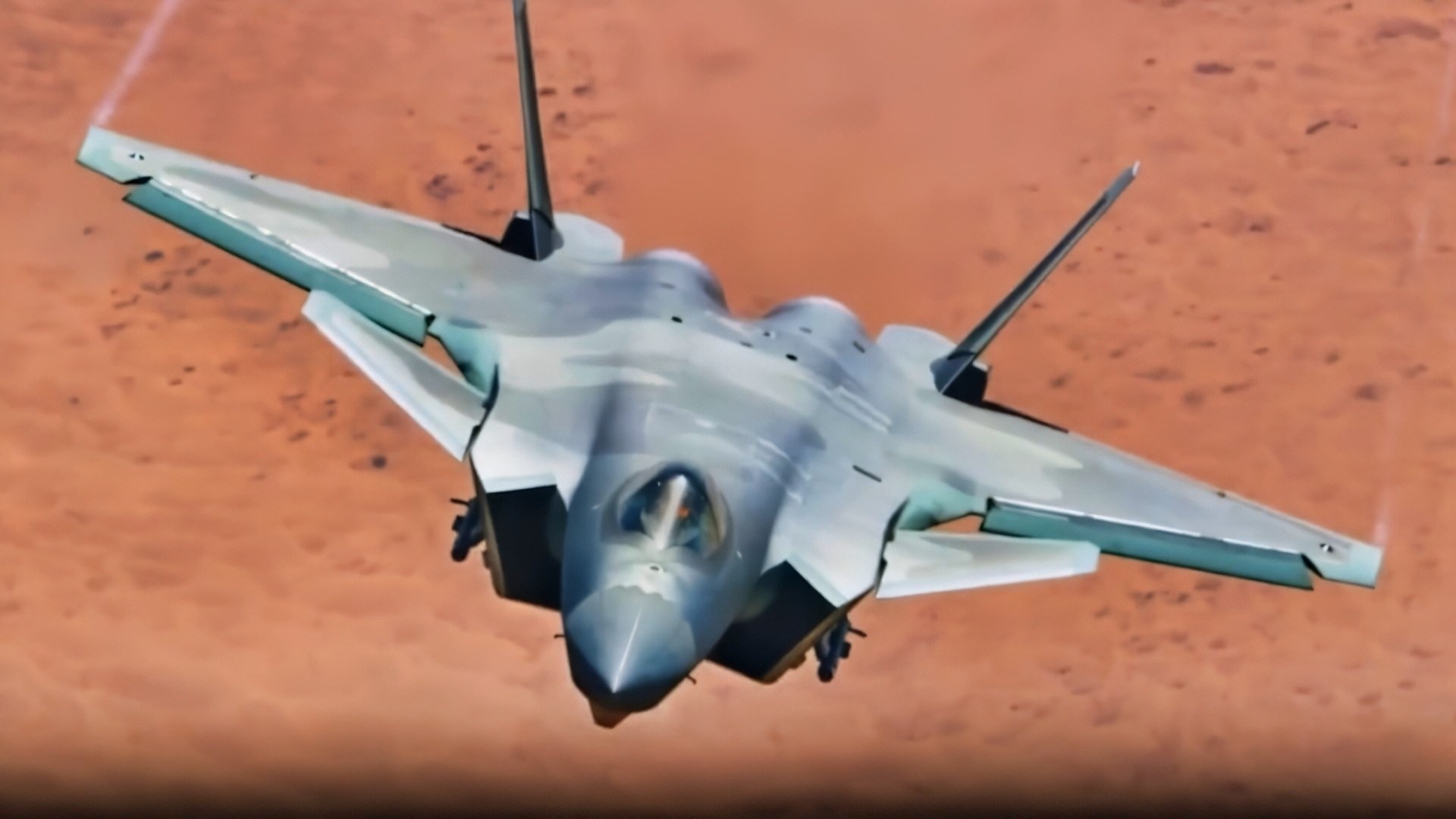
J-20 Fighter from 8K PLAAF Movie Screenshot.
Thus, the pressure on the US to consider nuclear escalation—to compensate for Taiwan’s greater vulnerability—would be greater. Also, the pressure on the US to bomb the Chinese mainland—thereby possibly provoking inadvertent escalation—would be greater.
Taiwan is therefore a crucial test of just how much nuclear fears constrain great powers’ use of force. Is China willing to risk nuclear escalation to move against Taiwan?
Nuclear Peace and Nuclear Disarmament
Nuclear weapons generate strange effects in world politics. Ostensibly powerful offensive weapons, they curiously bolster defense by making offense far too risky to try.
This ‘nuclear peace‘ idea undercuts the commonsense logic of nuclear disarmament. If nukes keep the peace—if only out of sheer terror—is it wise to abolish them all? Taiwan is a looming test of this position.
Author: Dr. Robert Kelly, Pusan National University
Dr. Robert E. Kelly is a professor of international relations in the Department of Political Science and Diplomacy at Pusan National University in South Korea. His research interests focus on Security in Northeast Asia, U.S. foreign policy, and international financial institutions. He has written for outlets including Foreign Affairs, the European Journal of International Relations, and the Economist, and he has spoken on television news services such as the BBC and CCTV. His personal website/blog is here; his Twitter page is here.
More Military
JASSM: The ‘Stealth’ Cruise Missile That Keeps Russian Generals Up at Night
The Day a B-2 Stealth Bomber Disintegrated on Takeoff
The U.S. Military’s Superpower Muscles Are Getting Old
The Mach 6.7 X-15 ‘Hypersonic Rocket Plane’ Has a Message for the U.S. Air Force