
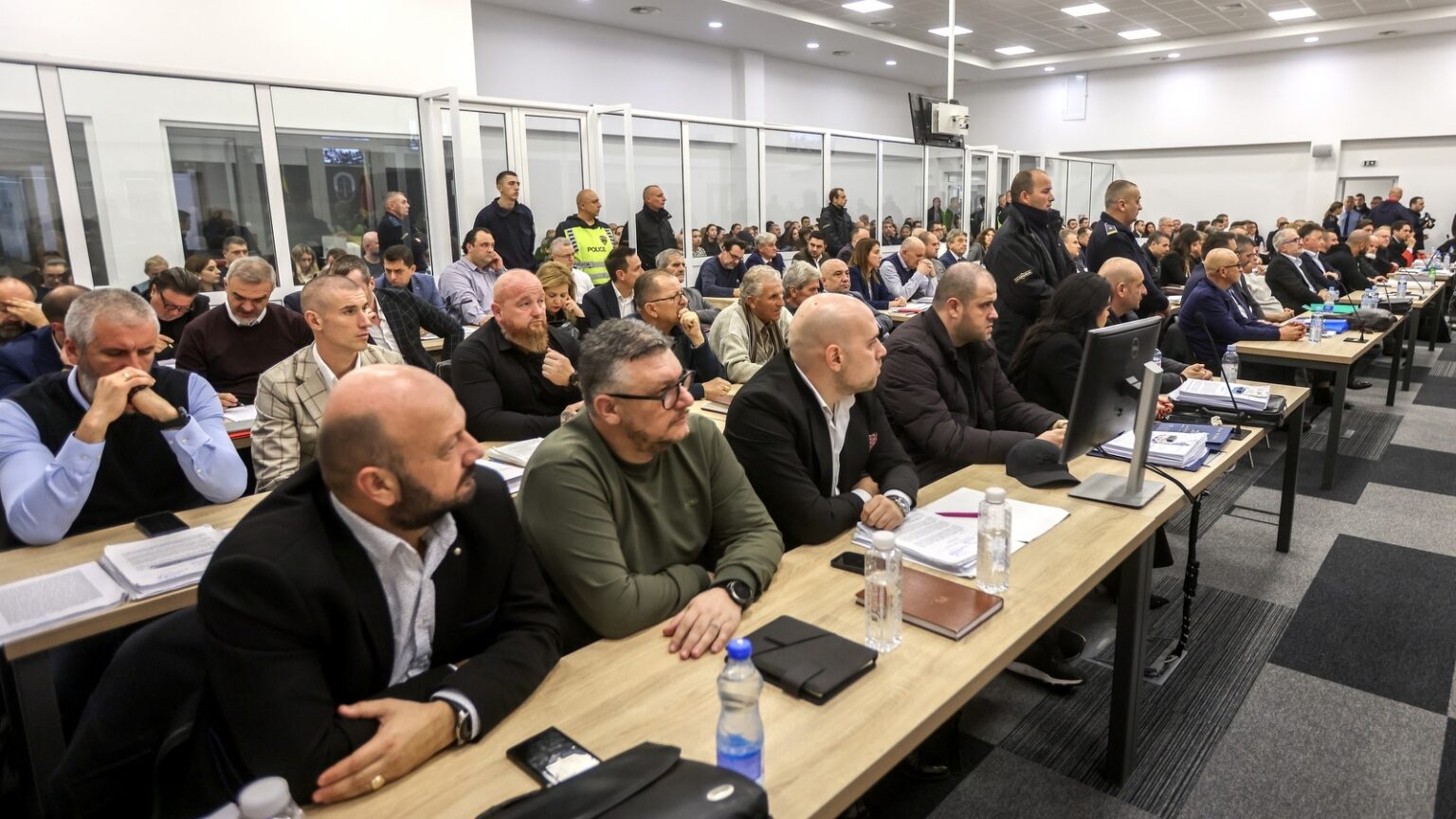
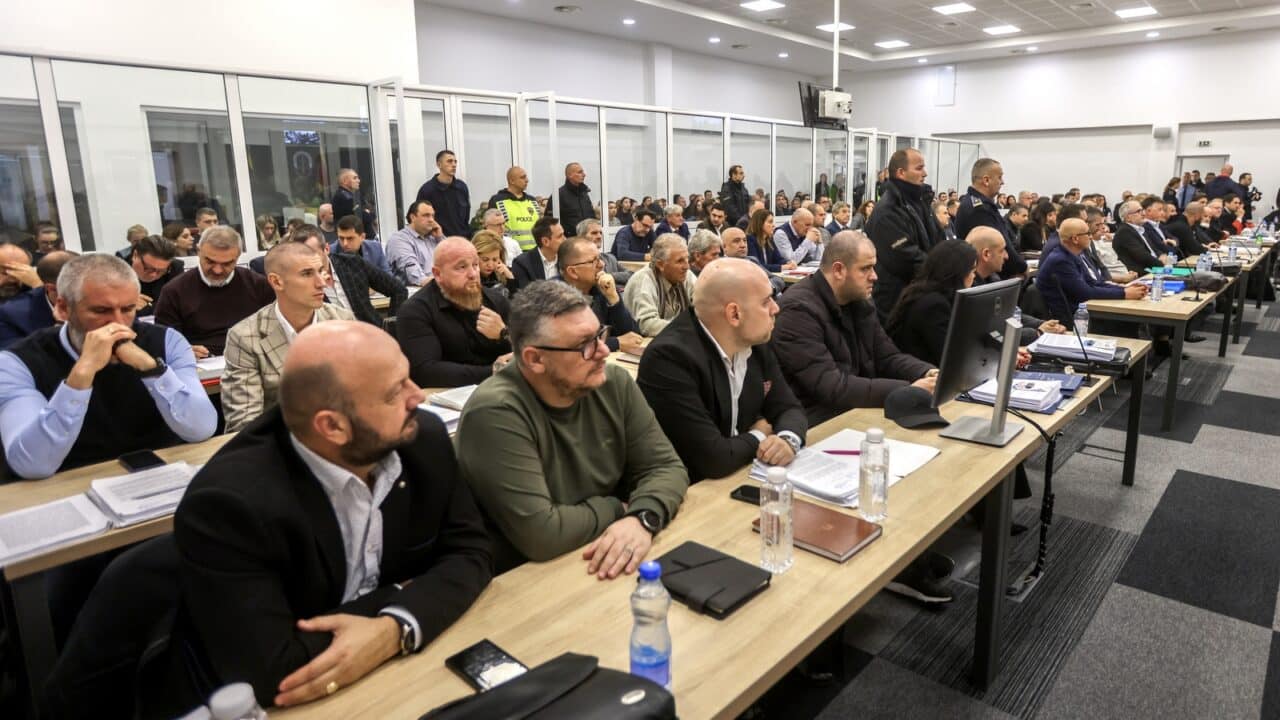
Defendants together with the lawyers, at the start of the trial for the Kocani nightclub fire, in the courtroom next to the Idrizovo correctional facility near Skopje, North Macedonia, 19 November 2025. Photo: EPA/GEORGI LICOVSKI
The first court hearing started on Wednesday at Skopje’s Idrizovo correctional facility, due to space and security concerns over this complex case, the Skopje Criminal Court said.
Thirty-eight defendants, including 35 people and three legal entities, are accused of participating in or turning a blind eye to years of systemic failings and corruption related to the work of the “Pulse” nightclub in Kocani, resulting in a disaster that devastated the small town and shocked the country.
“We will have respect for the grief and pain of the relatives of the victims, everyone will have the right to tell their version of the case and to propose evidence … We will be transparent,” presiding Judge Diana Gruevska told the first hearing.
“I cannot promise speed because mistakes can be made,” the judge reminded the packed courtroom, calling for patience and promising that justice will be served.
Among the defendants are the nightclub’s owner and management, security staff, former mayors of Kocani, state inspectors from several agencies and former government officials. Among the indicted legal entities is also the company that managed the nightclub.
The indictment alleges that a “chain of omissions and illegal actions” contributed to the disaster.
Prosecutors are seeking significant jail terms for the defendants, with up to 10 years in prison for serious crimes against public security.
The worst tragedy in North Macedonia’s recent history struck on March 16 when sparks from pyrotechnic devices used by the performing hip-hop duo DNK ignited the ceiling of the nightclub, which was packed well beyond capacity, as the investigation determined.
The fire spread rapidly through the flammable materials, sending thick smoke into the single-exit venue. Survivors describe scenes of panic and horror as people trapped inside tried to escape.
Fifty-nine mostly young people died at the spot or soon after in hospital, while the death toll rose to 63 in the following months. More than 200 people were injured, may severely, suffering burns and respiratory damage.
The State Prosecution has engaged 15 prosecutors for the trial, which media have deemed a test for the country’s justice system.
“Most probably we will engage few more prosecutors so that the proceedings do not stall. We are completely ready from our side,” State Prosecutor Ljupco Kocevski told the media last week.
The tragedy caused profound public outrage. Authorities discovered that the nightclub was operating without a valid licence and with critical safety violations that were ignored for years, including a lack of emergency exits and fire extinguishers, and highly flammable building materials. Investigations also pointed to possible corruption in the licensing process, with allegations that permits were granted illegally.
In the weeks after the disaster, protests erupted in Skopje and other towns. Thousands of mourners marched, demanding accountability and justice for what they saw as evidence of long-standing systemic corruption.
Almost every weekend, families of the victims hold marches in Kocani or in the capital, demanding that the trial be done properly and justice satisfied.
Despite predictions of a long and complicated trial involving hundreds or thiousands of items of evidence, the Skopje Criminal Court insists it will do its best to speed thing up. For that purpose, they are planning to hold two trial sessions a week.