
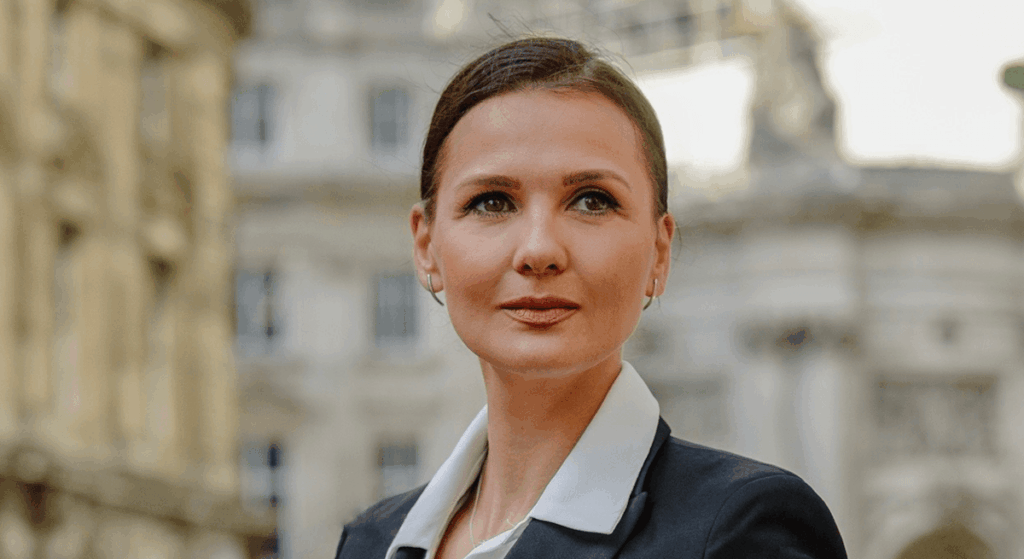
Dragana Čalija discusses her career challenges, the highlights and her advice for other entrepreneurs and innovators.
When Dragana Čalija graduated from a computer science degree in her native Serbia and began working as a software developer, she already knew that she was drawn to leadership and strategy rather than just the coding elements.
“I often led team projects and my professors recognised my entrepreneurial mindset early on,” Čalija told SiliconRepublic.com. “My education gave me the technical foundation that later became a great advantage in running a tech company, as well as a strong network I could rely on in the beginning.”
Realising very quickly that a traditional nine-to-five didn’t quite match her creative and dynamic nature, she made the decision to strike out on her own and develop “the kind of company [she] couldn’t find elsewhere”.
“I wanted to build something of my own – an environment that reflects my values, where excellence is pursued with empathy, and where people feel motivated, trusted and inspired to grow.” Thus Saint D was born, a software and digital consulting platform that Čalija founded at just 27.
“It was extremely rare at the time to see a young woman stepping into entrepreneurship in IT,” she explained. “Especially without funding, connections or a safety net. I had to work hard to be taken seriously and prove that my vision and leadership could stand on equal footing in a male-dominated industry.”
She found, in the early years, both persistence and resilience were essential, as she undertook a rigorous schedule of teaching at the university, building an outsourcing and software development company and developing a start-up. Challenges arose, such as the Serbian market being, at that time, unready to buy into automation.
“Many clients still managed operations manually,” she said, so before she could even consider selling a venture, she realised she would first have to “educate the market about technology itself”.
Other challenges, for example when the decision was made to restructure and reorient the company, while difficult, also served as educational moments in which Čalija emerged more confident with additional skills.
“It meant taking a step back to build a stronger foundation – scaling down both the size of our team and our client base to refocus on long-term sustainability. As part of that process, I had to let go of people who had been with the company for years.
“It was a deliberate and strategic decision that required clear judgement and strong leadership. It taught me that effective leadership is not only about growth, but about knowing when to realign, optimise and make the tough decisions needed to secure the company’s future,” she said.
Pride and perseverance
But building a company that spans Serbia, the UK and Switzerland didn’t just happen overnight. Čalija noted, she went from doing everything herself, from brewing the coffee to managing projects, to eventually overseeing scaling efforts and leading a team.
And she would urge others to commit themselves not just to their business but to their lives outside of work, stating while she has a business, clients and employees, she also has the space for her hobbies, balance and above all else, wellbeing.
“That didn’t come easily. I worked hard, set measurable goals and pushed through moments of burnout to get here.”
She also made a point of supporting other women in the sector, taking efforts to reduce gender bias and create opportunities in the same way that she created her own back in the day.
“We actively collaborate with organisations that promote female entrepreneurship, deliver digital training to women from vulnerable groups and support initiatives like International Girls in ICT Day to inspire the next generation to pursue careers in technology,” she explained.
“We also work with clients on projects that promote inclusivity and social impact, showing how technology can contribute to greater opportunity and positive change.”
And it is this potential for positive change that drives Čalija, who said the constant evolution of the tech industry never fails to excite her. “When I studied computer science, we were still using floppy disks and today, technology is advancing at a pace that would have been unimaginable back then,” she said.
Now, as every new development, be it AI or automation, pushes the boundaries of what was once impossible, people are responding in kind and adapting.
“That connection between innovation, learning and personal growth is what keeps me motivated. Technology never stands still and neither do the people who build it.”
Don’t miss out on the knowledge you need to succeed. Sign up for the Daily Brief, Silicon Republic’s digest of need-to-know sci-tech news.