
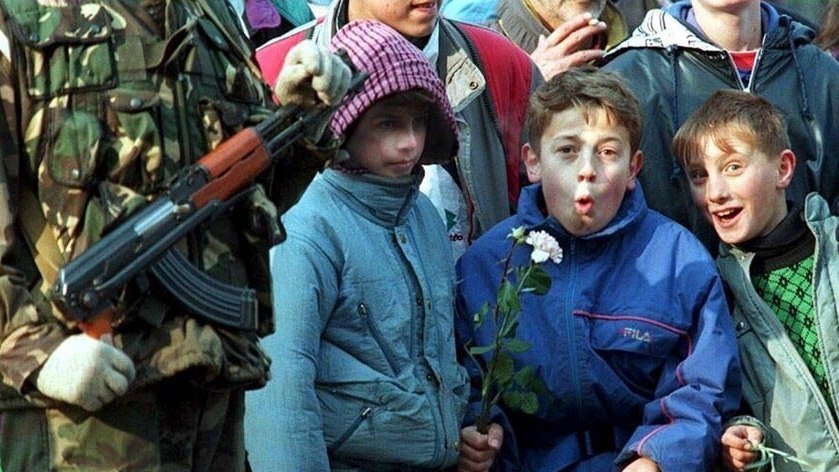
As the 30th anniversary of the Dayton peace talks is marked, the question arises – how do Bosniaks assess the deal that ended the 1992-95 Bosnian war?
For Bosniaks, the Dayton peace agreement is to be seen in the context of what came before it, and what the opportunity cost of failing to agree to it might have been.
Dayton was preceded by a series of United Nations and European peace plans, all of which undermined and undercut Bosnia’s sovereignty and territorial integrity. Most were cloaked in the language of peace but essentially proposed partition of the country.
Hamstrung by a UN arms embargo supported by then British Prime Minister John Major and French President Francois Mitterand, and confronted with these plans for partition, besieged Sarajevo faced a daunting challenge.
After the Srebrenica genocide of July 1995, carried out by Bosnian Serb forces with the complicity of a Dutch battalion of UN peacekeepers, the idea that Europe might forge peace in Bosnia was a non-starter.