
CF: natural hazards, Switzerland highly exposed
Keystone-SDA
The rapid expansion of Swiss settlements and infrastructure, climate change and increased frequency of extreme weather events has heightened the risk of damage to people and property, according to a government report.
+Get the most important news from Switzerland in your inbox
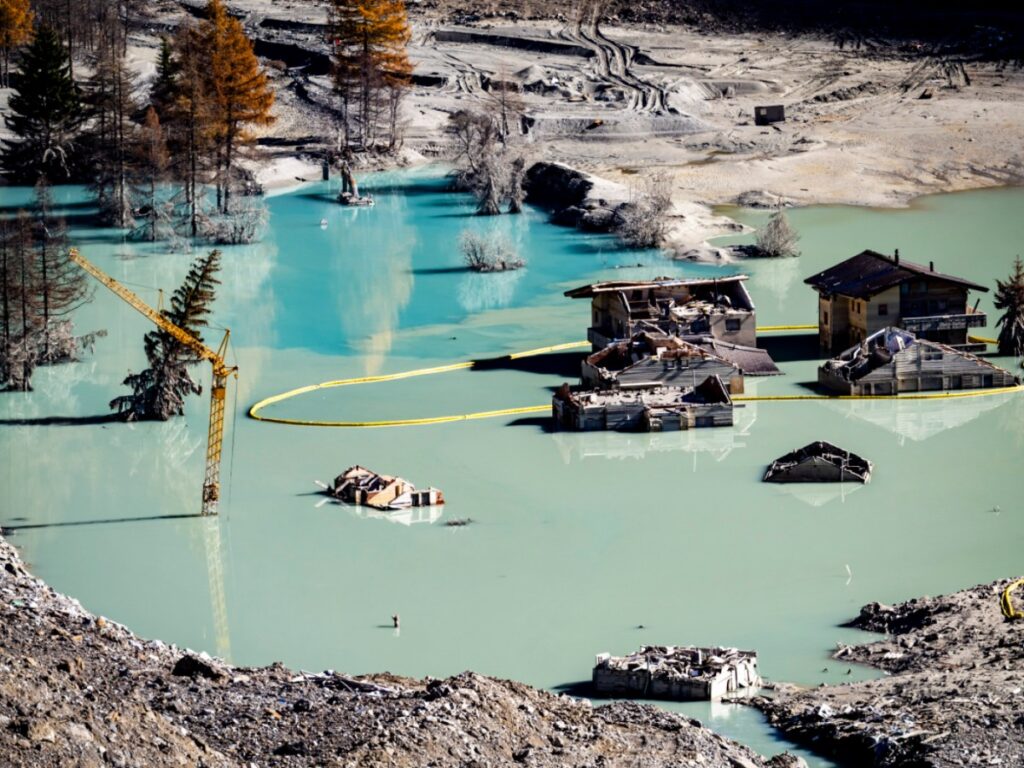
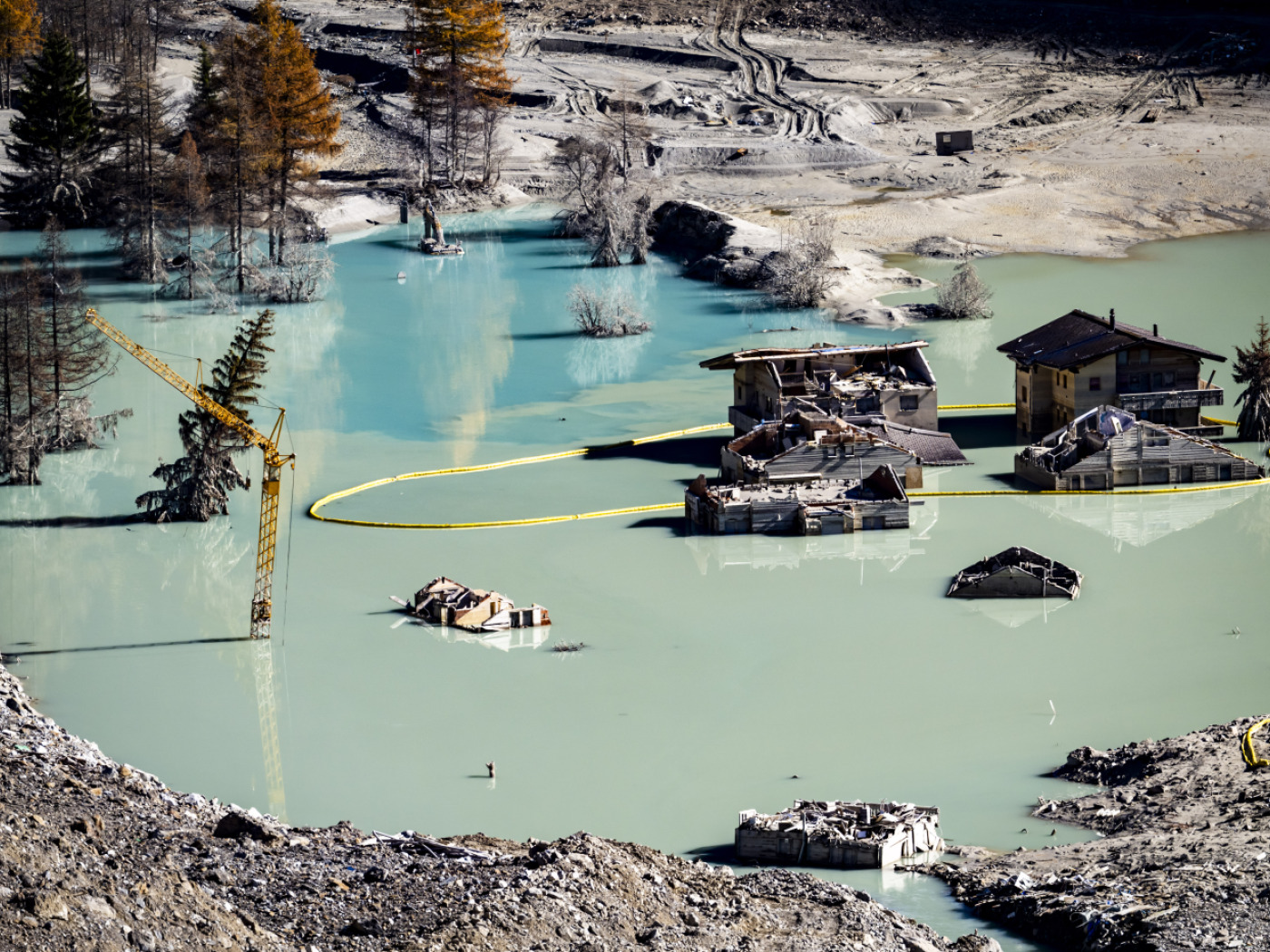
The report, approved today by the Federal Council, states that Switzerland – as an Alpine country – is strongly exposed to natural hazards, as shown by the recent tragedies in the Mesolcina and Vallemaggia, as well as the landslide in the village of Blatten.
+ One in six Swiss homes exposed to natural hazards
The document shows that the federal government has a comprehensive strategy for protection against such hazards. However, in order to limit the risks also in the future, the measures defined in the action plan dating from 2016 will have to be implemented by 2040.
In order to ensure effective protection, the federal government, cantons, municipalities and other partners are already working together within the framework of Integrated Risk Management (IRM). This approach takes a holistic view of natural hazards and aims to contain the increase in risks by means of an appropriate combination of measures, e.g. in the area of spatial planning, emergencies or through forests and protective structures.
More
More
Climate adaptation
Switzerland braces for more heatwaves, droughts and violent storms
This content was published on
Nov 4, 2025
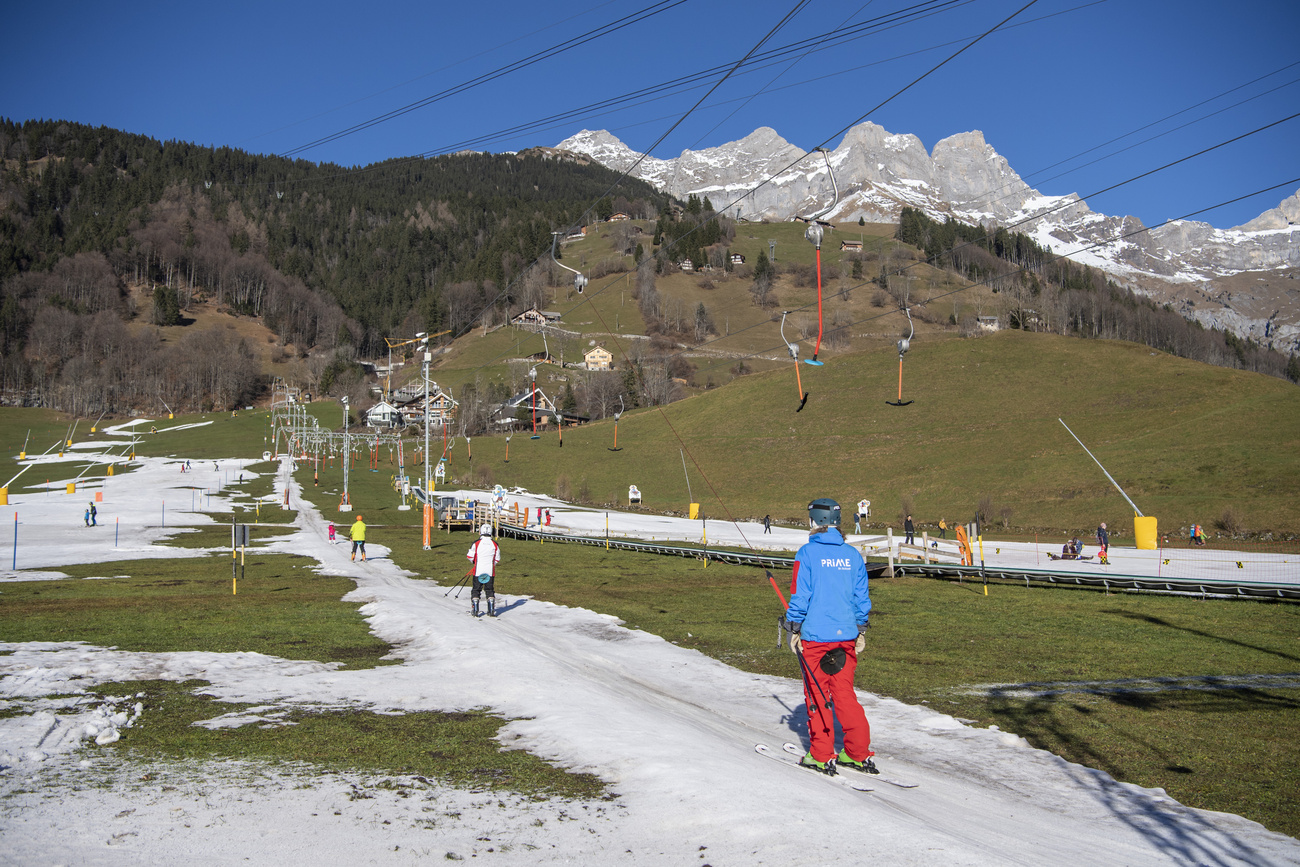
Switzerland is heading for a future that is hotter, drier and more unpredictable, with less snow and heavier rainfall, according to a new climate report.
Read more: Switzerland braces for more heatwaves, droughts and violent storms
Wide-ranging action plan
In 2016, the Federal Office for the Environment (FOEN) produced a report on the management of natural hazards, accompanied by an action plan consisting of 67 measures. The status of implementation of these measures is now the subject of the second report, with the third evaluation scheduled for 2030.
According to the report published today, implementation is well advanced: 29 measures have already been completed and many others are partially implemented. The fields of action ‘Hazard and Risk Baseline Data’, ‘Preparedness’, and ‘Event Management and Regeneration’ show a particularly advanced state of implementation, it is pointed out.
+ Why do Swiss mountains collapse? It’s complicated
As of 2023, Switzerland also has a seismic risk model that makes it possible to estimate not only possible hazards, but also potential damage. As a result of the revision of the Federal Act on the Arrangement of Watercourses and the Forestry Act, from 2025 the cantons are obliged to supplement their basic documentation on natural hazards with risk overviews and strategic comprehensive planning in the area of protection against such hazards by 2031.
A further example of an innovative measure is the introduction of the ‘sponge city’ concept, which envisages retaining rainwater in urban spaces instead of channelling it quickly into drainage systems, thus mitigating the effects of heavy rainfall.
Ongoing measures are constantly monitored and, if necessary, supplemented following natural events such as the 2024 bad weather in the Mesolcina and Vallemaggia and the landslide in the Upper Valais municipality of Blatten in 2025.
According to the report, natural hazards have always been a part of the Swiss reality, but they become a risk when they threaten people, settlements and infrastructure, as has increasingly been the case in recent years. The aim is therefore to complete all measures by the end of 2040, ensuring the full implementation of the GIR throughout Switzerland, the note concludes.
More
More
Climate adaptation
Geologists warn of new rockfall above Swiss village
This content was published on
Nov 19, 2025
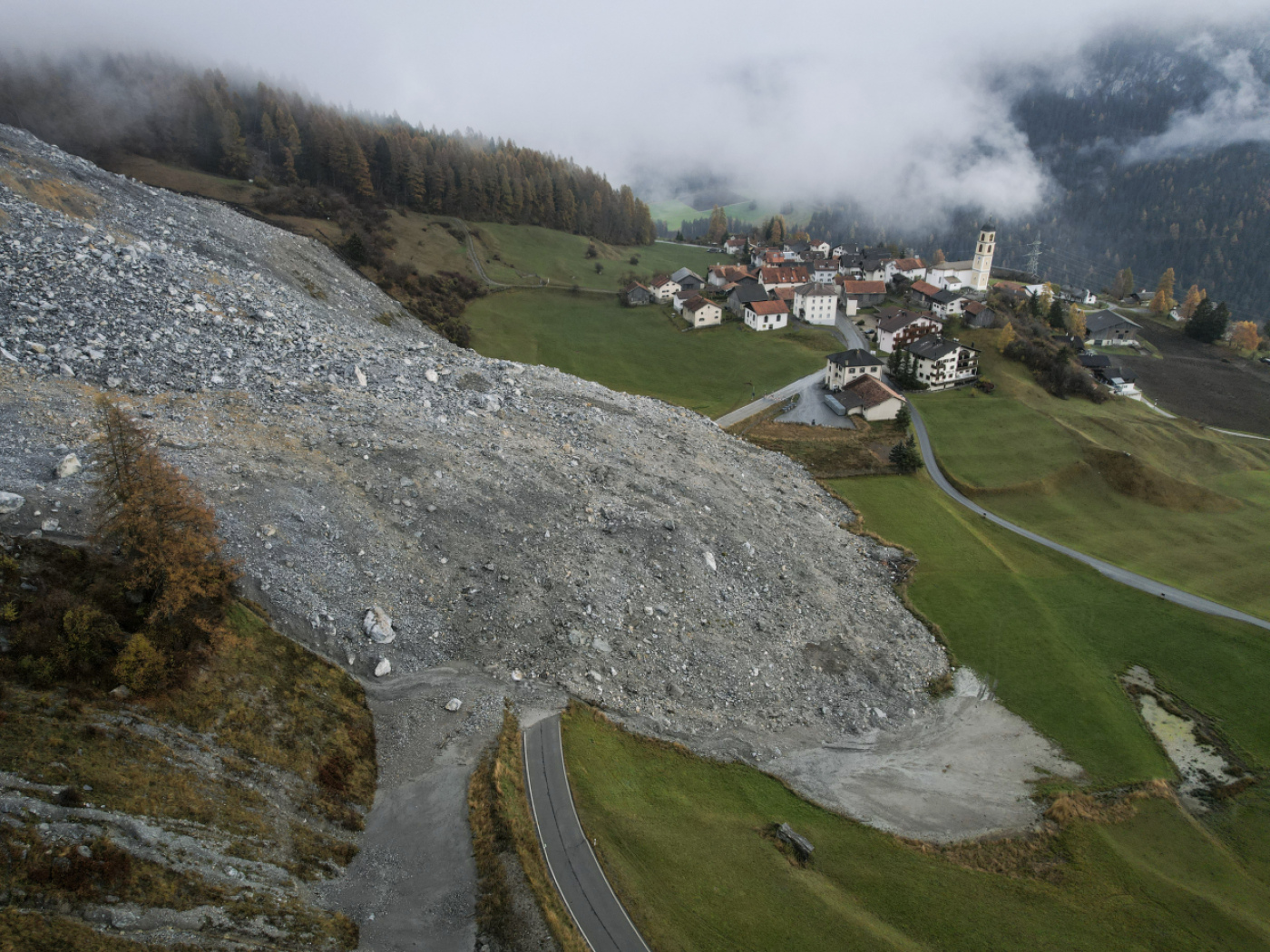
Geologists fear that up to 150,000 cubic metres of rock could fall in the next few days.
Read more: Geologists warn of new rockfall above Swiss village
Translated from Italian by DeepL/mga
How we work
We select the most relevant news for an international audience and use automatic translation tools to translate them into English. A journalist then reviews the translation for clarity and accuracy before publication.
Providing you with automatically translated news gives us the time to write more in-depth articles. The news stories we select have been written and carefully fact-checked by an external editorial team from news agencies such as Bloomberg or Keystone.
If you have any questions about how we work, write to us at english@swissinfo.ch
Articles in this story