
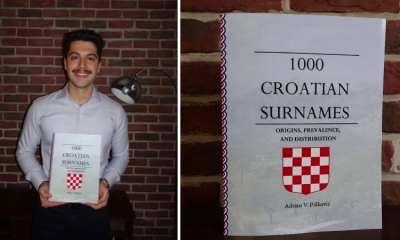
For Adrian Pišković, surnames have always been more than words — they are windows into family history, migration, and identity. What began as a childhood fascination with old photos and stories from his grandparents eventually grew into a five-year research project spanning Croatia, Bosnia and Herzegovina, and Canada. His new book, 1000 Croatian Surnames, is the culmination of that journey.
In this interview, Pišković reflects on the personal loss that sparked the project, the discoveries that shaped it, and why our surnames remain living stories that connect us to our past.
Your book began as a childhood fascination with family photos and stories from your grandparents. When did you realise this curiosity was becoming a full-scale research project?
Although I’ve always been fascinated by surnames, the moment this curiosity turned into a serious research project came in the summer of 2020. That year, I lost my Baka (grandmother), who had been one of the strongest influences on my connection to my Croatian heritage. During my visits to the cemetery, I began noticing countless Croatian surnames on gravestones that I didn’t recognise. It made me wonder who these families were, where they came from, and what their stories might be.
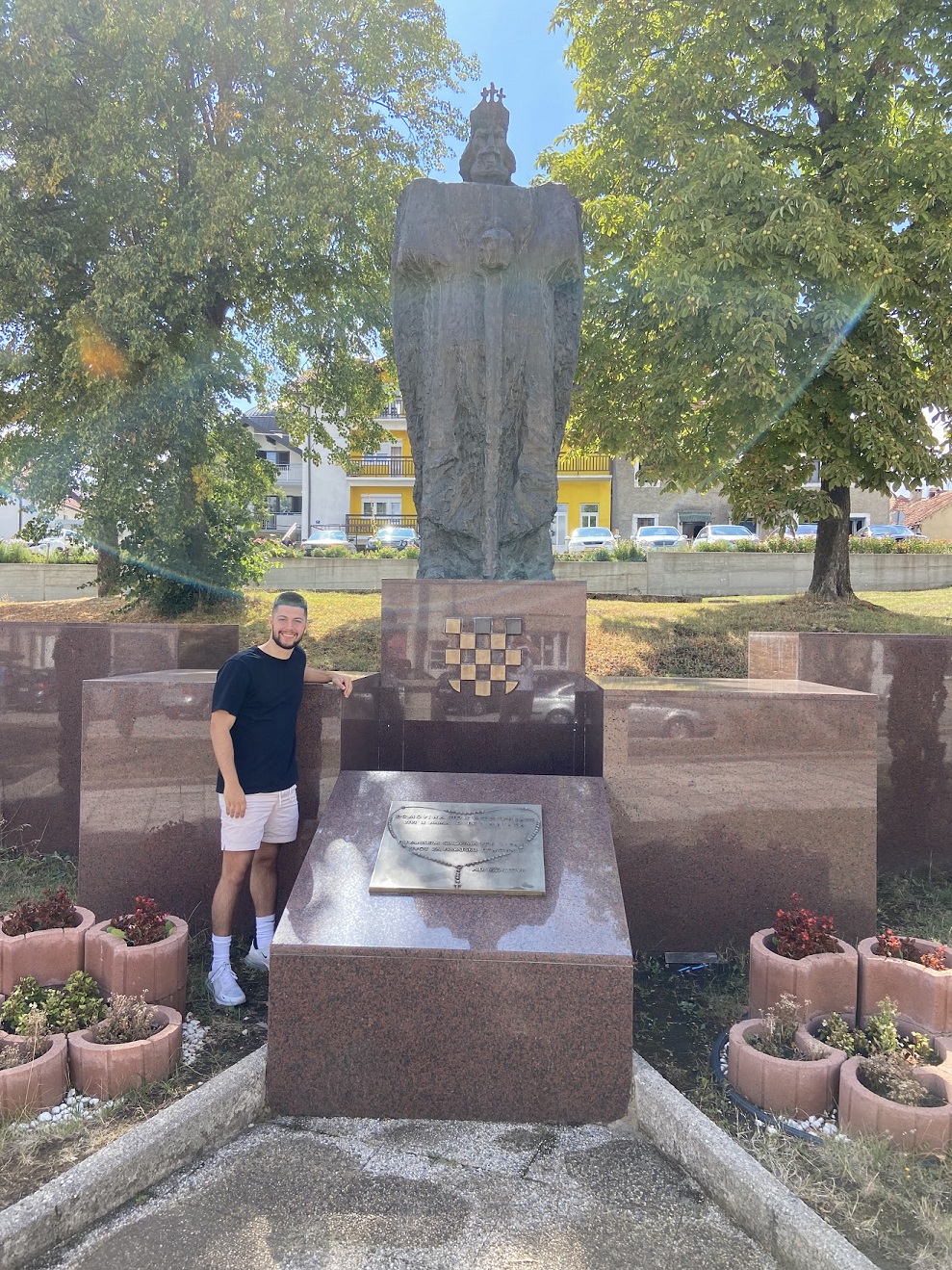
With the support of my Dida (grandfather), I began collecting directories of Croatian surnames found across North America, along with genealogical research books sent to me from Croatia and Bosnia and Herzegovina. With these resources in hand, I set out to study Croatian surnames both locally and globally, focusing on their origins, prevalence, and distribution patterns.
Your research took you across Croatia, Bosnia & Herzegovina, and even Canada. Which location—or discovery—had the biggest impact on shaping the book?
Throughout these five years, I’ve been fortunate to travel back to the homeland to deepen my understanding of our history and surnames. But the place that influenced my work the most was Bosnia and Herzegovina. When I was 21, I travelled across the entire country, visiting more than 40 municipalities.
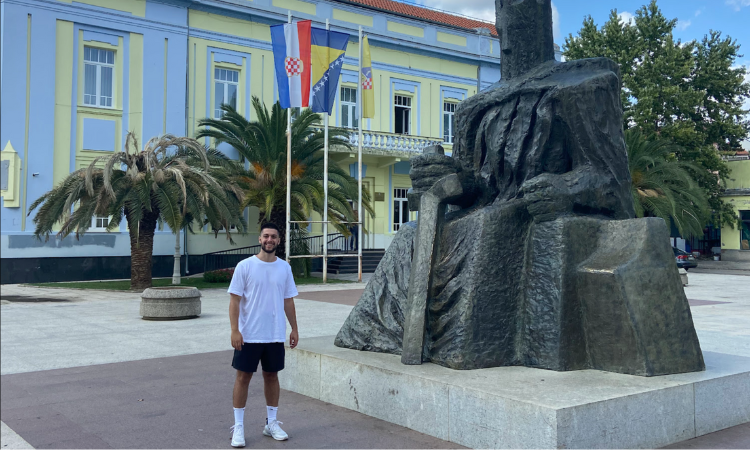
I learned an enormous amount about our shared past by exploring Franciscan monasteries, museums, and cemeteries in Čapljina, Sarajevo, and Banja Luka. Seeing how diverse and layered the history is there helped me appreciate just how complex the story of surnames and migration is throughout the region.
The index features 1,000 detailed surname entries. How did you decide which surnames to include, and what criteria shaped the final list?
With more than 33,000 Croatian surnames in existence, choosing which ones to include was far from easy. The final list was shaped by personal interest as well as a desire to represent Croats from across Southeastern Europe as broadly as possible. I decided that 1,000 surnames would offer a meaningful balance—enough to include widely common names while still highlighting rarer or regionally specific ones.
Many selections came from personal observations: researching Croatian families in my hometown of Windsor, studying the most common surnames in Croatia, and discovering unique names during my travels through Croatia and Bosnia and Herzegovina.
Each entry explores origins, meanings, linguistic roots, and historical distribution. Which aspect of surname research did you find most challenging—or most surprising?
The most challenging—and surprisingly fascinating—aspect was uncovering the historical distribution of Croatian surnames. To do this, I compiled centuries-old data, including municipal and village records from across Croatia and Bosnia and Herzegovina. Over time, waves of migration and demographic change dramatically reshaped where certain surnames appear.
Seeing how diverse Croatian surnames are across regions made this part of the research complex, but incredibly rewarding.
You created custom prevalence maps for each surname. How did you develop these maps, and why is visual geography important for understanding family history?
For each surname, I created a custom map showing where it was historically recorded across Croatia, Bosnia and Herzegovina, Serbia, Montenegro, and Kosovo, resulting in 26 organised regions. These regions are based mostly on modern administrative divisions and traditional historical boundaries, with minor adjustments made for easier interpretation. The maps support each surname entry by offering a clear and accessible way to visualise migration patterns and the regional or multi-ethnic presence of each name—details that might otherwise be harder to grasp from text alone.
You’ve said that surnames help preserve family stories, migrations, and traditions. What example from your research best illustrates this connection?
A personal example is my own surname, Pišković. Through my research, I discovered that my ancestors from Čapljina originally came from Tribistovo in Posušje, and that before that they carried a different surname — Krajinović — from the Tomislavgrad area. Realising how my family moved across regions, changed surnames, and eventually became part of the Croatian diaspora in Canada helped me understand that surnames are truly living records. They reflect where families travelled, the challenges they faced, and the traditions they carried with them.
It made the entire project feel deeply personal.
After five years of work, your book is finally available on Amazon. What do you hope readers—especially those exploring their own heritage—will take away from 1000 Croatian Surnames?
My greatest hope is that readers—especially those exploring their own roots—feel a deeper connection to their family history and to the broader story of Croats across Southeastern Europe. I’m not a historian or academic; I’m simply someone with a passion for our heritage who spent five years trying to understand it better.
If this book helps someone discover something new about their surname’s history, then the project has fulfilled its purpose. I also hope it inspires others to keep learning. Surnames are living links to migration, tradition, and identity, and there is always more to uncover. I fully intend to continue learning in the years ahead — and I hope readers feel encouraged to do the same.
And you can buy your copy of this book HERE