
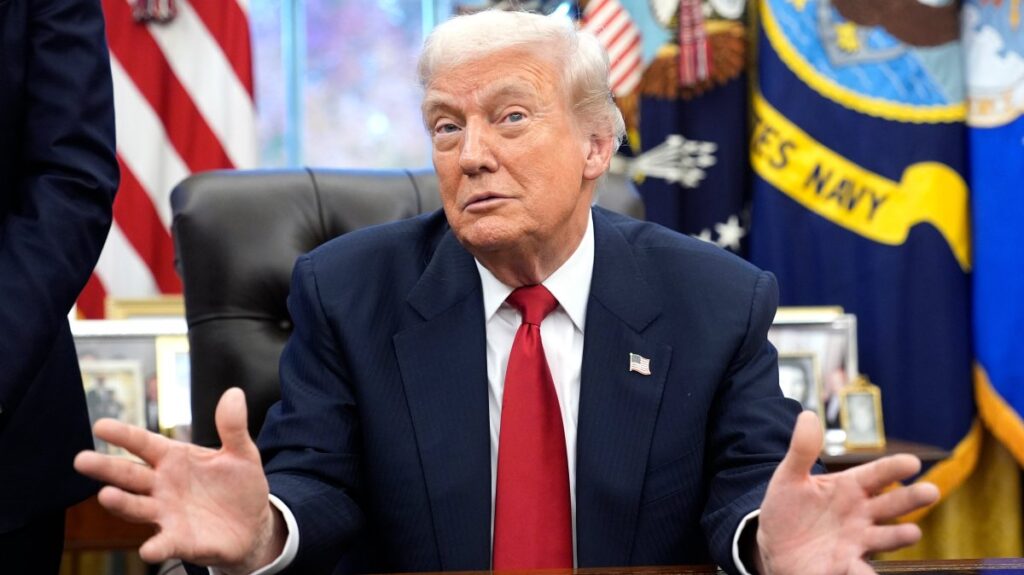
When Americans sit down on Thursday for Thanksgiving, the US president hopes they will be thanking him. On Friday, President Trump used an Oval Office meeting with Zohran Mamdani, the New York mayor-elect, to repeat one of his favourite talking points: telling voters the price of turkey is down — with Walmart cutting the price of its holiday basket from $55 to $40. Proof, Trump says, that he is delivering on a pledge to Americans to reduce costs.
The problem: Walmart has cut the price by shrinking the product. This year’s version is smaller — 15 different products to last year’s 21 — with more own-brand goods. Food inflation is still running at about 3 per cent.
This week Trump told a gathering of McDonald’s franchise owners in Washington that he had “normalised” inflation. Yet, according to the restaurant chain’s own chief executive, low-income customers are turning away from the fast-food chain as soaring prices mean the once-cheap treat feels like a splurge.
• Why Americans can’t afford McDonald’s any more
Concerns are growing among Republicans that if things continue this way, the party is on track for a drubbing in next year’s mid-terms. If that comes to pass and they lose the House, administration figures fear Trump will lose control of his presidency. The rest of the term is then dominated by blockages, investigations and perhaps even impeachment. “That’s when it ends,” says one figure close to the administration.
It’s why, in a week where Trump finally agreed to the release of the Epstein files (as a result of rebel Republicans) and presented President Zelensky of Ukraine with a “peace” deal that horrifies many Europeans, the development that most worried his supporters was the one that took place on Wall Street.
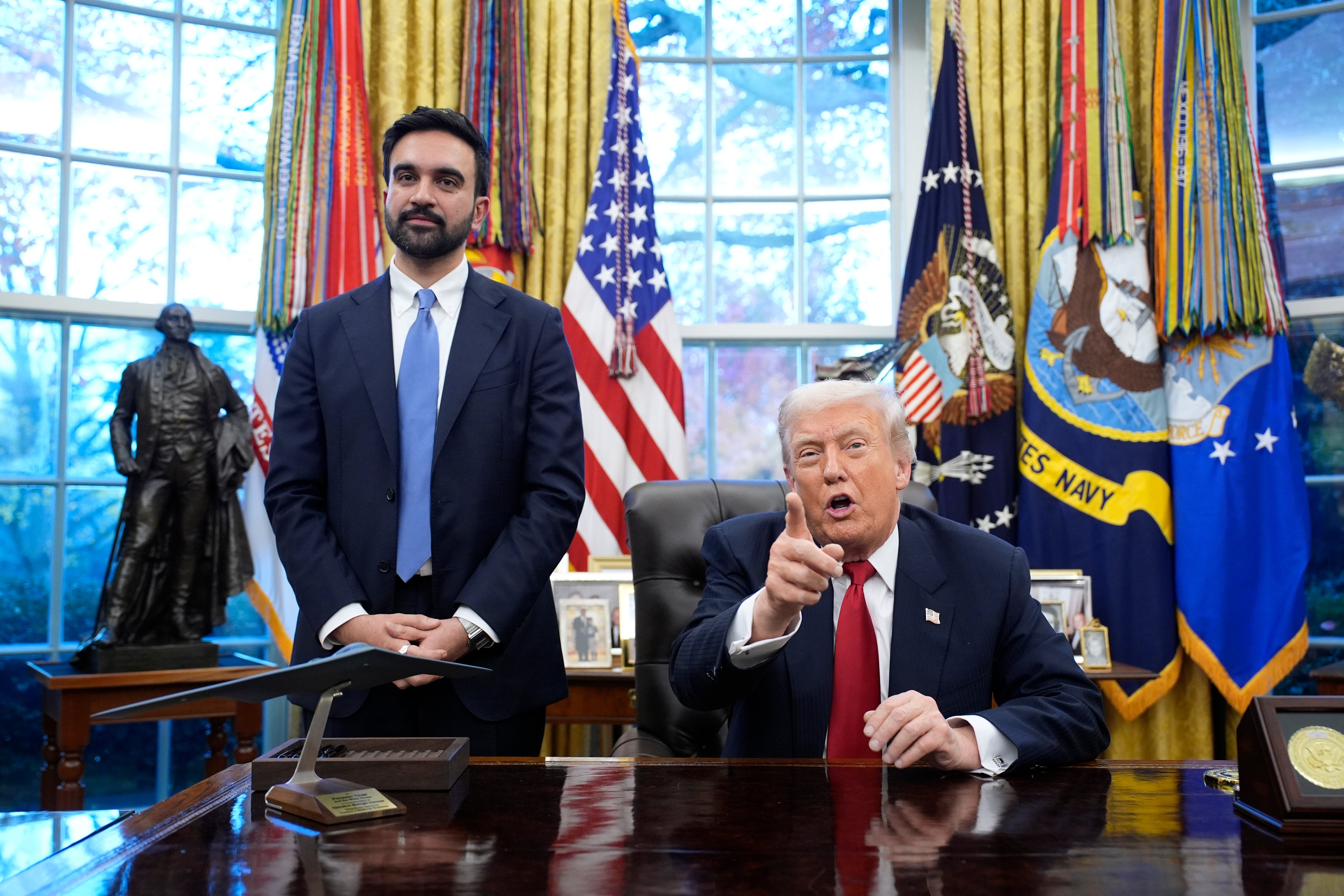
Trump on Friday with Zohran Mamdani, the New York mayor-elect
YURI GRIPAS/CNP/SHUTTERSTOCK
The US economy is seen by many as inflated by an AI bubble. Stock market valuations are higher than during the dot-com boom and comparisons are being drawn with America’s railroad bubble in the 19th century: when excitement about future technology brought down an economy.
Amid such fears, stocks tumbled over investor doubts about the strength of the AI boom, with concerns that these companies are artificially inflating the value of their stocks through a circular flow of investments and questions as to how some of these companies find profitability.
There was a brief sigh of relief on Thursday when Nvidia, the chipmaker and a $5 trillion company, published profits above expectations. But it was not enough to calm investor nerves — or talk that, if this is a bubble, it’s best to get out now.
Gary Smith, emeritus professor of economics at Pomona College, says: “The Big Tech companies — Google, Microsoft, Meta, etc — have other sources of revenue, but OpenAI and other pure LLM companies are bubbly in that plausible revenue projections don’t justify the high valuations.”
“There’s certainly a sense that maybe we got a little in front of our skis,” says a Silicon Valley insider. “We don’t have an over-supply yet, so where is the bubble? I don’t see the bubble yet because these guys are at full capacity,” says Shaun Modi, the founder and CEO of Capitol AI. But he adds: “Just like in any industry where there’s hyper growth, there are going to be things that don’t work. But that’s the beauty of the American system … it’s OK to fail, try and fail.”
Such uncertainty is a problem for Trump as his party bets on improving the economy. A look under the bonnet of the economy shows the real story is artificial intelligence. In the first half of this year, AI-related capital spending contributed about 1.1 percentage points to US GDP growth, more than consumer spending for the first time. Strip that out and America’s story is closer to one of economic stagnation. Jason Furman, who served as economic adviser to Barack Obama, thinks underlying growth evaporates to 0.1 per cent once you remove the AI effect. There are reports that AI investments accounted for nearly 92 per cent of US GDP growth in the first half of this year.
• Sign up for The Times’s weekly US newsletter
Investment in information processing kit and software is only about 4 per cent of GDP, yet accounts for more than 90 per cent of the growth. Renaissance Macro Research describes an economy that would be close to recession were it not for server farms and chips. Little wonder then that the White House now lists AI infrastructure as one of its five economic priorities. AI is no longer just a tech story in America, it is the core of Trump’s growth strategy.
As Trump’s former press secretary Sean Spicer put it last week: “The dirty secret is there’s only so much you can actually do in the short term … you’ve got to set the right policies and hope they stimulate the economy.” He added: “The one big thing that I think is interesting that’s overshadowing everything the president is doing is the acceleration of AI. So at the same time you’re getting a lot of investment, a lot of this AI innovation is taking away jobs.”
That investment was on full show last week when the crown prince of Saudi Arabia, Mohammed bin Salman, rolled into town — aside from dodging questions about dismemberment, MBS signed various deals largely centred around chips and AI.
So Trump is betting on AI, even though it involves stock market jitters, concerns from his base and a threat to the blue-collar worker he is meant to represent.

Crown Prince Mohammed bin Salman received a warm welcome from Trump, who said he was “extremely respected”
EVAN VUCCI/AP
The risks are threefold. First, the bubble: Americans watch their stocks, which is why Trump sees the market as a political virility symbol. When the market rises, Middle America is happy. But Big Tech now accounts for almost a third of the S&P 500. Politically, this makes Trump hostage to a narrow slice of Silicon Valley. The old saying that what is good for General Motors is good for America is routinely reheated to count for AI. Trump needs its shares to keep soaring, so Americans feel richer. But voters not rich enough to own shares feel poorer.
• Irwin Stelzer: Yesterday’s ‘hoax’ is today’s policy as the US economy faces hard truths
In Maga, there are concerns that Trump is beholden to the tech plutocrats. Look how his BFF-turned-nemesis Elon Musk (a supporter of HB1 visas, which make Maga see red) returned to the fold last week with pride of place on the MBS visit. Chris MacKenzie of Americans for Responsible Innovation says: “I think for a lot of the public, this feels like, you know, Big Tech round two. These new AI tools are coming online. There are two big concerns in the minds of voters. One is their job and two is their kids.”
Trump last week threatened to sign an executive order stopping states from having their own AI regulations, prompting a Maga backlash.
This pushback included Marjorie Taylor Greene, the Georgia congresswoman with whom he has fallen out and who has said she will stand down in the new year. “States must retain the right to regulate and make laws on AI and anything else for the benefit of their state,” she wrote in a post on X on Thursday.
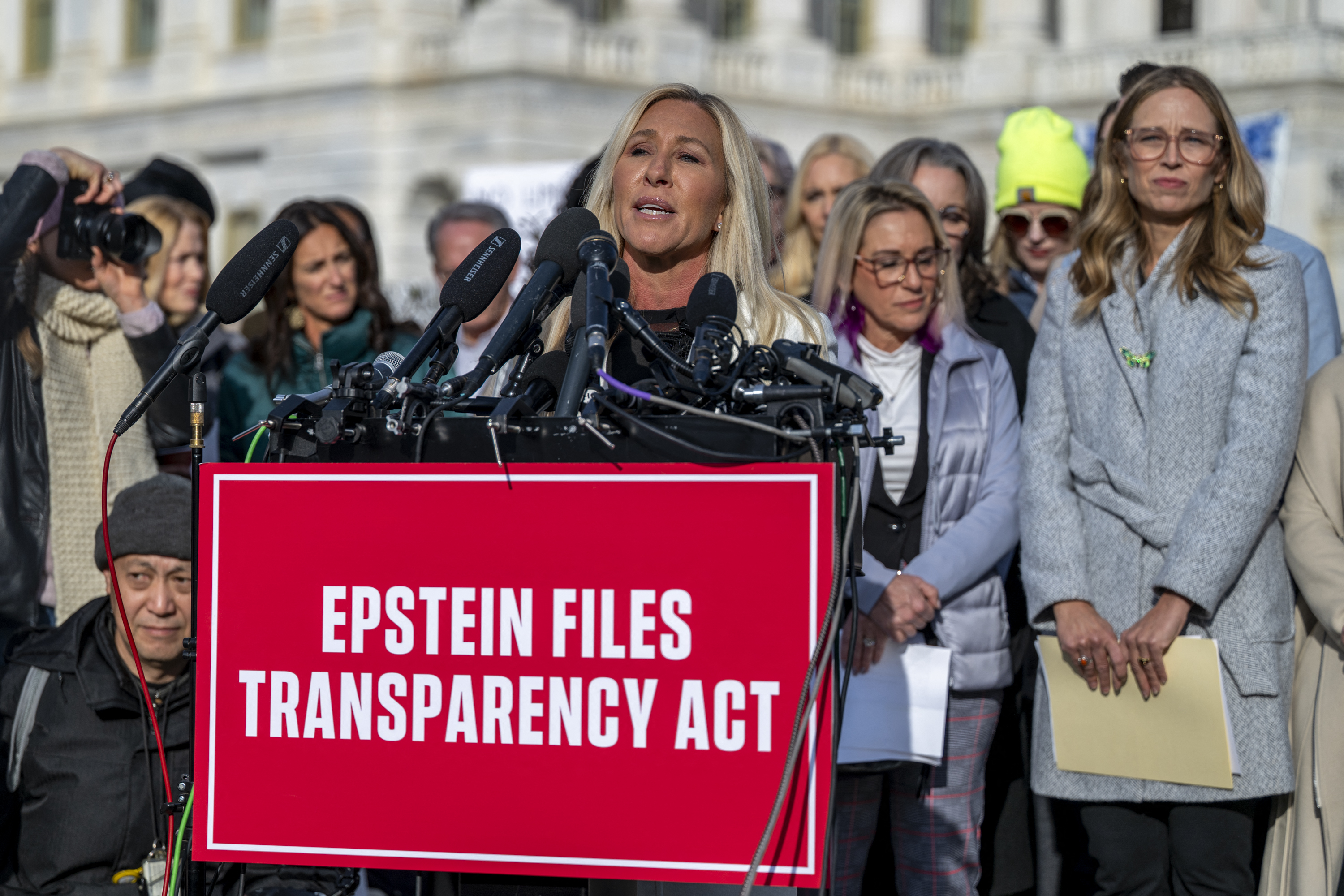
Marjorie Taylor Greene is resigning from Congress after the US president labelled her a “traitor”
DANIEL HEUER/AFP/GETTY IMAGES
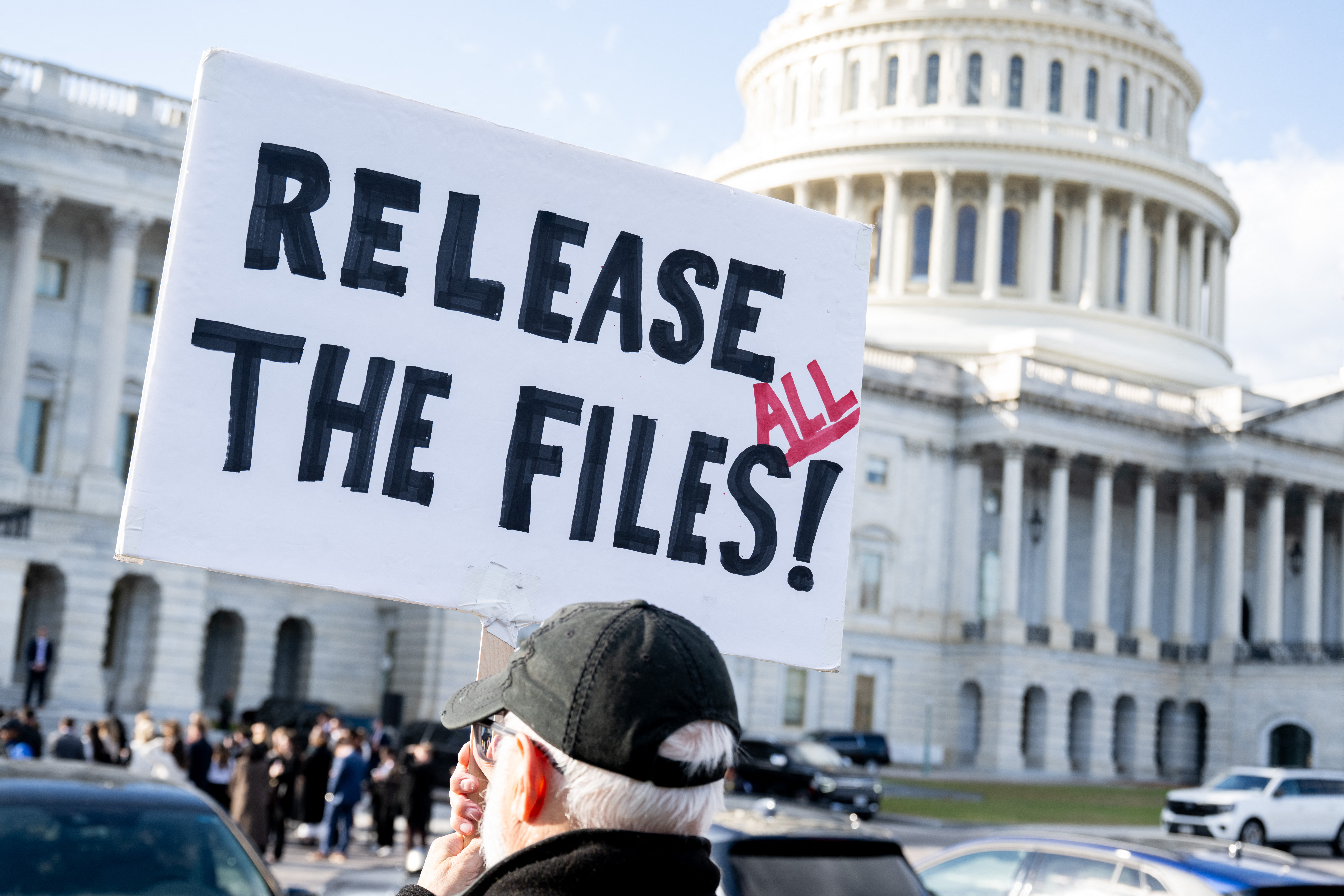
Greene had spearheaded efforts to get the Epstein files released
SAUL LOEB/AFP/GETTY IMAGES
Brad Littlejohn, a director at American Compass, the influential “New Right” DC think tank, says: “We’re getting what looks like an attempt to browbeat Congress into signing a blank cheque to override state laws … This is not responsible governance. If America is to lead AI, it must do it the American way — democratically.”
Next, cost of living. The AI revolution needs lots of electricity to power data centres. Feeding them (along with grid upgrades and increased costs for natural gas) has helped push the average US household electricity bill up by about 30 per cent over the past four years. In parts of the country where data centres are concentrated, wholesale power prices are more than double what they were five years ago. In the PJM grid region, which runs from Illinois to North Carolina, capacity market costs have recorded close to a tenfold rise over two years, mostly blamed on data centre demand.
If US data centres were a country, it would already be near the top of the global power consumption league table. To communities whose bills have already risen faster than inflation, the idea that they are subsidising someone else’s supercomputer — including for a company led by a tech billionaire — is not great optics.
• Has Trump the ‘crypto president’ delivered for bitcoin investors?
Then there’s the jobs. Figures such as JD Vance believe the AI and automation revolution will help America by empowering US workers and reducing the need for immigrants. Perhaps so. But for now, many fear AI is instead coming for their jobs. Recent reports suggest the next cohort of US graduates are heading for one of the worst job markets in years — a force that is powering support for Mamdani in New York and is set to help Democrats elsewhere.
How does the Republican party get the vote out when many of the new working class fear the revolution Trump is embracing is coming for their futures?
“There are some early warning signs going off in the economy for young workers in specific sectors, for college grads working in HR, working in coding. These folks have seen employment opportunities decline pretty significantly since AI,” says MacKenzie of Americans for Responsible Innovation.
“From an economic perspective, our biggest question is: how are we going to make sure workers who are displaced have the support they need to transition into whatever new jobs AI creates?” The worst of both worlds would be an AI bubble burst as well as firms slashing staff.
Trump wants to fight the next election on the story that he has tamed inflation and put money back in voters’ pockets. Administration figures say the White House is hopeful of good data in Q1 and Q2 of the coming year. But he is, in part, betting on an AI boom that could push up bills if it succeeds — or puncture savings and pension plans if it fails. The wage revolution (Musk mused with the Saudi delegation last week that work may become “optional”) won’t be until after the next presidential election.
• Mehreen Khan: Boom or bust, AI remains an American phenomenon
No one doubts that AI can change the American economy — and world — over the next ten years or that the US, too, has little choice but to join the chip race as China pulls ahead.
But for a man who wants to show results on affordability, Trump doesn’t have much time. He has staked his fortunes on a technology that is indispensable to his growth figures, but currently invisible in most voters’ lives, apart from the monthly utility statement.
AI is a gamble; the US economy is a gamble. And on that gamble, rather than this week’s turkey, the Maga project may well depend.