
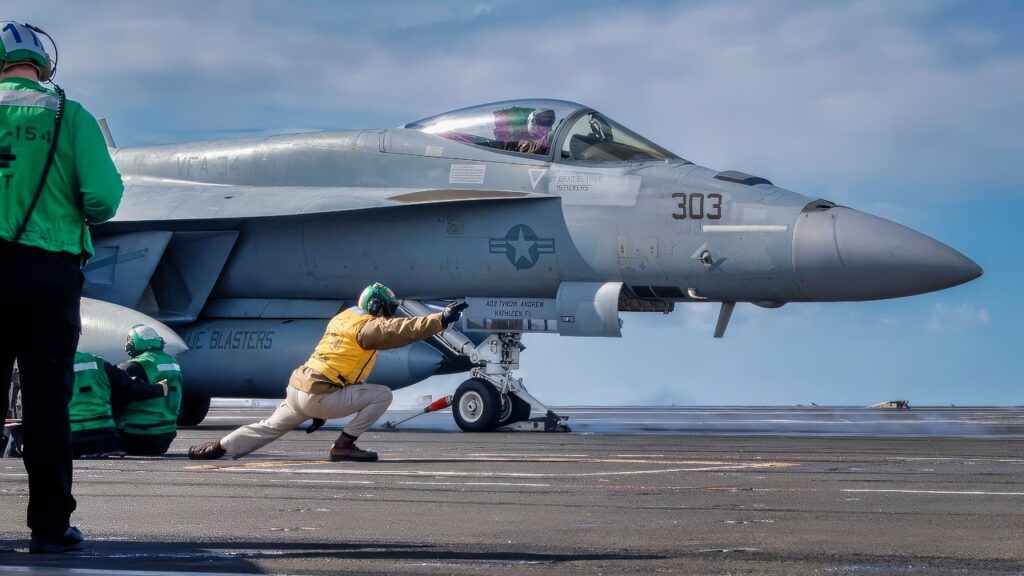
Article Summary – In 2015, the French nuclear attack sub Saphir slipped through the screen of USS Theodore Roosevelt’s carrier strike group during an Atlantic workup and scored multiple simulated torpedo hits on the carrier and escorts.
-The war game “kill” showed how hard quiet submarines are to find, even for a well-defended U.S. supercarrier.
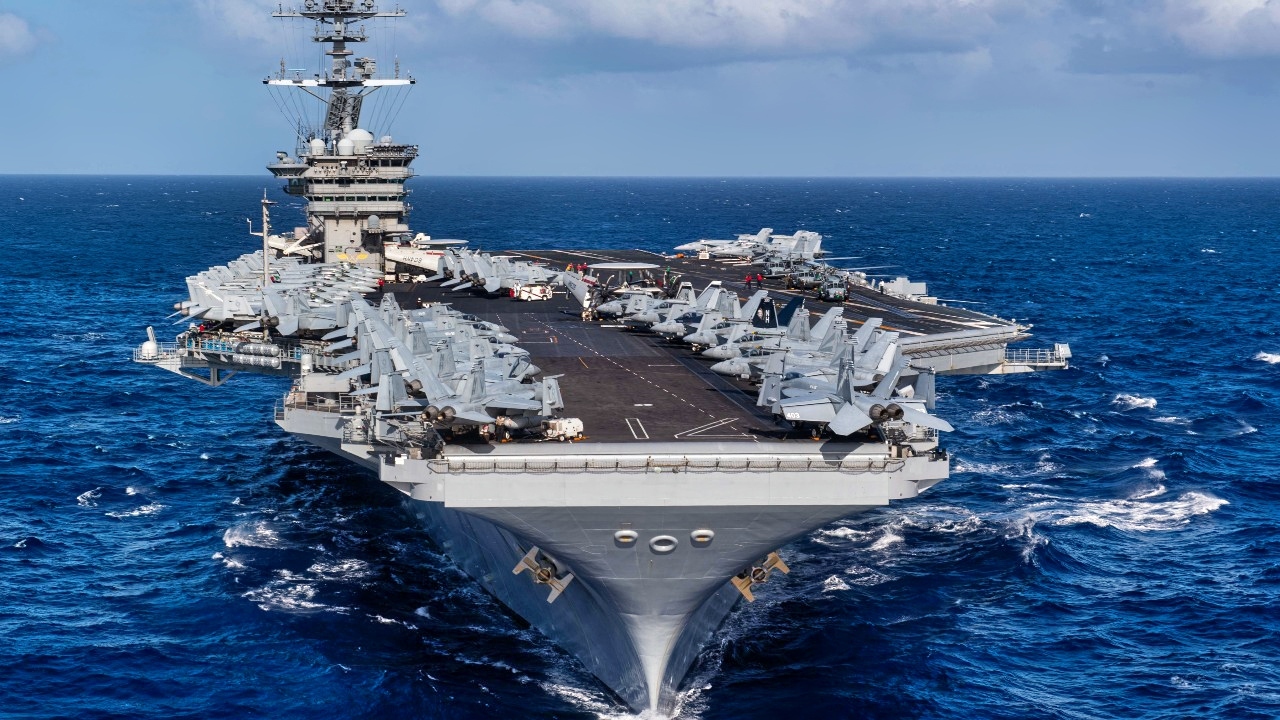
PHILIPPINE SEA (Feb. 5, 2024) The Nimitz-class aircraft carrier USS Theodore Roosevelt (CVN 71) transits the Philippine Sea, Feb. 5, 2024. Theodore Roosevelt, flagship of Carrier Strike Group Nine, is underway conducting routine operations in the U.S. 7th Fleet area of operations. An integral part of U.S. Pacific Fleet, U.S. 7th Fleet operates naval forces in the Indo-Pacific and provides the realistic, relevant training necessary to execute the U.S. Navy’s role across the full spectrum of military operations – from combat operations to humanitarian assistance and disaster relief. U.S. 7th Fleet works together with our allies and partners to advance freedom of navigation, the rule of law, and other principles that underpin security for the Indo-Pacific region. (U.S. Navy photo by Mass Communication Specialist 2nd Class Andrew Benvie)
-It also foreshadowed today’s worries that drones, long-range missiles and stealthy subs could turn big decks into high-value targets in any future war with China or Russia.
-The Navy’s answer is more undersea capability, unmanned vehicles, longer-range weapons and new air wings, but big questions remain.
What a 2015 War Game Really Says About the Future of Aircraft Carriers
In March 2015, the French Rubis-class nuclear attack submarine Saphir (S602) successfully scored a “kill” against one of the United States Navy’s flagship assets during a U.S.-French exercise. It was an incident that would later become a turning point in undersea warfare debates, and is perhaps more relevant now than it was then.
During that drill, Saphir penetrated the layered defenses of USS Theodore Roosevelt (CVN-71) and its carrier strike group, evading detection long enough to register simulated torpedo hits on both the carrier and some elements of its screening escort vessels – the ships and assets designed to escort and protect the carrier.
The “sinking,” therefore, wasn’t real. Instead, it was a hypothetical “sinking” achieved and overseen under exercise rules rather than the result of firing live weapons.
The implications, however, were significant.
So significant, in fact, that they linger to today, and expose a major vulnerability: even the U.S. Navy’s most valuable ships are at risk when exposed to stealthy vessels under the water.
How did this small and relatively old French submarine manage to pull this off?
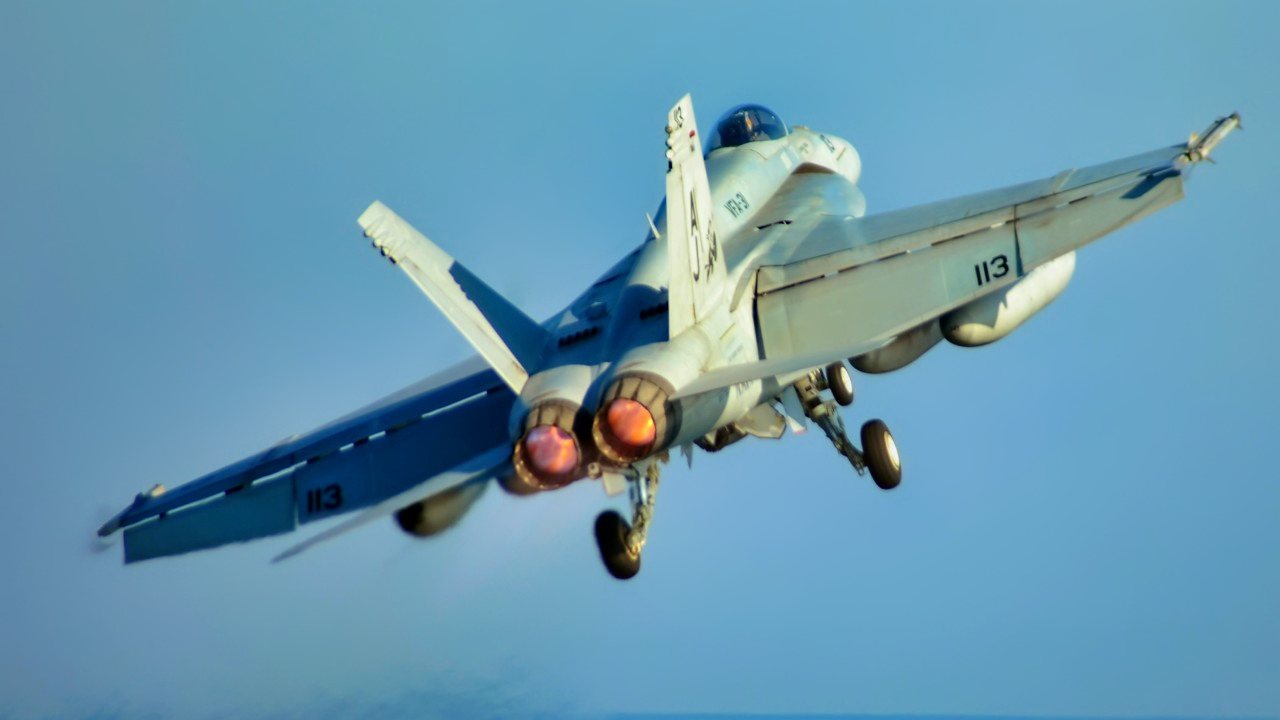
(Jan 31, 2009) An F/A-18 Super Hornet assigned to the “Tomcatters” of Strike Fighter Squadron (VFA) 31 launches from the flight deck of USS Theodore Roosevelt (CVN 71). The Nimitz-class aircraft carrier and embarked Carrier Air Wing (CVW) 8 are operating in the 5th Fleet area of responsibility and are focused on reassuring regional partners of the United States’ commitment to security, which promotes stability and global prosperity (U.S. Navy photo by Mass Communication Specialist 3rd Class Jonathan Snyder/Released)
Aircraft Carrier Defeated: How Saphir Pulled It Off
The exercise took place off the coast of Florida, in the Atlantic Ocean, ahead of a U.S. deployment.
The French Ministry of Defense described the exercise in a now-deleted online article as part of training with the U.S. Carrier Strike Group 12, which is made up of the USS Theodore Roosevelt, Ticonderoga cruisers and Arleigh Burke-class destroyers, and a Los Angeles-class submarine.
The exercise simulated assaults by adversaries targeting American territorial and economic interests. During the first phase of the exercise, the Saphir was embedded within the friendly force to support anti-submarine warfare.
It was during the second phase, however, that the Saphir was integrated into enemy forces and tasked with locating the Theodore Roosevelt and attacking the strike group.
According to accounts of the exercise by analysts, mainly based on limited information published online, Saphir moved slowly and quietly, limiting its acoustic signature to stay below detection thresholds.
The submarine then moved to periscope depth briefly to finalize plans for firing at the aircraft carrier, before dropping deeper again and launching exercise torpedoes that registered as hits.
When headlines say that the carrier “sank,” what it really means is that the airline would have sunk had those torpedoes been live ammunition.
When French naval sources initially published a blog post describing the outcome of the exercises, the U.S. Navy did not publicly contest the assertion that one of its carriers could theoretically be taken out by a submarine.
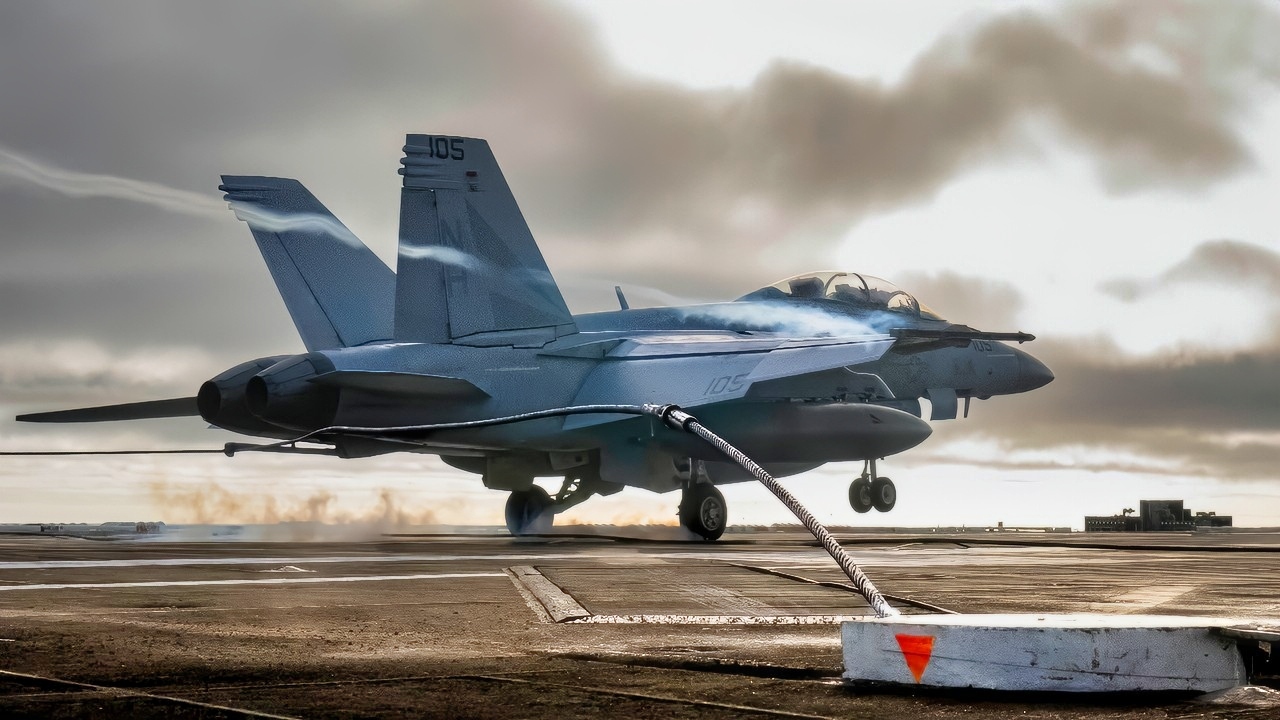
A U.S. Navy F/A-18F Super Hornet, assigned to the “Black Knights” of Strike Fighter Squadron (VFA) 154, lands on the flight deck of Nimitz-class aircraft carrier USS Theodore Roosevelt (CVN 71), July 24, 2025. Theodore Roosevelt, flagship of Carrier Strike Group (CSG) 9, is underway conducting exercises to bolster strike group readiness and capability in the U.S. 3rd Fleet area of operations. (U.S. Navy photo by Mass Communication Specialist 3rd Class Aaron Haro Gonzalez)
However, much of the original information initially published about the exercise has since been removed.
Why It Matters
The incident mattered then because aircraft carriers are the dominant and most valuable above-water naval asset for any modern force.
It matters now, in particular, because aircraft carriers are increasingly seen as vulnerable in an age of drone warfare, and as unmanned fighter jets are under development with plans to be deployed alongside traditional manned fighters.
Submarines are increasingly touted as the future of naval warfare, and aircraft carriers as “sitting ducks.”
The Saphir exercise demonstrated that a stealthy submarine, operating with patience, can be a formidable foe against even the most advanced aircraft carriers and vessels.
Even a relatively small SSN like the one from France, if not actively trapped or already identified, can exploit gaps in detection and shoot right into the heart of a carrier group.
Ultimately, the strike proved that the carrier isn’t invulnerable – it is just well protected.
And now, as drones become cheaper and easier to produce – and as adversaries like China work on unmanned fighter jets and bombers – there’s no telling how vulnerable current aircraft carriers may be without changes in how they operate and how they’re defended.
What Next?
The Saphir exercise revealed a weakness, and since then, the U.S. Navy has accelerated multiple initiatives to expand undersea dominance and harden its fleet.
On the submarine front, Electric Boat and the Navy’s Maritime Industrial Base program reflect a push to adopt new additive manufacturing techniques, better known as 3D printing, to reduce lead times for critical submarine parts.
The move could help the United States overcome major bottlenecks that lengthen the time it takes to build new platforms.
Additionally, work continues to progress on the use of both manned and unmanned assets at sea. For example, this year’s reports revealed that a team working with the U.S. Navy’s Naval Undersea Warfare Center Division in Newport completed the first recovery of a second-generation unmanned undersea vehicle into a Virginia-class submarine’s torpedo tube.
The milestone marks the progress made by the U.S. Navy Submarine Force in streamlining the launch and recovery of autonomous undersea vehicles from submarine torpedo tubes.
And to protect its carriers, the Navy is doubling down on modernization. It recently authorized the procurement of 837 Maritime Strike Tomahawk (MST) missile seekers to expand strike options for its carrier groups.
Meanwhile, the next generation of carrier aviation is on the way, with the F/A-XX program moving forward with funding now approved by Congress. Whatever aircraft comes from the project is intended to replace the Super Hornet and will operate alongside uncrewed systems, providing more strike options for carriers while also serving as a deterrent.
The U.S. is attempting to maintain its lead in underwater naval power by integrating manned and unmanned platforms; however, every significant global power faces the same threat, and the future of aircraft carriers remains notably uncertain at this stage.
About the Author:
Jack Buckby is a British author, counter-extremism researcher, and journalist based in New York who writes frequently for National Security Journal. Reporting on the U.K., Europe, and the U.S., he works to analyze and understand left-wing and right-wing radicalization, and reports on Western governments’ approaches to the pressing issues of today. His books and research papers explore these themes and propose pragmatic solutions to our increasingly polarized society. His latest book is The Truth Teller: RFK Jr. and the Case for a Post-Partisan Presidency.