Harnessing artificial intelligence to advance CRISPR-based genome editing technologies
https://www.nature.com/articles/s41576-025-00907-1

Harnessing artificial intelligence to advance CRISPR-based genome editing technologies
https://www.nature.com/articles/s41576-025-00907-1
1 Comment
From the study
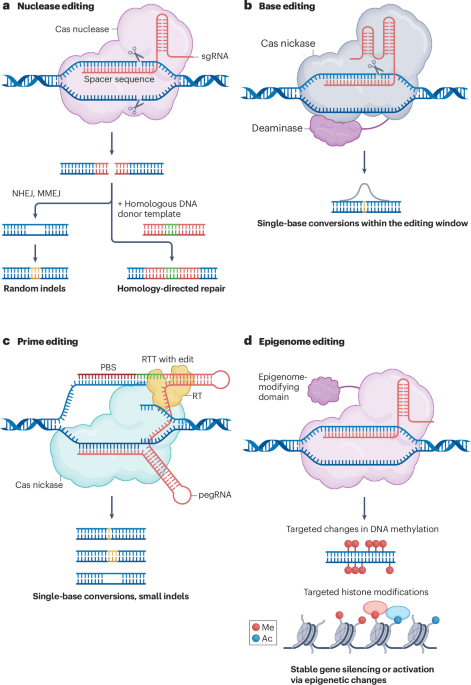
CRISPR-based genome editing technologies, including nuclease-based editing, base editing and prime editing, have revolutionized biological research and modern medicine by enabling precise, programmable modification of the genome and offering new therapeutic strategies for a wide range of genetic diseases. Artificial intelligence (AI), including machine learning and deep learning models, is now further advancing the field by accelerating the optimization of gene editors for diverse targets, guiding the engineering of existing tools and supporting the discovery of novel genome-editing enzymes. In this Review, we summarize key AI methodologies underlying these advances and discuss their recent noteworthy applications to genome editing technologies. We also discuss emerging opportunities, such as AI-powered virtual cell models, which can guide genome editing through target selection or prediction of functional outcomes. Finally, we identify key directions where the integration of AI methods is poised to have a substantial impact going forward.