
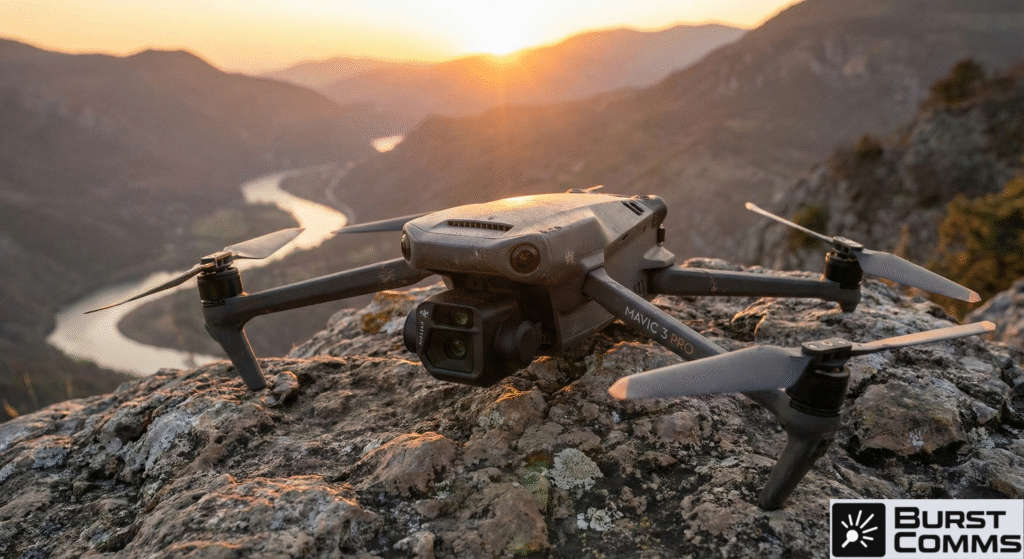
Observing the evolution of FPV drones and loitering munitions over the last couple years, it feels like we’re right at the beginning of something much bigger.
and right now, most of these suicide drones are still manually piloted, basically remote-controlled bombs with cameras. But it’s obvious where this is heading. As electronic warfare and jamming improve, autonomy becomes less of a “cool feature” and more of a baseline requirement.
We’re already seeing visual navigation, object recognition, even prototypes that can land, wait, and re-engage when the target shows up. These won’t stay as disposable weapons. They’re turning into patient predators. And when that happens, they’ll outgrow the battlefield roles we originally assigned them.
If loitering munitions become cheap, autonomous, and mission-flexible, how long before that tech spreads into unmanned ground vehicles? Or naval drones? This looks like the beginning of a drone arms race one that could accelerate autonomous warfare faster than any other domain of robotics.
It mirrors what we saw with anti-tank missiles: guided at first, then fire-and-forget. its the same playbook just a different medium.
from my perspective, this looks like the spark (pun intended) that may push most manned combat vehicles off the battlefield. Not instantly. But the trajectory is clear. AI-driven kamikaze drone tech is likely to spill into broader vehicle design, air, land, sea. Warfare is rushing toward fighting by proxy, not just with human allies, but with machines acting in our place.
More detail: BurstComms.com
10 Comments
We’ve spent decades automating the workforce now we’re automating the battlefield. Suicide drones are evolving rapidly from human-guided tools to fully autonomous, decision-making weapons. As AI takes over the target selection and engagement process, we’re inching toward a future where manned warfare may only exist at the control nodes coordinating vast swarms of ultra-committed AI drones executing missions without fatigue, without hesitation, and without accountability. Are we prepared for a future where the decision to kill is no longer human?
Naval warfare is the biggest area at risk, imo, because so much of the function of a navy is to serve as a mobile base of operations. Being able to deploy roaming “intelligent torpedoes” for area denial against foreign battleships seems great for anyone who doesn’t care to field a navy of their own.
Unfortunately, this also risks friendly fire, especially against merchant vessels. I can see this being a major argument against investment in this area outside of very tight shore defenses.
There is a reason why most armies spent significantly more (by few orders of magnitude) on heavy land vehicles. People need to realise that drones are basically worse missiles with only selling point being price.
When you start adding fancy features to platform that has neither the speed nor payload of a missile you are narrowing the price advantage.
And no, drones did not show us that tanks or IFVs are outdated. They showed us that tech from ’80s is outdated. Shocked picachu much. The fact west (not even gonna bother with Russian developments at this point) saw hard kill systems work in the ’80s, perfected them two decades ago and those are still neither standard nor really developed since paints the picture of why drones even work on the battlefield dated as one in Ukraine.
Russia is running out of money and will be forced to stop the war. And if it does I doubt we will have the tech advancements that we are having. All the other wars are between weak nations or very specific operations there is nothing that will push advancements like Ruso Ukraine war.
The flying drones may return to a role as a mini AWACS system that can paint targets and track them for cheaper ground based drones that can carry a heavier payload than a flying one. Send a bunch of wheeled car-sized bomb drone against armored columns and troop locations.
Id agree if countermeasures from microwaves, lasers ballistic defences weren’t also being developed at a pace.
Loitering, cheap munitions are great but theyd have to be so advanced in a peer to peer conflict i see them outgrowing and negating their benefits through their cost. They will certainly become part of the battlefield though.
The largest growth area for that is in the naval arms race as I believe anything other than fast attack aircraft will become far too vulnerable to countermeasures.
Autonomous naval drones that can submerge are an interesting prospect, but they still fall foul of current manned craft issues, namely cost, heat signature and ability to negate countermeasures effectively. Such weapons would be difficult to affordably equip with enough computing power to perform the desired functions to make it worthwhile while also maintaining stealth.
Autonomous Loitering torpedos are interesting but could be negated by disposable screening drones that would come at a significantly reduced cost.
[Every day this video feels less and less like fiction.](https://www.youtube.com/watch?v=9fa9lVwHHqg)
We need white hats building the braer tar pit equivalent for malware, cyber-surveil, and I really don’t know what can be done for the drones.
We have to get society better to hope we stop trying to hurt each other.
The police/1984/bigbrother world that looks likely is scary.
I think it is possible that autonomous and robotic warfare may actually make war cleaner and less lethal, similar to nuclear weapons. Nuclear weapons have likely prevented a number of direct wars with nuclear armed countries.
Man vs robot is suicide, so wars will shift to becoming more about capital. Once one side eliminates the critical infrastructure and robot military of the other the fight is over and it will be time to negotiate the surrender.
Still will have concerns with rogue nations or non state actors, just like we do with nuclear weapons, but paradoxically it may be a benefit in the long run.
We have yet to see the full potential of swarms and different kinds of drones working together autonomously when needed and with other weapon systems, but we are starting to see this with maybe two component systems, relay drones etc. AI is not yet to my knowledge used on one drone to call up another weapon to support, although some of the sea drones may use something like this.
For example in the area of loitering drones, that land and wait, you dont need a big drone or kamakazi drone.
A drone without payload can drop, wait with sensors, then when it thinks its time, fly up, call back to an autonomous remote operated mortar, with pre-cleared (manual) geofenced target zones, whilst the mortar fires the mortar communicates the mortar is going to the location ETA can be computed, the mortar has some low aspect glide ratio and can be steered by laser designator on the deome, which activates a second or so before the mortar arrival.
The drone with its laser designator and AI now flies home. But it could designate several targets before it does.
Another option is a heavy lift drone drops an unguided rocket mine.
Another drone lands om this, and can aim the heavy rocket mine and would have the object recognition.
When it has fired the rocket mine it flies home and alerts on the way as to any surveilance it captures briefly over the site.
A single drone ‘operator’ type may function as both surveilance, relay drone, laser designator and operator of ground weapons as described with the rocket mine and naturally mesh into networks.
You dont want to waste expensive optics and AI or other systems or even drone motors or batteries, when yoy dont have to.