

It’s official: Europe’s Schengen Zone is poised to gain a brand new member in 2026, and depending on which side of the debate you lie, this bodes great (or not-so-great) news.
After 20+ years of being in the European Union, the small island country of Cyprus is securing backing to finally ascend to the passport-free travel zone in the New Year, and if you’re wondering how exactly this affects you as a traveler, we’re here to give you the full run-down.
Spoiler? If you’re either taking a sabbatical or you’re a digital nomad planning to explore Europe in the long term, that window may be closing sooner than you might think:

How Does Schengen Work?
Europe’s Schengen Zone is a collective of (currently) 29 countries that have willingly abolished border and customs checks among themselves. It comprises a majority of the European Union, as well as EU-aligned states like Switzerland, Norway, Iceland, and more.
In sum, much of the continent has effectively eliminated passport control as it pertains to intra-European travel.
In practice, this is how it works: a U.S. traveler flies from New York to Paris, and undergoes border control at Charles de Gaulle Airport. Should they travel onward to Rome, in Italy, or Barcelona, in Spain, they will no longer be treated as an ‘international arrival’.

Though a Paris-Rome flight is, technically, still an international flight, thanks to the Schengen accords, this same passenger will be considered a domestic traveler. No further border control will be carried out, so long as that traveler remains within the 29-country-wide area.
As we have seen in recent months, spot checks can take place, especially now that Europe is under intense migratory pressure, but they are not the norm. Once you’re in Schengen, you can move around freely as borders effectively don’t exist.
90 Days Out Of Any 180-Day Period
Avoiding the usual customs and border bureaucracy sounds great, alright, until you take into account the biggest caveat here.

Most countries allow American tourists to stay 90 days as tourists visa-free, and this is also true in Europe. However, within Schengen bounds, that means Americans only get a 3-month stay across all 29 countries.
You don’t just get to spend 90 days in Croatia, then take a cross-border train to Hungary, then Slovakia, then Austria for 90-day add-ons.
In other words, if you spend a week sun-bathing in Nice, France, then another week skiing in the Swiss Alps, that’s 76 days left on your Schengen clock, and if you used up the 3 months, you won’t get allowed back in for another three.
That’s the rule: as a tourist, you cannot be present in the Schengen countries for more than 90 days out of any 180-day period.

Cyprus Will Be The 30th Schengen Country
In the last 4 years, three countries were added to Schengen: Croatia, Bulgaria, and Romania. Starting in 2026, the border-free zone is gearing up to welcome its landmark 30th member: Cyprus.
A sun-kissed island getaway in the Eastern Mediterranean, known for its Caribbean-like, powdered-sugar sands, fascinating ancient ruins, and unique blend of Greek and Turkish cultures, it has officially completed the technical work needed for Schengen accession.
These include full integration into the EU’s Visa Information System, alignment of visa rules with those of the broader European Union, and installation of EES (the EU’s controversial new Entry/Exit System) at airports and seaports.
According to Nicholas Ioannides, the Cypriot Deputy Minister for Migration and International Protection, Cyprus is the closest it’s ever been to entering Schengen.

Potential Setbacks For Cyprus’ Schengen Accession
Reviews are due before 2025 is up, but given the stage of negotiations, and the fact that Cyprus is set to hold the Presidency of the EU Council in the first half of 2026, Schengen accession is all but confirmed, if not in the short term, then in the mid-term.
Cyprus is expected to place Schengen accession as a priority during its EU presidency, and as Ioannides pointed out himself, following a meeting with the EU Home Affairs Commissioner, feedback from Brussels has been largely positive.
Some issues remain, such as the island’s division and the growing Turkish influence:

For those who are not aware, the northern third of Cyprus has been occupied by Turkey since the 1970s, in a decades-long dispute that has yet to be settled by international law.
Should Cyprus join Schengen, it is likely only the south of the island, formally administered by the internationally-recognized Republic of Cyprus, will benefit from Schengen accession, while movements to and from the north will continue being subject to passport checks.
So How Does It Affect Americans?
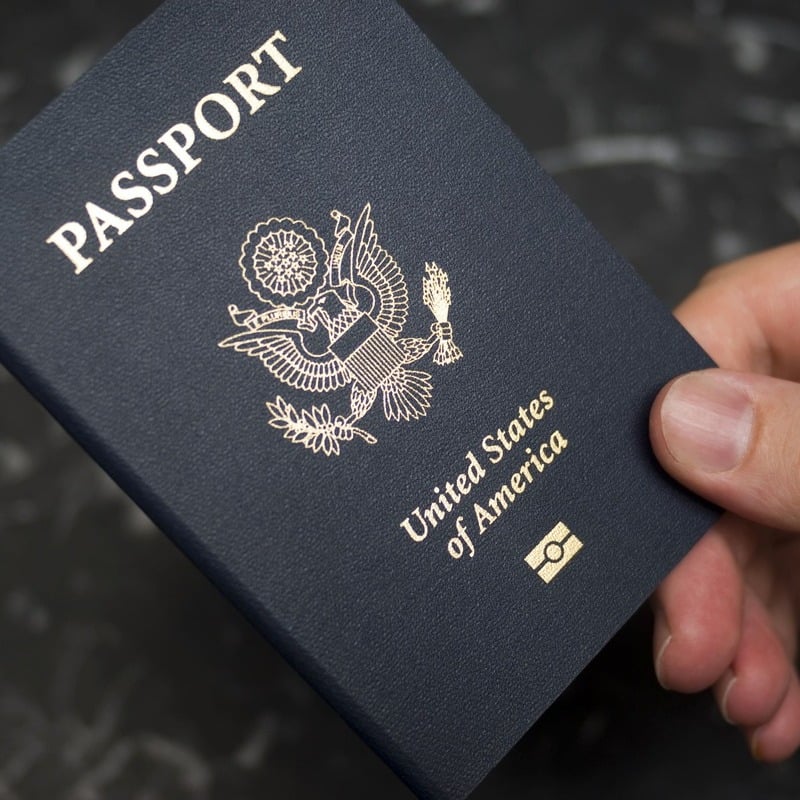
Cyprus’ Schengen accession is great news for Cypriot travelers, who will no longer have to join the long wait lines of international arrivals traveling from their island to the rest of the EU, but what about Americans and other travelers?
For many years now, long-term travelers in Europe have used Cyprus as a ‘reset’ country.
This means that, once they’ve used up their allowed 90 days in Schengen, they would typically jet off to Cyprus, where the strict rule did not apply, and get an additional 90 day-stay regardless of time spent in the European mainland.
As soon as Cyprus formally enters the Schengen Zone, this loophole will close, as it did with Croatia, Bulgaria, and Romania.
As a digital nomad, you will no longer be able to increase the length of your stay in Europe by adding a little side trip to Cyprus. Likewise, as a slow traveler, you might want to think more carefully about where you choose to spend your time, as 90 days only for 30 countries is a bit tight.

EES And ETIAS Are On The Table
On top of adhering to the Schengen rules, Cyprus will automatically begin to enforce EES and ETIAS.
We know it’s a lot of acronyms to memorize, so let’s break these down one at a time. EES was already mentioned before, and it refers to the EU’s new Entry/Exit System.
In sum, all non-European travelers, except foreign residents in the EU, must have their fingerprints and facial biometrics recorded upon arrival. This includes U.S. passport holders traveling to Europe as tourists.
As for ETIAS, it stands for the European Travel Information and Authorization System, a long name for a digital entry permit, or, as some have called it, an eVisa.
From late 2026, Americans will no longer be able to travel to the Old Continent carrying a valid passport only. They will need, first and foremost, to apply for authorization online in advance, at the cost of €20, and this will also apply in Cyprus.

What To Expect For Cyprus In 2026
Cyprus’s Schengen accession depends on political will and the agreement of all 29 other countries that already participate in the zone. No formal date has been set, and final approval is yet to be granted.
Talks are ongoing, and they will surely gain momentum upon Cyprus’s temporary EU presidency in a few months, so we will be sure to keep you posted.
Either way, the country’s inclusion in the border-free bloc is bound to happen sooner or later, and, according to experts, 2026 is very likely to be the long-awaited year.

The Travel Off Path Advantage: Your Travel Toolkit
Subscribe To Our Latest Posts
Enter your email address to subscribe to Travel Off Path’s latest breaking travel news, straight to your inbox.