
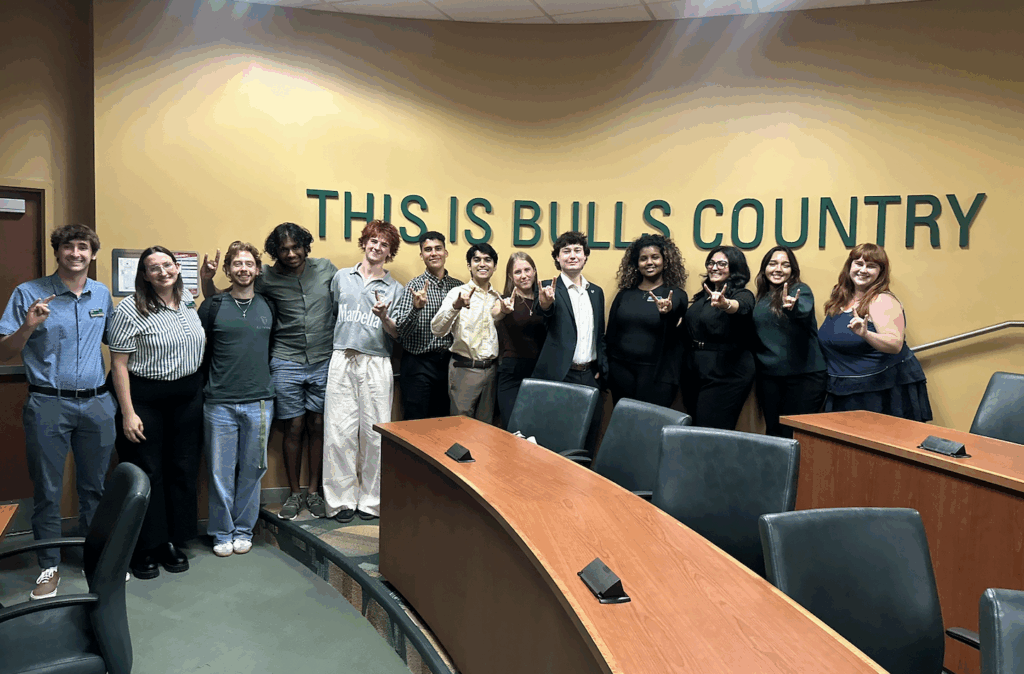
 Members of USF PIRG and GenCLEO at USF show that collective action reduces climate anxiety and creates real environmental change. SPECIAL TO THE ORACLE/LAILA FARHAT
Like many in Gen Z, I worry about what our future looks like as temperatures rise and plastic pollution worsens.
But the work happening at USF and other Florida colleges is a reminder that community action is one of the strongest ways to combat climate anxiety.
Surfrider collected over 360,000 pounds of trash worldwide in 2024 — 83% of which was plastic.
Plastics pose serious risks to the environment and human health, killing animals and even leaking carcinogenic chemicals into tap water, according to the Environmental Protection Agency.
For many students, plastic pollution fuels real anxiety — as Gen Z is especially concerned about the environment.
But collective action, not individual dread, is what reduces that anxiety and leads to meaningful environmental change.
People who participate in advocacy and community outreach had no symptoms of depression in relation to their climate anxiety, according to a 2022 study done by the Yale School of Public Health.
Thankfully, many students across the state are engaged in collective action through environmental and advocacy clubs.
Related: USF’s Climate Teach-In aims to educate community on environmental initiatives
Florida State University’s Student Government passed a ban on plastic bottles and styrofoam in 2020 and banned plastic straws in 2023.
Laila Farhat, the Florida PIRG Students at USF president, said FSU’s successful banning of plastic and styrofoam items encouraged student groups at USF to pass the same ban.
USF students recognized the negative environmental impact of plastic use and worked together to create a university that prioritized sustainability and environmental awareness.
An SG senate resolution sponsored by PIRG passed in March, banning all USF clubs from purchasing styrofoam with activity and services fees, according to the resolution.
All USF students are charged A&S fees to fund 12 Student Success departments and over 250 clubs.
Clubs can use A&S funds for things like food, supplies and speaker fees.
But Farhat said the club was able to build off the momentum of the styrofoam ban resolution — successfully passing another ban on Oct. 27.
The new ban prevents clubs from purchasing plastic straws, cups and plates using A&S fees.
This shows that collective action does have an impact — it spreads from campus to campus.
Related: OPINION: Climate denial videos do not belong in schools
The successful banning of those detrimental items also shows that when we work together, we can help create positive environmental change.
“Individual actions, when done collectively, can create meaningful change,” said Farhat.
As college students, we cannot underestimate our potential impact. It can be easy to feel like our actions do not carry weight.
But the successful passage of policies on plastic and styrofoam shows that students’ voices and activism matter and can create real positive change.
We can fill gaps that others cannot. Getting legislation passed on campus is one way.
This momentum on college campuses can eventually create nationwide and international change.
The most powerful antidote to environmental anxiety isn’t isolation. It’s community.